 Help & Support
 SEARCH
Alibaba redefines AI sovereignty with Qwen 3.8 Max launch
SHARE IT
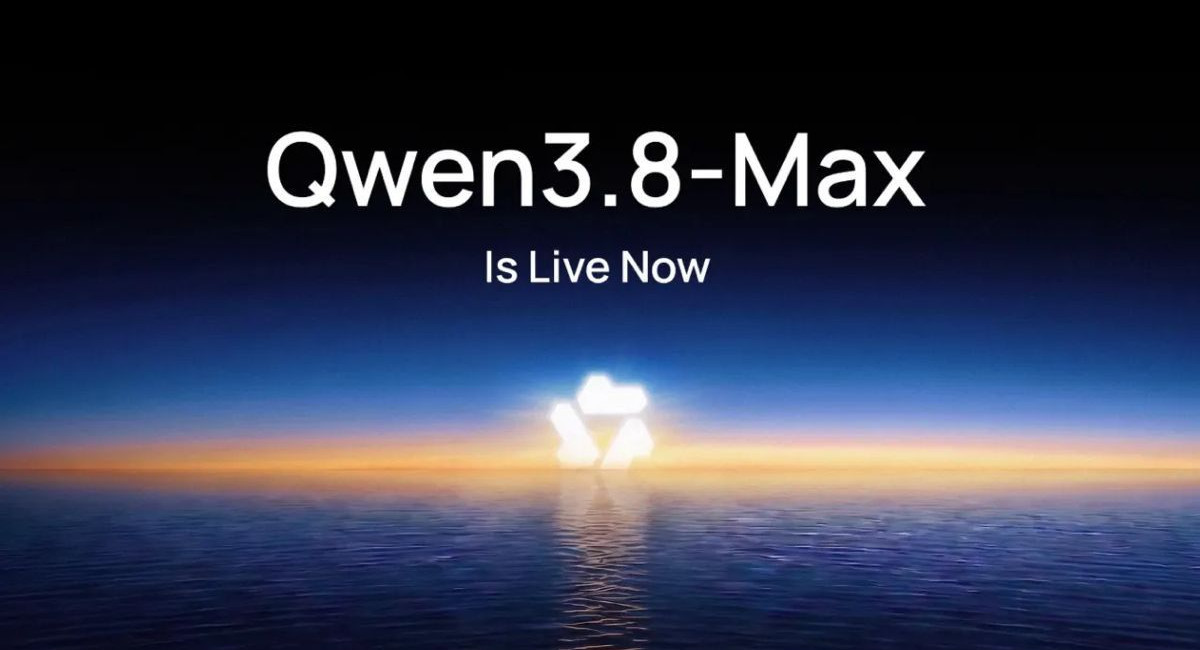
The global artificial intelligence race is experiencing a seismic shift as Chinese technological capabilities defy Western expectations and regulatory restrictions. The official unveiling of Qwen 3.8-Max by Alibaba marks a critical milestone in this evolving dynamic, delivering a sophisticated multimodal model that directly challenges the dominance of top-tier American systems like GPT-5.6 Sol and Fable 5. This release signals a broader geopolitical reality: US export controls instituted in 2022 to restrict China’s access to advanced semiconductor hardware have largely failed to halt progress, instead prompting Asian tech giants to achieve algorithmic breakthroughs and infrastructure independence.
At the core of this breakthrough is an extraordinary architectural framework. Qwen 3.8-Max boasts an impressive total of 2.4 trillion parameters. Built upon a Mixture of Experts (MoE) design, the model activates only 95 billion parameters per prompt, allowing for remarkable computational and energy efficiency without sacrificing performance. Enhanced by a massive context window of one million tokens, the system effortlessly ingests complex document bundles, massive legal archives, and expansive codebases. It demonstrates seamless multimodal integration, simultaneously parsing text, code, and structural elements with high proficiency in understanding user interfaces and intricate file structures.
Beyond sheer operational metrics, the strategic value of Qwen 3.8-Max lies in its remarkable autonomy and capacity for long-horizon problem-solving. Rather than serving as a basic conversational assistant or simple code completion script, the system operates as a fully capable autonomous software engineer. In real-world technical trials, the model managed the open-source project "oh-my-cli" on GitHub for over fifteen days without any human supervision. During this period, it independently reviewed user demands, generated 151 individual issues, authored complex code, and approved 127 pull requests by successfully navigating rigorous continuous integration and end-to-end testing protocols.
In scientific and academic contexts, this advanced reasoning capability yields equally impressive outcomes. When tasked with reproducing complex scientific research from scratch without existing template scripts, Qwen 3.8-Max developed over 7,600 lines of original code and managed 33 consecutive GPU training rounds across five days. Remarkably, it refined the original paper’s methodology, boosting the final score on the rigorous AIME24 mathematical benchmark by 2.7 points. The model’s high efficiency extends across professional sectors, enabling enterprise operations to analyze thousands of legal compliance clauses or run comprehensive data workflows in a fraction of the time traditionally required.
Alibaba is further expanding its market influence by pairing this enterprise solution with an open-source deployment strategy. The company is set to release Qwen3.8-27B next week, offering an open-weights version containing 27 billion parameters optimized for local PCs without relying on third-party cloud infrastructure. In European markets, where data protection and regulatory compliance are essential, local deployment offers a fully GDPR-compliant alternative. Furthermore, the arrival of highly capable open-source models applies strong downward pricing pressure on Western providers, accelerating a shift where advanced artificial intelligence operates as accessible baseline infrastructure rather than a proprietary monopoly.
MORE NEWS FOR YOU