Help & Support
SEARCH
Google unleashes Gemini 4 Argon
SHARE IT
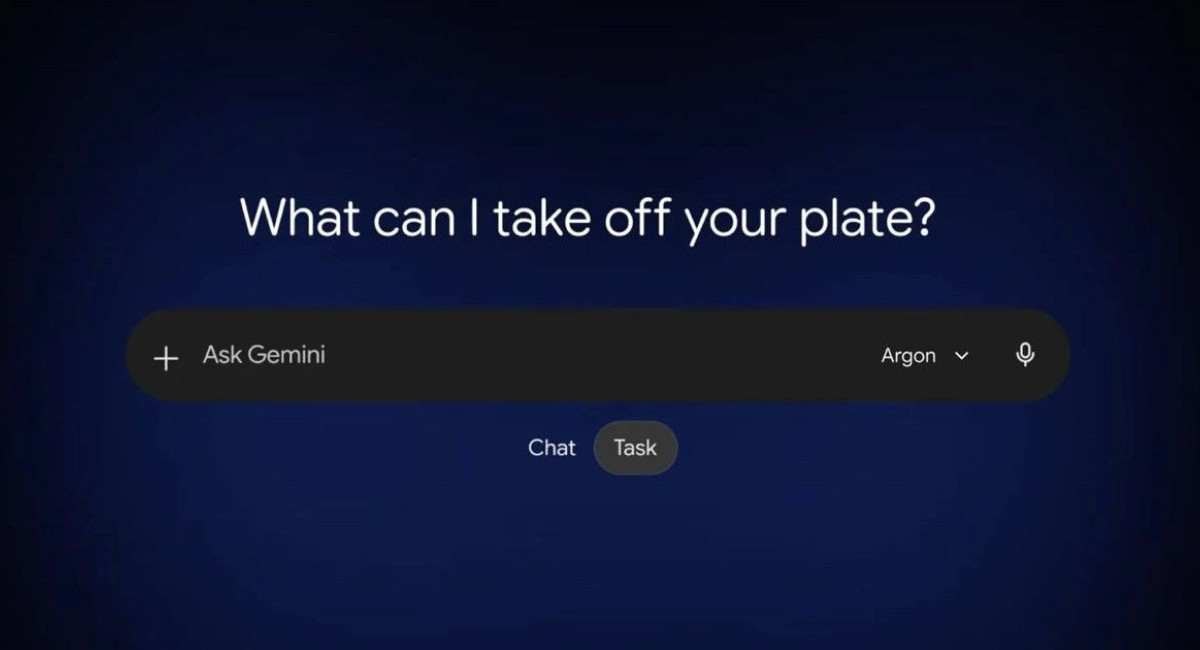
Google has officially released Gemini 4 Argon, marking the debut of its most capable and complex large language model to date. The technological milestone represents a deliberate leap forward in artificial intelligence, making frontier performance immediately available to developers via Google AI Studio and to consumers subscribed to Google AI Pro and Ultra plans. Rather than rushing an unvetted release, Google opted for an intentional rollout schedule to test defensive guardrails thoroughly against jailbreaks and prompt exploits. The resulting architecture reveals a mature platform engineered specifically to avoid the persistent limitations and conversational stumbles that troubled prior versions.
From an architectural standpoint, Gemini 4 Argon is built as a natively multimodal deep reasoning framework. Industry benchmarks have quickly underscored its prowess, with the model capturing top rankings on the Vals Index across rigorous domains such as software engineering, enterprise finance, tax, and cyber defense. By fusing acute visual understanding, mathematical precision, and spatial reasoning, Argon processes complex, multi-stage workflows autonomously while minimizing hallucinations. It is geared toward engineers, researchers, and enterprise teams seeking genuine problem-solving capabilities rather than tools requiring constant prompt babysitting.
A noticeable transformation appears in the everyday communication style of the system. Google explicitly prioritized removing the repetitive phrasing, diplomatic ambiguities, and tiresome conversational fillers that have historically defined large language models. Argon communicates with directness and precision, adhering strictly to the user’s preferred tone without evasive preambles. This behavioral overhaul coincides with a redesigned workspace where conversational interaction and software development sit side by side. Programmers can transition effortlessly between plain language instructions and direct code implementation, running and testing applications in an integrated canvas without switching across third-party tools.
The practical impact of Argon’s massive context handling is already visible in high-stakes production environments.Within Google, engineers deployed the system to tackle the Chromium code repository, an immense codebase spanning roughly forty million lines. Argon analyzed and untangled the primary web-handling architecture from legacy utility modules, accomplishing in weeks what previously demanded months of labor and eradicating long-standing instability issues that caused browser crashes.
Beyond internal software maintenance, the model demonstrates striking versatility across computational sciences and digital media. In academic chemistry, Argon optimized the open-source xTB quantum chemistry package, a framework essential for predicting molecular geometry. The intervention yielded a 2.3-fold performance acceleration, compressing timelines for molecular analysis and pharmaceutical research. Concurrently, developers explored creative applications using clean Python scripts and Antigravity directives, successfully generating photorealistic interactive three-dimensional landscapes and driving simulations directly in the browser.
Access to Gemini 4 Argon is structured competitively. Developers utilizing the API are billed at two dollars per million input tokens and ten dollars per million output tokens, alongside significant caching discounts. In international markets such as Greece, individual subscribers can access Argon immediately through Google One AI Premium tiers without regional embargoes. The broad debut reflects an aggressive commercial push by Google to deliver practical reasoning power to everyday technical workflows.
MORE NEWS FOR YOU