Help & Support
SEARCH
Amazon retires Fire brand to launch high-end Alexa Tablets with Google Play
SHARE IT
In what stands as its most consequential portable device pivot in fifteen years, Amazon is officially pulling the plug on its long-running Fire tablet lineup. For over a decade, the Fire badge was synonymous with low-cost, plastic slabs primarily intended as portable digital storefronts for Prime video, books, and basic streaming. That chapter has formally drawn to a close. The retail giant is replacing the budget lineup with an ambitious, significantly more upscale family of hardware branded as Alexa Tablets. Beyond modern aesthetics and elevated build materials, this relaunch represents a fundamental philosophical shift: Amazon has finally conceded to customer demand by integrating full,native access to Google services and the Google Play Store right out of the box.
The absence of genuine Google mobile services had persistently hampered Amazon hardware, forcing owners to rely on the limited Amazon Appstore or navigate cumbersome sideloading methods just to install essential tools. By building this new generation on Android 16 with native Google certification, users can now download Gmail,YouTube, Google Maps, Chrome, and thousands of top-tier productivity and entertainment applications without friction. Guiding this strategic renaissance is Panos Panay, who joined Amazon to steer its hardware division after orchestrating the Surface hardware line at Microsoft. His influence is unmistakable, pivoting the portfolio toward refined industrial design, productivity capability, and versatility rather than bare minimum specifications.
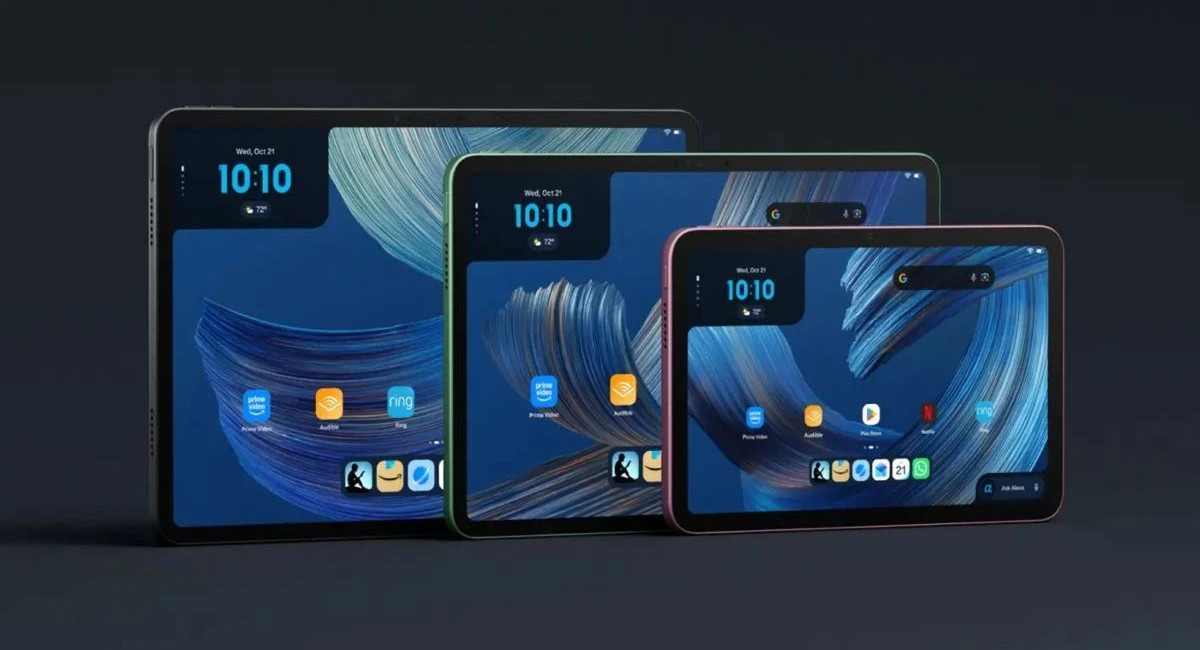
Positioned at the apex of the new roster is the Alexa Tablet 12 Pro, engineered specifically to challenge established high-end offerings from Apple and Samsung. Encased in a sleek aluminum unibody measuring a mere 6.5 millimeters in thickness, the flagship features a 12-inch display with a productivity-friendly 3:2 aspect ratio, a sharp 2800 by 1840 pixel resolution, and a fluid 120Hz refresh rate. Beneath the exterior lies a four-nanometer octa-core MediaTek 8400 silicon platform, designed to deliver triple the computing throughput and a ninefold leap in graphical performance compared to outgoing Amazon hardware. Buyers can configure the device with 8GB or 16GB of system memory alongside 128GB or 256GB of onboard storage, backed by a battery rated for sixteen continuous hours of video playback.
Amazon is also leveraging its digital reading heritage to give the Pro model a distinctive edge in the market. Customers can choose an optional nanomatte screen finish for an additional fifty dollars, pushing the base configuration price to 549.99 dollars. This specialized glass treatment drastically diffuses ambient glare while imparting a subtle tactile resistance reminiscent of genuine paper. It works in tandem with an updated Kindle mode featuring a dedicated Color Paper profile that dampens harsh saturation to emulate color electronic paper displays. To complete the premium workstation conversion, Amazon is introducing the dedicated Pro Keyboard and a pressure-sensitive Pro Pen stylus,positioning the tablet firmly as a capable creator canvas.
Flanking the flagship are two more affordable siblings built with similar structural refinement. The Alexa Tablet 11,retailing at 329.99 dollars, adopts an aluminum frame, a 2.5K display running at 90Hz, and a MediaTek 8199 processor paired with 8GB of memory and up to 15 hours of battery endurance, catering squarely to entertainment purists.Meanwhile, the ultra-portable Alexa Tablet 8 arrives at an accessible entry point of 229.99 dollars, sporting an 8.7-inch screen and a MediaTek 8189 processor with 4GB or 8GB of memory. While the smaller tablet prioritizes lightweight everyday portability over intensive multitasking, both the 8-inch and 11-inch models will simultaneously be offered in dedicated Kids editions, featuring rugged shock-absorbing cases at no extra charge.
Hardware improvements are accompanied by a deep architectural reimagining of Amazon software, anchored by its generative artificial intelligence platform, Alexa+. Replacing standard static home interfaces, the software integrates a dynamic hub that surfaces context-aware information, widgets, and predictive content based on daily usage patterns.Crucially, the system introduces contextual on-screen intelligence, allowing users to summon the assistant to analyze whatever is currently displayed. Whether generating rapid summaries of long-form articles or recognizing products featured in buying guides to instantly place them into an Amazon shopping basket, the software aims to streamline user workflows.
With consumer rollout officially scheduled to begin on October 19, 2026, and European retail availability expected shortly thereafter, Amazon is signaling a confident new trajectory. By shedding the compromised reputation of plastic bargain slates and embracing genuine software interoperability alongside premium industrial craftsmanship, the new Alexa Tablets indicate that Amazon is ready to take tablet computing seriously.
MORE NEWS FOR YOU