 Help & Support
 SEARCH
Anthropic is rewriting the rules of drug discovery with Claude Science
SHARE IT
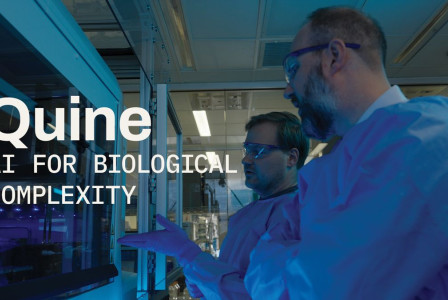
The official unveiling of Claude Science by Anthropic marks a pivotal moment in the technology sector, signaling much more than the mere release of yet another specialized large language model. In a surprising and ambitious move,Eric Kauderer-Abrams, the head of life sciences at Anthropic, revealed that the company is actively recruiting biologists, constructing physical wet labs, and embarking on the internal development of its own pharmaceutical treatments. This strategic pivot transforms a renowned artificial intelligence company into a fully integrated biotechnology research organization.
This hands-on approach sharply differentiates Anthropic from its primary competitors in the artificial intelligence landscape. Until now, industry giants like Google, through DeepMind and its AlphaFold technology, as well as hardware leaders like Nvidia, have primarily operated as service providers. They offer incredibly powerful software tools as a service to traditional pharmaceutical companies. Anthropic, however, has chosen a radically different path by becoming an active research entity itself. According to company executives, there is simply no substitute for the practical experience gained directly in the trenches of scientific research. To train the ultimate artificial intelligence tool for the scientific community, the engineers at Anthropic require a completely controlled, real-time environment for production and testing. The envisioned workflow is seamless: the artificial intelligence designs a molecule, the company researchers synthesize it within their own physical laboratory, the efficacy is meticulously recorded, and the model instantly learns from the resulting success or failure.
Perhaps the most fascinating aspect of this massive undertaking is the specific medical focus Anthropic has chosen.The company has no intention of directly competing with pharmaceutical behemoths like Pfizer or Novartis in the highly lucrative markets of weight loss treatments or standard cardiovascular drugs, which demand massive global commercial networks. Instead, leveraging its foundational status as a Public Benefit Corporation, Anthropic is directing its vast computational resources toward discovering treatments for neglected and rare diseases. These specific medical conditions are frequently sidelined by the traditional research and development market. The relatively small number of patients affected by these rare diseases simply does not provide the financial justification for the traditional investment of two billion dollars and a decade of research required to bring a standard drug to market.
Artificial intelligence possesses the unique capability to dramatically compress both the astronomical costs and the extended timeframes associated with drug development. If the Claude Science platform can successfully identify viable drug targets in a matter of months rather than years, the financial risk is minimized to unprecedented levels. This technological breakthrough makes the development of orphan drugs not only possible but highly feasible, driven by a purely social and humanitarian imperative rather than strictly commercial motives.
From a software perspective, Claude Science is engineered to function as a comprehensive, unified digital AI workbench. Instead of forcing scientists to constantly switch contexts between Jupyter notebooks, high-performance computing terminals, the PubMed database, and various visualization applications, the platform centralizes everything within a highly intuitive natural language command environment.
The system features native connectivity with over sixty distinct scientific databases. This extensive integration allows the model to conduct highly precise literature reviews utilizing deterministic retrieval layers, effectively eliminating the dangerous hallucinations that often plague generative artificial intelligence. Furthermore, the platform excels in polymorphic evaluation. In the complex field of protein folding, for instance, a researcher can request the evaluation of a specific mutation. Claude Science seamlessly deploys ESMFold to generate the structural prediction and subsequently evaluates the alternatives using multiple advanced models, such as ESM-2 and ProteinMPNN. The final output is a carefully weighted list of the most promising candidates.
A critical component of the platform is its absolute traceability. Every single graph, molecular structure, or scientific conclusion generated by the system is accompanied by the exact source code that produced it. This rigorous approach guarantees that the research remains completely transparent, verifiable, and entirely reproducible by other scientists,directly addressing one of the most significant challenges in modern scientific research.
The operating environment is designed with maximum security in mind. It functions locally on protected, sandboxed systems running on MacOS or Linux, ensuring the strict privacy of highly sensitive biological data. When the research demands extraordinary computational power for intensive genomic analyses, the system can effortlessly scale by integrating cloud infrastructures like Modal.
Anthropic deciding to get its hands dirty at the laboratory bench signifies the dawn of a new era. The traditional boundary that once strictly separated software and artificial intelligence companies from biotechnology firms is rapidly beginning to fade. With Claude Science spearheading the software front and in-house biologists rigorously validating the experimental data, Anthropic is constructing the first fully vertically integrated, AI-driven system for scientific discovery. The implications of this development for the pace of medical breakthroughs over the current decade are expected to be nothing short of revolutionary.
MORE NEWS FOR YOU