 Help & Support
 SEARCH
Google Chrome empowers academic workflow with deeper Gemini integration
SHARE IT
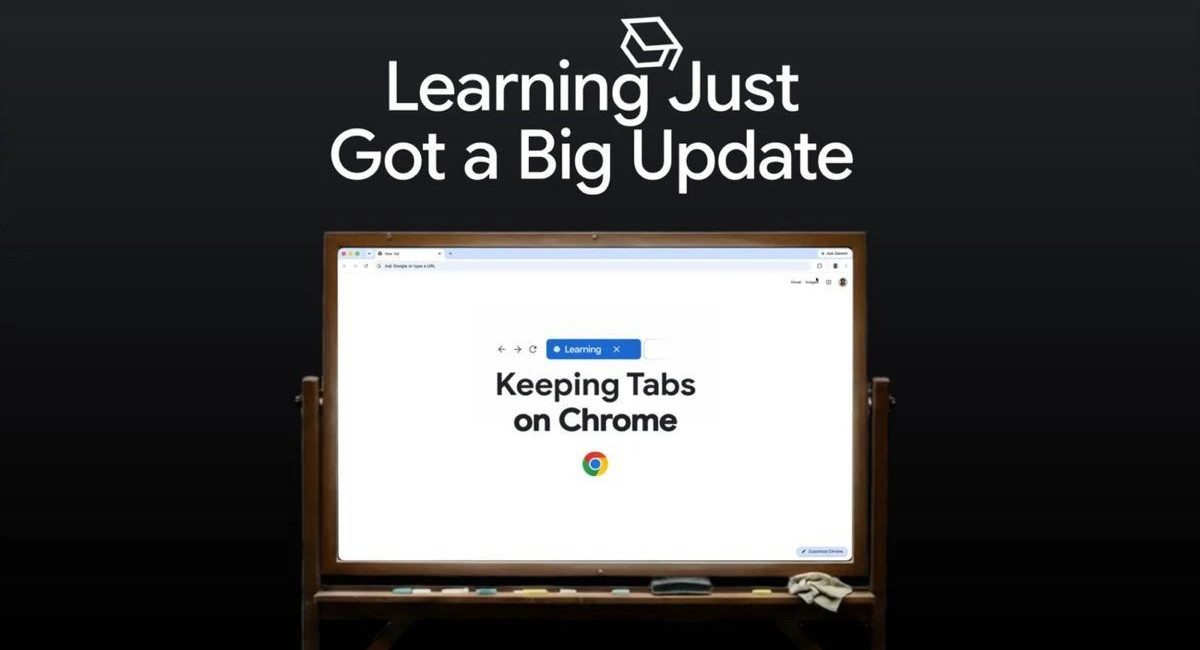
Google has unveiled a comprehensive suite of updates for its flagship Chrome browser, tailored specifically to meet the evolving demands of academic research, remote learning, and student productivity. As learners and scholars navigate increasingly complex digital ecosystems, the tech giant is reinforcing its core browser architecture with deeply integrated Gemini artificial intelligence capabilities and enhanced cross-device synchronization. The overhaul moves well beyond cosmetic redesigns, addressing fundamental friction points in digital workflows and fundamentally reshaping how users transition between screens while absorbing information.
At the core of the update is a sophisticated enhancement to Chrome's tab-sharing system. While transmitting web pages across mobile and desktop environments has long been a staple feature, the underlying engine now preserves the exact browser state upon transfer. Users can now move seamlessly between devices while maintaining their precise scroll position and form field inputs. For students reviewing lengthy academic papers or technical documentation on a mobile device during a commute, transitioning to a desktop workstation no longer requires manually searching for the last paragraph read or re-entering data into complex online forms. By capturing and securely transmitting the complete session state—including exact viewport coordinates—Chromium ensures an uninterrupted transition across operating systems.
Beyond seamless device continuity, Google is expanding Gemini's analytical reach to encompass a broader spectrum of multimedia content. The integrated Gemini side panel can now dissect, summarize, and query video and audio files hosted directly on external web pages, stepping outside the confines of YouTube. Recognizing that modern education relies heavily on podcasts, recorded lectures, and third-party media streams, the updated tool converts passive media into interactive research material. Users can prompt the AI assistant to summarize key arguments, clarify intricate concepts, or pin down specific timestamped discussions within long-form audio or video files, dramatically reducing the need for tedious manual transcription or time-consuming scrubbing through timelines.
To further reinforce knowledge retention, Google is introducing dynamic AI-generated quizzes natively generated from open browser tabs. Rooted in the educational principle of active recall, this feature leverages Gemini to evaluate the active web document, research paper, or multimedia stream and automatically generate targeted multiple-choice questions and comprehension exercises. By converting passive study materials into interactive self-assessment tools, Chrome aims to help students evaluate their understanding in real time before exams or project submissions.
The global rollout strategy reflects a phased approach. The advanced AI quiz generation is initially launching in English for users in the United States and India, with expanded language support, broader regional availability, and mobile integration slated to roll out over the coming months. Combined with session-state tab syncing and universal multimedia analysis, these enhancements position Google Chrome as a more integrated digital workspace for research and study.
MORE NEWS FOR YOU