 Help & Support
 SEARCH
Google Maps evolves into an AI powered personal concierge
SHARE IT
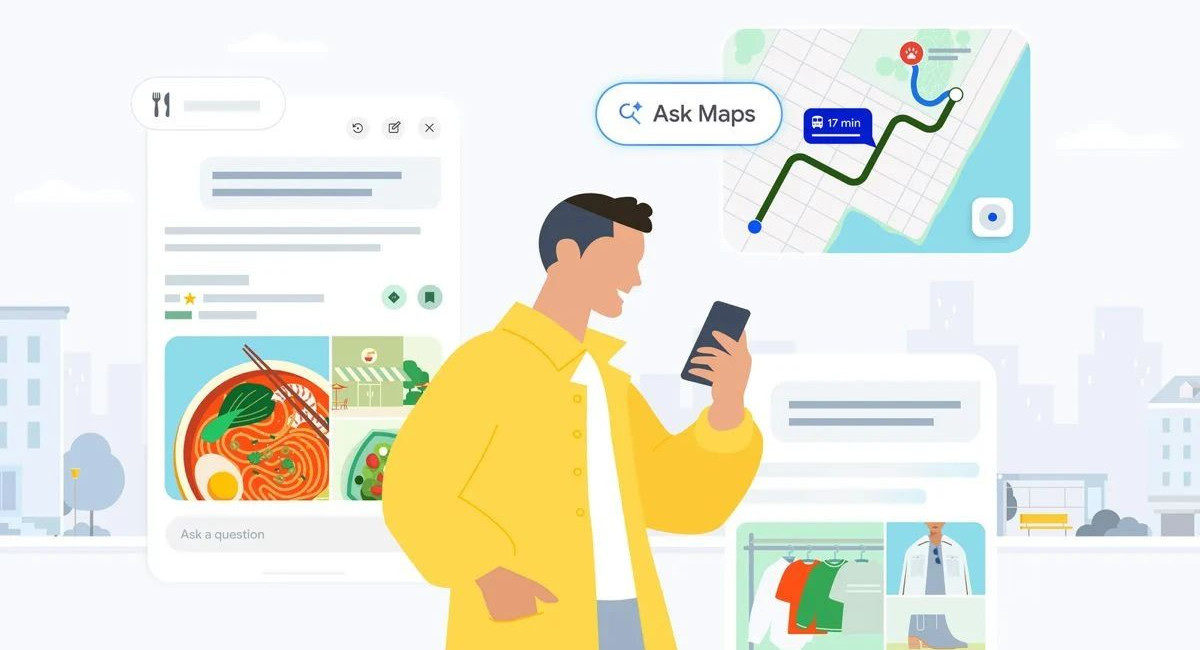
Google Maps is undergoing one of the most substantial transformations in its history, shifting from a conventional navigation and location-finding platform into a proactive, artificial intelligence assistant. By embedding the advanced multimodal capabilities of Gemini models directly into the mapping ecosystem, Google is elevating the user experience beyond simple pin-dropping and route planning. The cornerstone of this evolutionary leap is Ask Maps, a feature designed to transform how users interact with geographic data through natural conversational query processing and autonomous task handling.
Rather than serving as a passive interface where travelers enter explicit keywords or filters, Ask Maps introduces genuine agentic capabilities. Powered by Gemini, the application can assess complex contextual inputs, weigh multiple parameters, and carry out multi-step tasks without requiring continuous manual step-by-step guidance from the driver.This intelligent layer operates in tandem with Google's vast mapping database, allowing the system to comprehend complex real-world intent—such as recognizing implicit needs based on time of day, current trajectory, and saved personal preferences.
A prime demonstration of this practical utility is found in on-the-go food ordering. In traditional workflows, securing a meal along a drive required drivers to halt navigation, search external review applications, select a venue, browse a menu, and manually interface with a delivery app. Under the new architecture, a user can simply utter a spoken request to order a specific dish from a venue strictly positioned along their active route. Ask Maps immediately parses real-time navigation vectors, verifies current business operating hours, cross-references dietary restrictions associated with the user profile, and automatically populates the digital shopping cart. The user is left with only a single final action: reviewing the selection and authorizing payment.
Underpinning this seamless transaction ecosystem is Google’s Universal Commerce Protocol for Food. Built alongside key industry infrastructure partners like Square and Toast—with integration planned for platforms such as Uber Eats—this standardized framework bridges local merchant registers with the navigation layout. While initial rollouts focus on domestic markets in the United States, the technical foundation has been constructed for rapid global scalability.
Through this synthesis of natural language processing, dynamic routing logic, and embedded commercial protocols, Google Maps is redefining digital navigation. The platform moves away from merely showing where a destination lies, stepping forward to actively manage the micro-decisions and logistical demands of daily travel on behalf of the user.
MORE NEWS FOR YOU