 Help & Support
 SEARCH
Meta reinvents Facebook Creator Studio with a smart AI assistant
SHARE IT
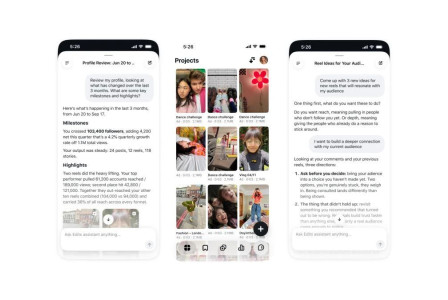
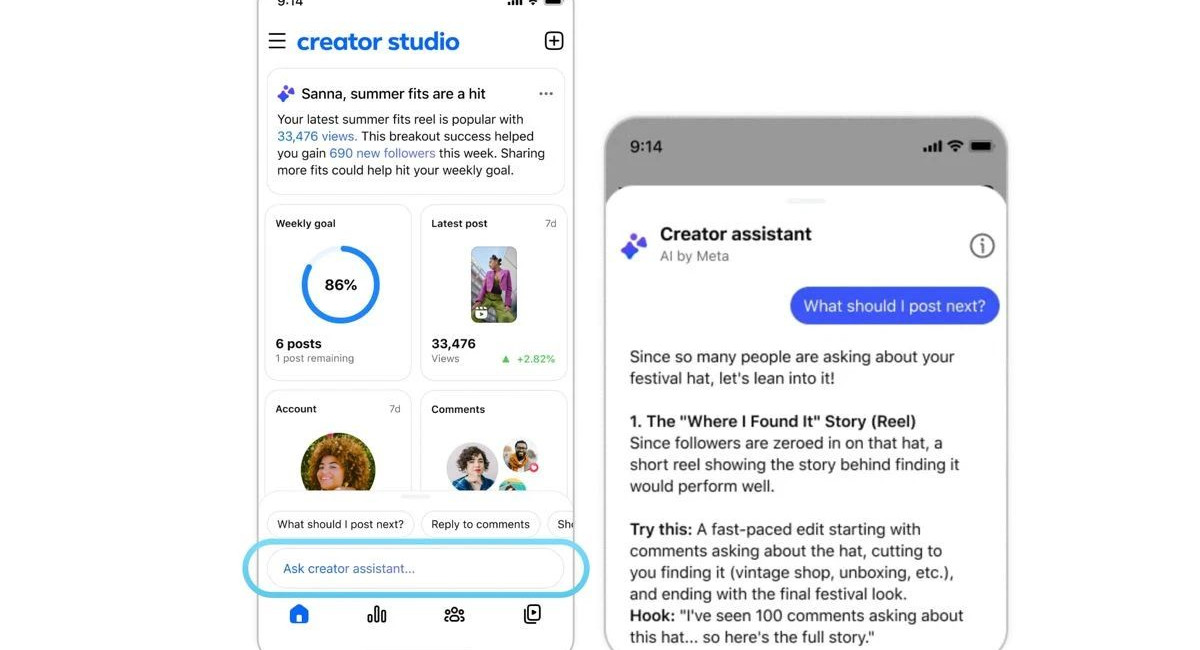
In a decisive move to win back the creative community, Meta has announced the relaunch of Facebook Creator Studio, transforming it from a traditional content scheduling platform into a fully automated AI companion app. At the heart of this revival is the AI Creator Assistant, a tool designed to guide content creators through data-driven insight and help them achieve organic audience growth without requiring an analytics background.
The decision represents a major course correction for the tech giant. A few years ago, Meta decommissioned the original Creator Studio and migrated all users to Meta Business Suite. However, this transition proved highly problematic for independent content creators. Meta Business Suite, heavily tailored toward performance marketing and ad campaign management, introduced unnecessary complexity to the daily workflow of non-advertisers. Recognizing this friction, Meta has built the new Creator Studio from scratch, presenting a clean user interface that isolates content management from commercial advertising modules.
Powered by the company’s Llama large language models, the AI Creator Assistant acts as a digital advisor that translates complex raw statistics into clear, actionable advice. Rather than spending hours interpreting standard engagement metrics, creators receive personalized recommendations regarding the exact format and optimal timing for their upcoming posts based on historical performance.
Beyond timing, the system acts as a brainstorming hub by monitoring platform-wide trending topics and analyzing the specific interests of a page's followers. It proactively suggests themes and content ideas before the writing process even begins. This algorithmic alignment ensures that upcoming posts are highly relevant to current community demands.
Community management is also receiving a major overhaul through automation. The new application filters and categorizes audience comments while generating draft replies that mimic the unique tone of voice of each creator. This feature significantly reduces the administrative burden of running a popular page, allowing users to maintain high engagement rates with minimal manual effort.
Crucially, the AI Creator Assistant acts as a safeguard against visibility penalties. By providing real-time compliance feedback during the drafting stage, the software warns creators if their text, imagery, or video risks triggering hidden algorithmic restrictions. This preemptive feature helps pages maintain their organic reach by preventing shadowbans or algorithmic demotions before a post is published.
From a technical perspective, Meta has opted for a cloud-based architecture rather than relying on on-device processing. The heavy computational lifting occurs entirely within Meta's advanced data centers, ensuring that low-spec mobile hardware can run the tool smoothly. Encrypted communication protocols secure the data transfer between the client application and corporate servers, enabling real-time metrics updates with negligible latency.
The software has been optimized primarily for iOS and Android environments, though a robust desktop web version remains available for traditional workflows. Because the codebase completely discards the bulky advertisement managers found in Meta Business Suite, the application functions with a noticeably lighter footprint and significantly reduced resource consumption. By separating the needs of casual creators from corporate advertisers, Meta seeks to foster a healthier, more dynamic organic ecosystem on its flagship social network.
MORE NEWS FOR YOU