 Help & Support
 SEARCH
OpenAI abandons the browser wars to dominate the enterprise desktop
SHARE IT
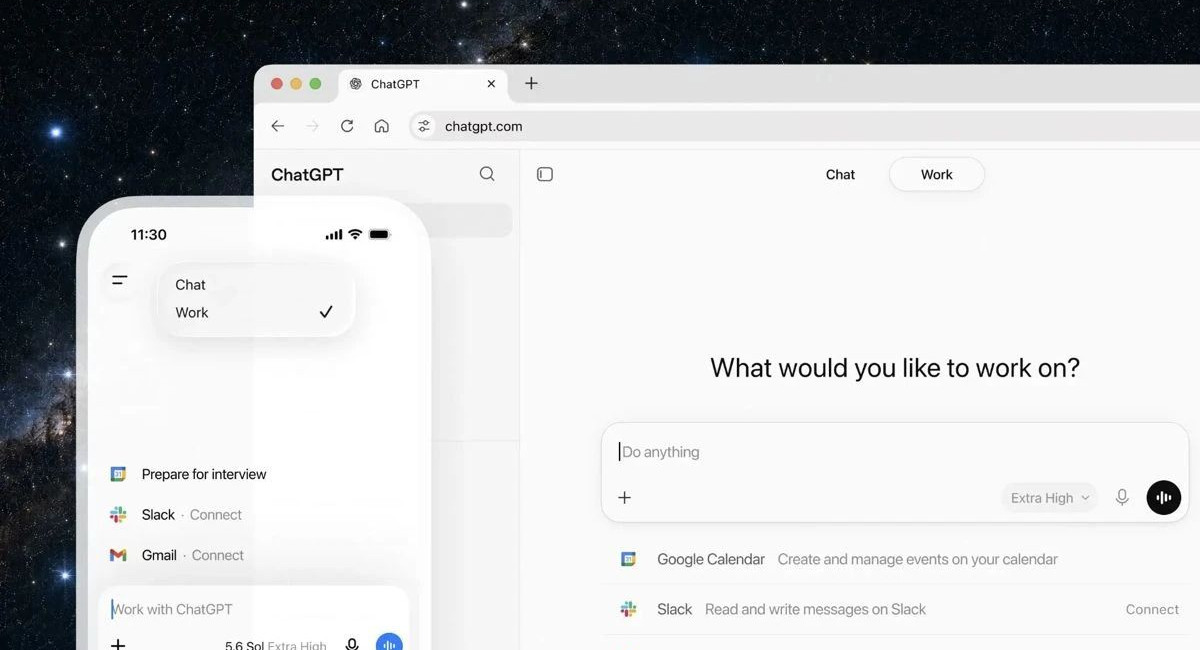
OpenAI has officially announced the launch of the ChatGPT Work enterprise ecosystem, while simultaneously pulling the plug on its highly ambitious but ultimately unsuccessful ChatGPT Atlas Browser. This dual announcement marks a significant maturity milestone for the company, signaling a decisive shift away from experimental consumer products and toward robust,secure, and seamlessly integrated professional tools. By introducing a completely rebuilt and unified desktop application for both Windows and macOS, the technology giant is making a clear bid to become the foundational productivity layer for developers and corporate users alike.
The landscape of artificial intelligence is evolving at a breakneck pace, and user demands are shifting in tandem.Professionals, particularly software developers, are no longer satisfied with isolated web interfaces that require constant context switching and endless copying and pasting. They need intelligent systems that operate silently in the background, constantly aware of the broader workflow. OpenAI has clearly recognized this shift in user behavior.ChatGPT Work represents the culmination of this realization, offering an enterprise grade platform housed within a dedicated desktop client. It promises zero data retention for future model training, addressing one of the most pressing privacy concerns held by corporate entities today.
At the heart of this new desktop experience is the native integration of the Codex code generation model. The days of treating an artificial intelligence assistant as a separate conversational partner are over. The new application functions as an intelligent, responsive overlay that hovers directly above any integrated development environment, including industry standards like Visual Studio Code and the suite of tools provided by JetBrains. Through a simple keyboard shortcut, Codex can instantly analyze all open files, identify complex logical bugs in real time, and propose on the fly optimizations. This direct system communication extends to the clipboard and command line interfaces such as PowerShell on Windows and Terminal on macOS, allowing developers to execute test scripts with unprecedented speed and minimal friction.
However, bringing this level of intelligent context to the desktop requires serious computational muscle. While the application can technically run on a system with eight gigabytes of random access memory, OpenAI strongly recommends at least sixteen gigabytes to ensure the background context engine operates without frustrating performance bottlenecks. In a nod to modern hardware capabilities, the client directly leverages neural processing units found in the latest processors from Intel, AMD, and Apple Silicon. This hardware acceleration can reduce command latency by up to forty percent. Furthermore, when granted explicit permission, the application can read and modify local files, dramatically accelerating the refactoring of large codebases. All of these enterprise queries are protected by rigorous end to end encryption protocols, ensuring that sensitive corporate intellectual property remains completely secure.
While the launch of the new enterprise client represents a massive leap forward, the abrupt termination of the ChatGPT Atlas Browser serves as a stark reminder of how brutal the software market can be. Analysts were largely unsurprised by the demise of the standalone web browser. Despite offering innovative native features like automated article summaries and intelligent email composition, the core browsing experience was plagued by severe instability. Users frequently reported massive memory leaks when pushing past a dozen open tabs.
Building and maintaining a modern web browser is a monumental engineering undertaking. The market is absolutely dominated by the Chromium engine, which powers Google Chrome and Microsoft Edge, alongside the WebKit engine behind Apple Safari. Competing against these entrenched titans requires astronomical resources. OpenAI ultimately decided that these resources would be far better spent developing specialized productivity plugins rather than fighting an unwinnable war in the browser space. To ease the transition for the few remaining loyal users, the company has promised a dedicated export tool to seamlessly migrate bookmarks and browsing history over to Google Chrome.
MORE NEWS FOR YOU