Help & Support
SEARCH
OpenAI challenges Google with new ChatGPT Business hub
SHARE IT
The ongoing shift from traditional keyword-based search engines to conversational generative artificial intelligence has officially entered a new commercial phase. In a strategic move aimed squarely at the lucrative digital discovery market, OpenAI has unveiled the ChatGPT Business Hub. Currently rolling out in beta for businesses across the United States, this new platform signals a direct challenge to Alphabet, which has enjoyed near-total control over local search and online business visibility for decades through Google Business Profiles.
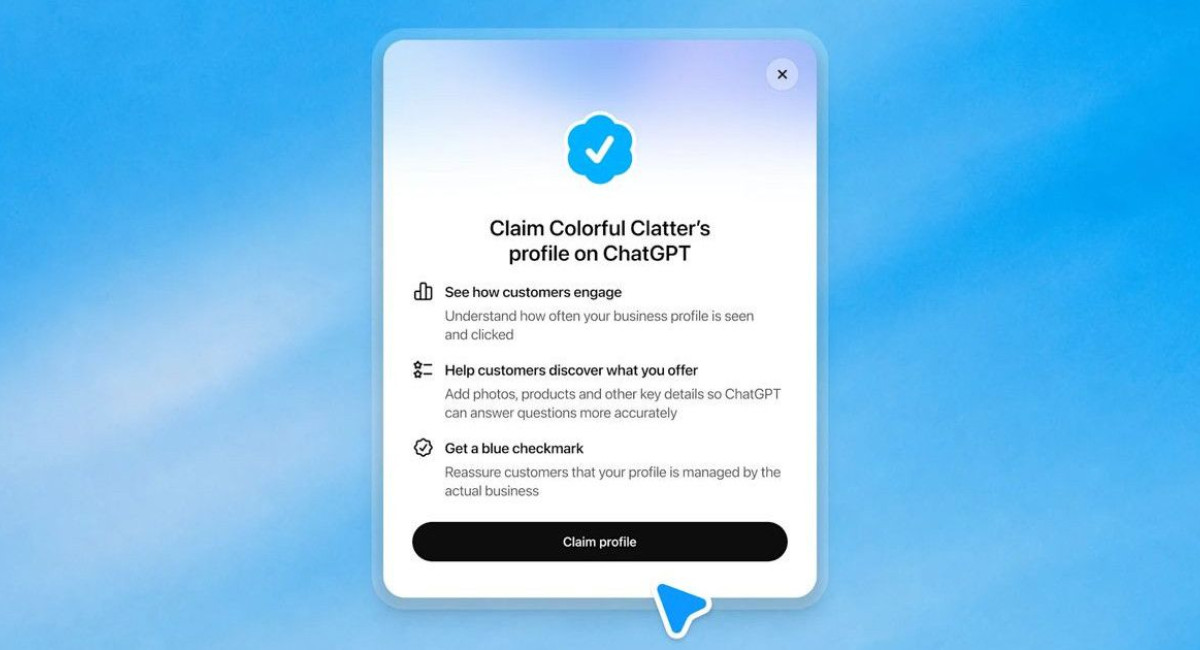
For years, establishing a verified digital storefront meant playing by the rules of Google My Business, a service that dictated how consumers discovered local shops, read reviews, and checked operating hours. OpenAI is now disrupting that status quo by transforming ChatGPT from a passive assistant into an active commercial directory. Initially tailored toward e-commerce brands and online service providers based in the United States, the Business Hub allows company owners to claim their digital presence, curate the essential information displayed to millions of users, and monitor engagement through built-in analytics.
The centerpiece of this rollout is the introduction of customizable Business Agents. Once a company completes its setup, it can deploy a dedicated AI representative trained specifically on merchant-provided data. Unlike generic chatbots that frequently stumble over specific store details, these agents are designed to act as knowledgeable digital concierges. They can answer nuanced customer inquiries, clarify return or shipping policies, and actively guide shoppers through a brand's available product catalog within the flow of a natural conversation.
Recognizing that trust is paramount in commercial transactions, OpenAI has implemented a rigorous, multi-tiered verification framework to prevent brand impersonation and spam. Business administrators must first prove ownership through official corporate email addresses and phone numbers, often supplemented by adding specific TXT records to their primary domain's DNS settings. To streamline onboarding for digital retailers, OpenAI has also integrated a direct connection with Shopify, enabling merchants to link their storefronts in just a few clicks and automatically sync inventory and product availability.
However, unlocking the coveted blue verification badge—and with it, the ability to launch a custom Business Agent—requires passing a final, stringent identity check powered by Persona. During this stage, applicants must submit government-issued identification, official corporate registration documents, and potentially biometric verification data.This strict vetting process ensures that the individual managing the profile holds legitimate legal authority to represent the brand.
According to Benji Shomair, Vice President of Monetization at OpenAI, the launch reflects a fundamental change in consumer behavior. Shoppers are increasingly bypassing traditional search bars in favor of AI platforms to discover products, weigh alternatives, and make final purchasing decisions. As ChatGPT evolves into a primary bridge connecting everyday consumers with commercial enterprises, providing businesses with native tools to manage that interaction became a logical necessity.
Importantly, the Business Hub represents a sharp departure from OpenAI's existing corporate offerings, such as ChatGPT Business and ChatGPT Enterprise. Those subscription tiers were built strictly for internal workplace productivity, offering sandboxed environments where company data is isolated and never used to train models. In contrast, the Business Hub is entirely outward-facing, focusing on public brand visibility, customer acquisition, and real-time service.
This development places immediate competitive pressure on Alphabet. While Google still commands massive distribution advantages through Google Maps and the Android ecosystem, embedding product discovery and customer support directly inside a conversational interface offers a frictionless, personalized alternative that traditional web listings struggle to match. Should this beta initiative prove successful in the United States, an expansion into European and global markets is widely expected, a move that would force the entire digital marketing and search engine optimization industry to rethink how brands connect with customers online.
MORE NEWS FOR YOU