
 Help & Support
 SEARCH
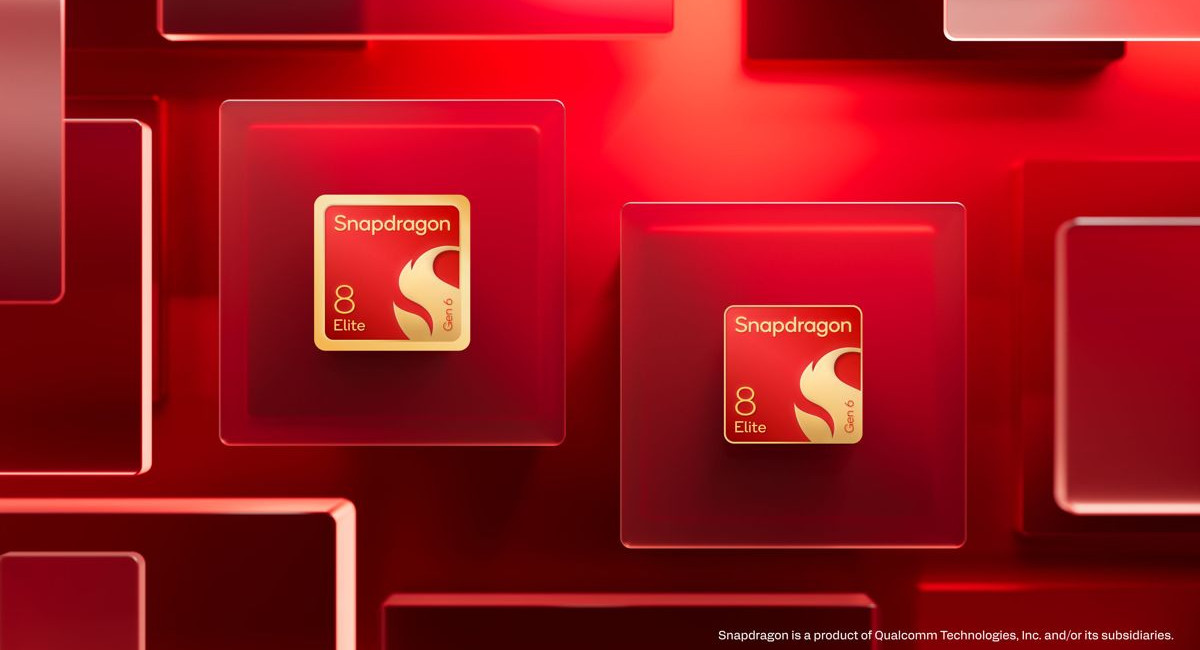
Qualcomm unveils Snapdragon 8 Elite Gen 6 and Extreme Series
SHARE IT
Qualcomm has officially rewritten its mobile silicon roadmap with the announcement of the Snapdragon 8 Elite Gen 6 and Snapdragon 8 Elite Extreme Gen 6 processors. Breaking away from its traditional single-chip flagship releases, the semiconductor giant is splitting its top-tier lineup into two distinct categories. Built on TSMC's cutting-edge 2nm process technology, both chips promise remarkable efficiency gains, but Qualcomm is reserving its most groundbreaking gaming,artificial intelligence, and media innovations exclusively for the ultra-premium Extreme variant.
Under the hood, both platforms feature a redesigned Oryon CPU architecture capable of pushing core clock speeds up to an astonishing 5GHz. The standard Snapdragon 8 Elite Gen 6 delivers a solid 10 percent boost in CPU performance over the previous generation alongside a massive 37 percent reduction in power consumption. Meanwhile, the Extreme edition pushes performance limits further with a 13 percent overall CPU boost. This high-frequency design ensures smoother multitasking, better sustained workloads, and instant responsiveness across next-generation Android flagships.
The divide between the two processors becomes most evident in graphics processing and gaming performance. The Snapdragon 8 Elite Extreme Gen 6 introduces dedicated hardware features including 18MB of Adreno High-Bandwidth Memory (HBM) and specialized Matrix Cores designed to power Adreno Neural Fusion. This custom pipeline enables real-time frame generation and AI resolution upscaling in heavy mobile titles while lowering GPU power draw by 40 percent. Surprisingly, the standard Snapdragon 8 Elite Gen 6 omits these dedicated GPU hardware modules entirely,creating a clear boundary for high-end mobile gamers.
Artificial intelligence capabilities have also received a substantial hardware transformation. Both chipsets house an upgraded Hexagon NPU paired with a dedicated Element Accelerator. The baseline model achieves a 14 percent jump in NPU speeds and a 20 percent improvement in AI efficiency per watt. However, the Extreme model ramps up neural processing by 35 percent and adds 50 percent more shared memory. This added capacity allows the Extreme variant to execute complex Mixture-of-Experts (MoE) AI models with up to 30 billion parameters directly on the device,eliminating reliance on cloud servers for responsive, private AI tasks.
Mobile videography receives the most significant upgrade with the Extreme variant, which introduces cinema-grade capabilities previously unseen on mobile hardware. The top-tier chip supports native 8K video recording at 60fps and 4K slow-motion capture at 240fps. It also adds hardware decoding for Versatile Video Coding (VVC) and encoding support for Advanced Professional Video (APV), cutting playback energy consumption by up to 55 percent. The standard Gen 6 lacks these advanced camera features and hardware codecs altogether, leaving high-end media creation tools exclusively to smartphones using the Extreme tier.
Global smartphone manufacturers are already preparing to launch devices powered by the new silicon. Brands including Xiaomi, HONOR, iQOO, Motorola, OnePlus, OPPO, REDMAGIC, Redmi, and vivo have confirmed upcoming flagship models featuring the chipsets. Led by early announcements like the Xiaomi 18 series, Qualcomm's dual-flagship strategy sets a high benchmark for on-device processing power, sophisticated AI integration, and professional mobile videography in upper-tier Android hardware.
MORE NEWS FOR YOU