Help & Support
SEARCH
Samsung overhauls SmartThings to slash latency and tackle offline blindspots
SHARE IT
Smart home environments are transitioning toward greater autonomy and network resilience as Samsung rolls out a comprehensive update to SmartThings, its flagship connected living platform. Currently supporting roughly 470 million registered accounts and working in tandem with over 430 certified partners within the Works with SmartThings framework, the ecosystem is shifting its focus toward reliable operation, proactive home insights, and direct hardware communication.
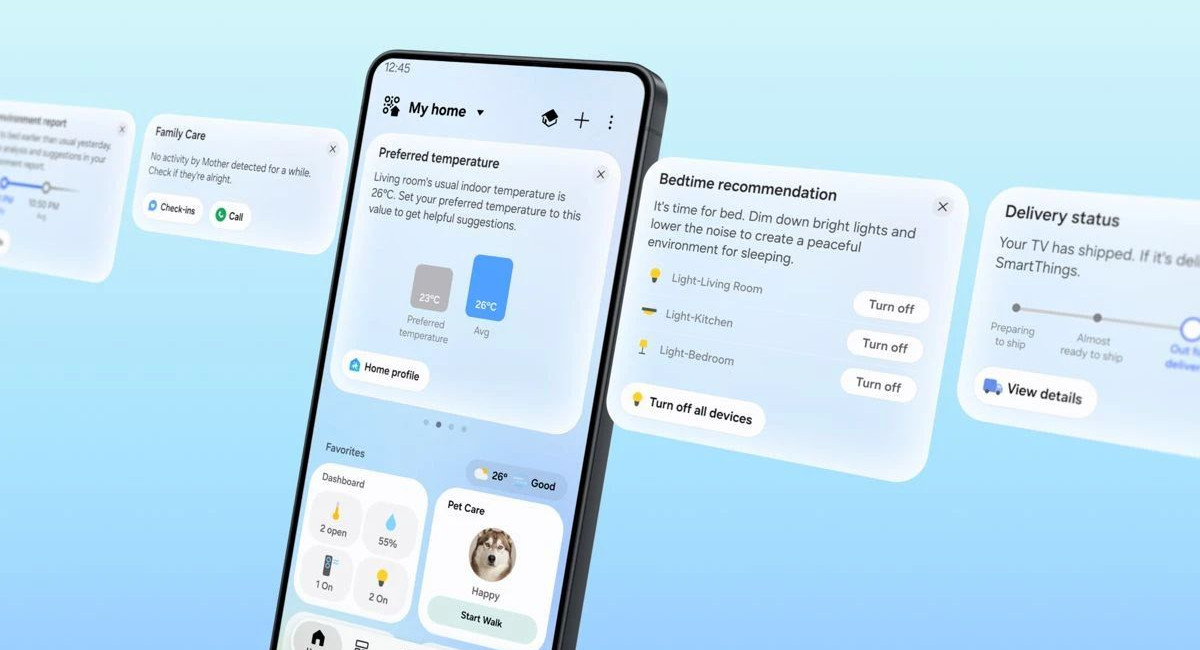
The introduction of SmartThings Now spearheads the redesign of the main interface, occupying prime digital real estate directly atop the Home tab. This front-facing evolution reflects an intentional pivot toward contextual automation rather than passive controls. According to Jaeyeon Jung, executive vice president and head of the SmartThings team within Samsung Artificial Intelligence Platform Center, the goal is to eliminate friction so people spend less time digging through menus to trigger basic commands.
Driving this change is Home Insight, an adaptive analytics engine that evaluates ongoing routines and suggests contextual adjustments based on behavioral patterns. A practical manifestation of this logic appears in Family Care,where the system monitors whether a vulnerable household member, such as an elderly relative, has ceased interacting with their usual devices for an extended window. When unusual dormancy occurs, caregivers receive an urgent,dedicated card loaded with direct outreach shortcuts.
Everyday location tracking works similarly to reduce physical touchpoints. As residents approach their neighborhood boundaries, the software detects the geo-fence transition and prompts them to illuminate their living spaces before opening the front door. Once a user confirms this proactive prompt, the system invites them to turn the manual action into an automated sequence. Routine cleanup operates quietly in parallel: the software analyzes weekly habits,suggesting adjustments to dashboard favorites, such as shelving climate control shortcuts as winter settles in.
The visual overhaul of the Home tab restructures user navigation around customized service cards, dynamic device groupings, and interactive overview panels. Aligned with Samsung One UI visual guidelines, a newly added floating bar stays anchored near the bottom edge of the display, prioritizing one-handed reachability on modern large-screen smartphones. A dynamic Live Wallpaper element rounds out the interface, subtly shifting its color palette and contrast to mirror the progression of day and night.
Beyond UI refinements, the platform introduces an architectural shift toward local control. When a mobile controller and a SmartThings Hub share the identical local Wi-Fi subnet, incoming signals bypass external cloud servers entirely.By keeping execution within the home perimeter, response times drop by approximately 30 percent, and core domestic operations remain fully functional during regional internet outages. Seamless background switching intelligently determines whether to execute actions via local routing or remote cloud relays based on real-time device proximity. To smooth out transient errors, a dedicated offline diagnostics view pinpoints hardware bottlenecks and assists in rejoining dropped hardware to the mesh.
Interoperability also takes a tangible leap forward with the integration of the Matter 1.6 specification established by the Connectivity Standards Alliance. Through this release, SmartThings expands its functional footprint across four critical hardware verticals: real-time energy metering devices, specialized architectural closures like motorized garage barriers or perimeter gates, intelligent lawn irrigation systems, and soil sensors. This expansion allows environmental readings and utility usage data to seamlessly blend into broader household automations.
In essence, the upgrade marks a decisive departure from the cloud-reliant, reactive nature that long characterized consumer automation. By fusing responsive edge communication with predictive routines and broad multi-brand support, the platform presents a mature, self-contained architecture suited for dependable daily use.
MORE NEWS FOR YOU