Help & Support
SEARCH
WhatsApp takes on video conferencing giants with account-free calling
SHARE IT
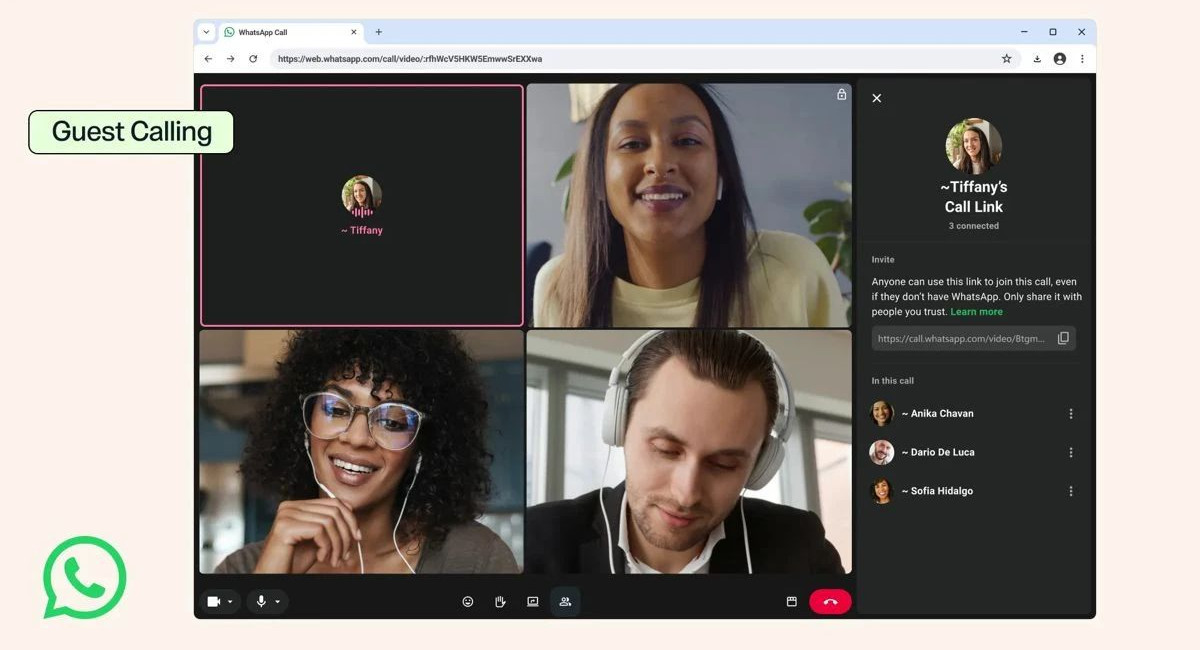
Meta is making a decisive push to redefine digital communications by introducing a feature that allows people to participate in WhatsApp voice and video calls without ever setting up an account. By removing its longstanding requirement of registration tied to a mobile phone number, the messaging platform is directly challenging established videoconferencing leaders. This strategic adjustment aims to lower barriers to entry, making digital meetings substantially more frictionless for casual and professional users alike.
The mechanics of this new system are engineered around simplicity and cross-platform accessibility. Registered users generate a unique session link within the application, which can be transmitted through text messages, emails, or alternative communication channels. When a recipient opens the link, the call loads immediately inside any standard web browser, including Google Chrome, Apple Safari, Microsoft Edge, or Mozilla Firefox. The guest is merely prompted to enter a display name so other callers can identify them. There is no software installation required, no verification procedure, and no administrative hurdle before getting started.
Security remains a primary focus of this rollout. Meta has extended its standard end-to-end encryption protocols to encompass web-based guest participants. This technical integration ensures that voice, video feeds, and shared screen content remain shielded from external interception, matching the strict confidentiality standards applied to native app conversations. By maintaining this cryptographic protection for anonymous or transient guests, the company seeks to build institutional and individual confidence in the web-based utility.
Beyond accessibility, the platform is introducing a compelling competitive proposition by eliminating time constraints on these group sessions. Traditional solutions in the marketplace have historically placed strict limitations on unpaid tiers. For instance, Zoom imposes a forty-minute ceiling on complimentary group calls, while Google Meet restricts equivalent interactions to one hour before requiring paid subscriptions or automatic disconnections. In contrast,WhatsApp is offering these web sessions completely free of charge, with no artificial time boundaries or hidden service tiers.
This tactical opening places WhatsApp in head-to-head competition with corporate stalwarts like Zoom, Google Meet,and Microsoft Teams. Historically, Meta's messaging tool dominated everyday social chats and family interactions,leaving structured workplace meetings and educational workshops to platforms that specialized in browser-based invitations. By adding essential collaboration utilities, such as screen sharing, alongside uncapped call lengths,WhatsApp offers an attractive alternative for freelancers, educational groups, and small businesses seeking reliable communication tools without recurring software costs.
The broader implications of this development highlight an intensifying battle across the unified communications sector.By transforming an application used by billions into an open web portal for anyone with an internet connection, Meta is bridging personal messaging and enterprise utility. If adoption spreads among remote teams and informal organizations, competitors may face growing pressure to adjust their entry-level subscription models and eliminate restrictive restrictions on everyday digital collaboration.
MORE NEWS FOR YOU