 Help & Support
 SEARCH
Apple Watch Series 12: Precision biometrics and premium aesthetics
SHARE IT
Apple has officially unveiled the Apple Watch Series 12, signaling a notable pivot toward real-time biometric precision and refined industrial design. Breaking away from the incremental hardware tweaks of recent years, the tech giant is positioning its flagship wearable as an indispensable health-tracking powerhouse. At the core of this upgrade is a reconstructed sensor architecture known as the Health Sensing System, engineered from the ground up to offer unprecedented data granularity for health-conscious users and fitness enthusiasts alike.
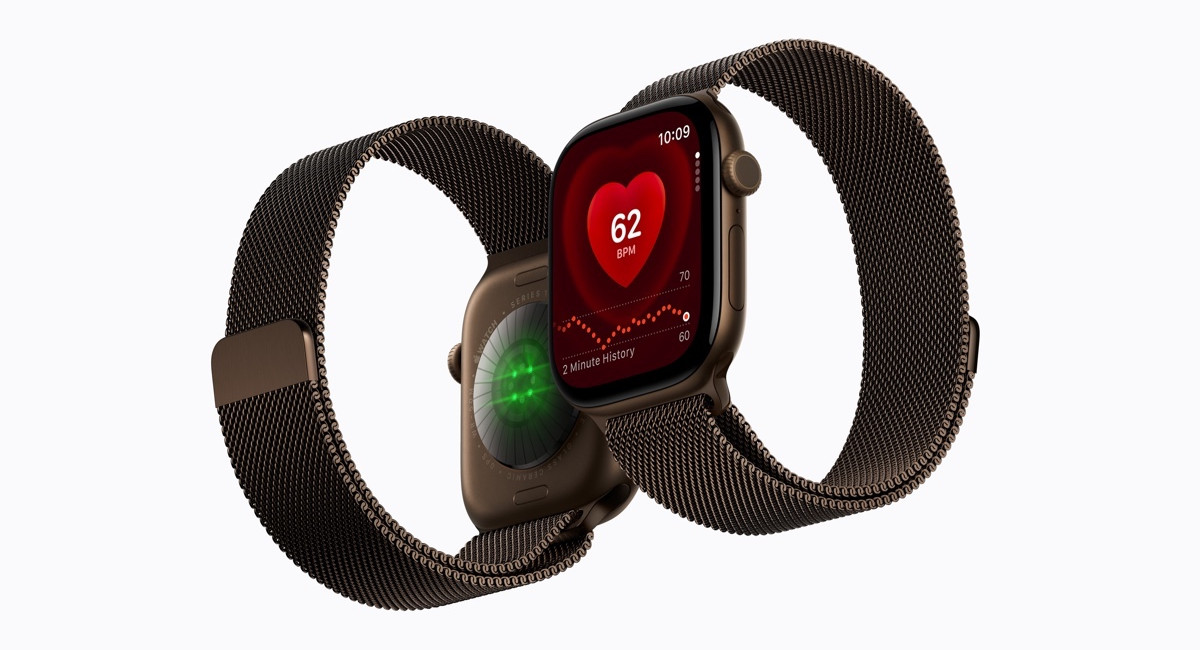
The hardware transformation begins with the optical heart rate sensor. By embedding larger, significantly more energy-efficient green LEDs, the Apple Watch Series 12 transitions from periodic sampling to continuous tracking, measuring heart rate every five seconds throughout the day. This data collection feeds directly into watchOS 27, which leverages Apple Intelligence to contextualize physiological metrics. Beyond continuous tracking, the device drastically increases Heart Rate Variability (HRV) sampling—up to 24 times more frequently than prior generations. This allows the system to differentiate between Recovery HRV, designed to pinpoint immediate daily stress, and Overall HRV, which monitors long-term cardiovascular performance.
Central to the user experience is Readiness, an algorithmically driven metric that attempts to translate complex body diagnostics into actionable daily guidance. By synthesizing sleep scores, recent athletic load, and baseline physiological signals, the feature assigns an overall body readiness score from 0 to 10. Rather than requiring users to decipher raw medical metrics, the system offers straightforward recommendations such as "Recover," "Pace Yourself," or "Go For It." Developed in collaboration with exercise scientists and informed by data from the Apple Heart and Movement Study, this feature aims to eliminate guesswork around physical fatigue and recovery management.
Complementing these features, the updated Health app on iPhone introduces the Longevity tab alongside a Health Age calculation, providing users with insights into how their biometric performance compares against their chronological age. Meanwhile, the new Daytime Vitals view allows seamless toggling between nighttime physiological trends and daytime measurements, enabling early detection of bodily shifts before they manifest during sleep.
Under the hood, the wearable is powered by the new S11 silicon chip, which delivers the processing power required for complex algorithms and local AI workloads. The chip enables upcoming Audio Intelligence features slated for release later this year via software update. These privacy-focused capabilities assist users in remembering key conversation details and maintaining awareness of environmental sounds. Furthermore, Apple engineers have overhauled the step-tracking mechanism, utilizing advanced machine learning models to ensure higher distance accuracy whether walking outdoors or running on a treadmill.
In terms of design, Apple retains its recognizable rectangular chassis while expanding its material offerings. Alongside standard aluminum choices in dark bronze, black, light gold, and space gray, the lineup includes titanium variants in radiant gold and natural finishes. Marking a triumphant return is the premium ceramic edition, available in pearl white and night blue. For the aluminum entry models, durability gets a boost with Ceramic Shield 2 front glass, which offers 60 percent greater scratch and shatter resistance compared to legacy Ion-X glass.
Power management receives modest refinements. Despite the heavy computational load of continuous sensing, the device maintains a 24-hour mixed-use battery life, with continuous outdoor workout tracking extending by 25 percent to reach 10 hours. Charging speeds have also seen an upgrade: a 15-minute session on the magnetic fast charger supplies 12 hours of operational power.
MORE NEWS FOR YOU