 Help & Support
 SEARCH
Google Images redefines search for its 25th anniversary
SHARE IT
To mark the 25th anniversary of Google Images, Google has announced a sweeping overhaul of its visual platform. Rather than merely cataloging existing web graphics, the service is transforming into a generative powerhouse powered by advanced artificial intelligence.
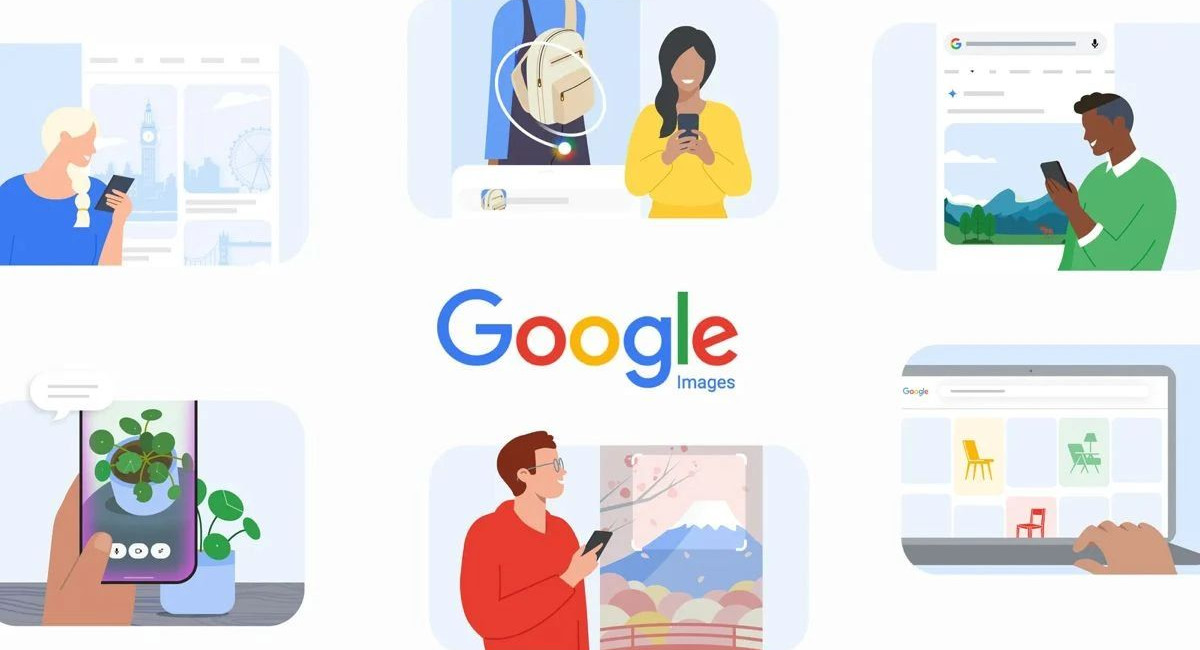
This upgrade represents more than a cosmetic facelift; it is a fundamental restructuring of the user experience. The milestones unveiled for the anniversary include a dynamic, customized layout for desktop users, native text-to-image creation integrated into AI Overviews, multi-object recognition capabilities, and a highly sophisticated search box. This integration aims to bridge the gap between discovery and creation, cementing the role of multimodal artificial intelligence in daily internet utility.
For desktop users, the change is immediately apparent upon opening the platform. The traditional static grid of search results is making way for an immersive, real-time gallery that learns and adapts to individual browsing patterns. As users interact with the web and save visual ideas, the system automatically curates this content into personalized Collections. Displayed as distinct tabs at the top of the interface, these curated spaces offer a fluid browsing rhythm that echoes content discovery networks like Pinterest, facilitating seamless returns to previous search sessions.
Perhaps the most significant leap forward is the transition of Google Images from a discovery index to a creative engine. Historically, the platform could only surface images that already existed somewhere on the internet. Now, if a user has a highly specific concept that cannot be found via standard indexing, artificial intelligence will step in to build it from scratch. By integrating image generation into the central search ecosystem, Google utilizes its latest generative model, Nano Banana, to turn text prompts into high-resolution custom graphics in a matter of seconds.
Looking back, the history of this digital tool highlights just how much consumer demand dictates technological progress. The service was born in July 2001, sparked by a cultural phenomenon when millions of internet users scrambled to find photos of Jennifer Lopez wearing her famous green Versace gown at the 2000 Grammy Awards. The massive surge in search volume proved that the public wanted direct access to visual media rather than text hyperlinks, prompting the launch of a dedicated image search engine.
Since that initial launch, the technology has evolved through several breakthrough eras. The introduction of Similar Images in 2009 allowed the underlying algorithm to analyze pixel data and color composition rather than relying strictly on textual descriptions. By 2011, Search by Image flipped the equation entirely, enabling users to upload an image file or a URL to trace its original source. The launch of Google Lens in 2018 brought computer vision to mobile screens, turning smartphone cameras into real-time tools for object recognition and text translation.
Recent years have accelerated this trend toward total multi-modality. In 2022, Multisearch allowed users to combine text and images simultaneously, while 2024 saw the introduction of Circle to Search, a gesture-based tool currently active on hundreds of millions of Android devices. The subsequent rollouts introduced complex visual parsing capabilities capable of breaking an image down into multiple sub-queries, alongside live video interaction to troubleshoot physical objects in real time.
The current phase of this technological evolution pushes these capabilities even further. The latest upgrades to Circle to Search introduce Multi-Object Recognition, allowing the algorithm to isolate and analyze multiple different items within a single frame simultaneously. Concurrently, the new Intelligent Search Box supports bulk multi-image uploads coupled with complex textual questions. While these next-generation tools are debuting gradually for English-language users in the United States, they lay the groundwork for a broader rollout across global markets, signaling a future where searching the web is as much about creating the world as it is about finding it.
MORE NEWS FOR YOU