
 Help & Support
 SEARCH
Google retreats on AI health summaries following accuracy alarm
SHARE IT
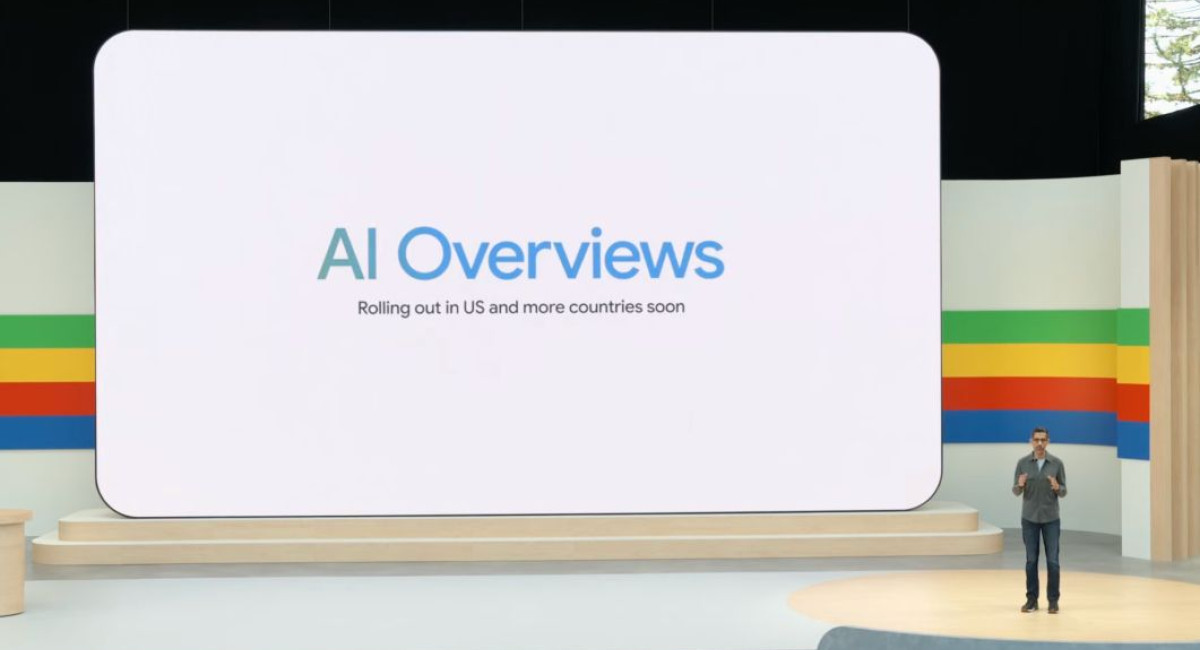
In a significant shift regarding the deployment of artificial intelligence in sensitive information sectors, Google has quietly disabled its AI Overviews feature for specific medical search queries. This decision comes in the immediate wake of an investigative report by The Guardian, which highlighted that the search giant’s AI-generated summaries were providing users with misleading, oversimplified, and potentially dangerous health information. The move underscores the growing friction between the rapid integration of generative AI into everyday tools and the critical need for absolute accuracy in matters of public health and safety.
The controversy centers on how Google’s AI Overviews, a feature designed to provide quick, synthesized answers at the top of search results, handled complex medical questions. The investigation revealed that for certain queries, the AI failed to provide the necessary nuance required for medical interpretation. A primary example cited involved users searching for the normal range of liver blood tests. The AI returned a static set of numerical values, presenting them as a definitive standard. Medical experts were quick to point out that such a presentation is fundamentally flawed because “normal” ranges are highly variable and dependent on a multitude of individual factors, including the patient’s age, sex, ethnicity, and nationality. By omitting these crucial variables, the AI risked leading users to falsely believe their test results were healthy when they might actually indicate serious pathology, or conversely, causing unnecessary panic over normal variations.
Following the publication of these findings, Google acted to suppress the AI Overviews for the specific queries flagged in the report, such as questions about liver blood test ranges and liver function tests. However, the response was reactive rather than systemic. Reporters and analysts noted that while the exact phrases highlighted by The Guardian no longer triggered an AI summary, slight variations of those queries—using medical abbreviations or different phrasing—continued to generate the contested AI responses for some time. This game of whack-a-mole highlights the difficulty in policing the output of large language models that generate text dynamically rather than retrieving static, vetted documents.
The investigation was not limited to liver function tests. It also uncovered disturbing inaccuracies regarding advice for cancer patients and those seeking mental health support. In one particularly egregious instance, the AI advised people with pancreatic cancer to avoid high-fat foods, a recommendation that contradicts standard medical advice for many patients suffering from that condition, who often struggle to maintain weight and require high-calorie diets. Such errors demonstrate the peril of an AI system that statistically predicts the next word in a sentence without truly “understanding” the medical context or the gravity of the advice it dispenses.
Google’s official stance on the matter has been defensive yet compliant in action. A spokesperson for the company stated that they do not comment on individual removals of search features but emphasized that they are constantly working to make broad improvements to the system. The company also claimed that an internal team of clinicians had reviewed the examples provided by the investigation and concluded that in many instances, the information was not factually inaccurate and was supported by high-quality websites. This defense, however, misses the core criticism from medical professionals: that medical accuracy is not just about facts in isolation, but about the context in which those facts are presented to a layperson.
Medical organizations have reacted with a mixture of relief and continued apprehension. Vanessa Hebditch, a representative from the British Liver Trust, welcomed the removal of the misleading summaries but warned that the broader issue remains unresolved. The fear is that as long as AI attempts to summarize complex health data without the oversight of a qualified professional, the risk of misinformation persists. Similarly, the Patient Information Forum described the removal as merely a first step, noting that trust in health-related search results is fragile and easily eroded by such blunders.
This incident serves as a stark reminder of the limitations of current generative AI technologies. While these models excel at creative writing and coding, their application in high-stakes fields like medicine requires a level of reliability and context-awareness that they have yet to consistently demonstrate. As Google continues to refine its search algorithms, the balance between providing instant, convenient answers and ensuring user safety remains a precarious tightrope. For now, the tech giant appears to be conceding that for certain medical questions, no answer is better than an AI-generated one.
MORE NEWS FOR YOU