Help & Support
SEARCH
Google transforms Gemini Into an all-in-one workspace
SHARE IT
Google has rolled out a major upgrade to its Gemini platform, bringing direct document creation, previewing, and full editing capabilities straight into the conversational interface. Announced on October 31, 2026, this update removes the friction of switching between external applications by allowing users to build and refine Google Docs, Google Sheets, and PDFs without ever leaving their chat window.
For years, working with generative AI meant dealing with fragmented outputs that required constant copying and pasting into separate word processors or spreadsheet tools. Google’s revamped interface changes that workflow entirely. Users can now natively generate, format, and manage a wide spectrum of file types—including presentations, Markdown files,plain text documents, and raw source code—directly within Gemini. While PDF viewing and basic management are supported seamlessly across both desktop browsers and mobile apps, full creation and editing capabilities for the remaining file formats are currently exclusive to the web browser experience on desktop computers.
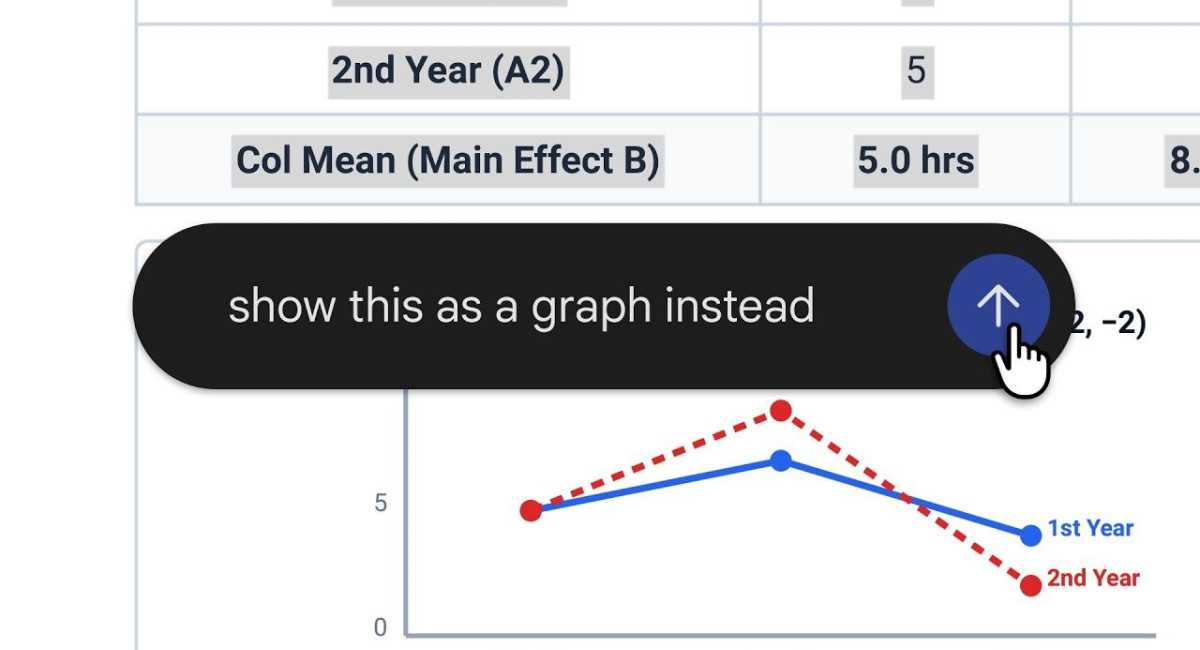
The standout feature of this release is a full-screen workspace designed for surgical, interactive revisions. Rather than forcing users to regenerate an entire document just to fix a minor phrasing issue, Gemini now lets people highlight specific sections of text or data and issue targeted, natural-language commands. A user can select a single paragraph to adjust its tone, reformat a section, or highlight a table of raw numerical data and instruct the AI to instantly convert it into a clean, readable visual chart. All of these adjustments take place inside the live document before the final version is saved directly to Google Drive.
This upgrade builds upon groundwork Google laid earlier in the year, when Gemini gained the ability to generate downloadable files but lacked a unified space to dynamically edit them. Previously, Google Workspace users experienced AI assistance primarily through the Gemini side-panel inside Google Docs, where the model acted as a secondary writing companion. Moving the entire document-editing lifecycle into the central Gemini chat represents a deliberate strategic shift. Instead of serving as a mere add-on to traditional office software, Gemini is now positioned as the primary starting and finishing hub for complex academic and professional projects.
The broader generative AI industry has been steadily converging toward this exact paradigm, recognizing that professionals need tools capable of handling structured outputs without breaking their creative or analytical momentum.Anthropic set an early benchmark in this space with Artifacts for Claude, introducing a dedicated side-by-side window where users could view, modify, and interact with code, documents, and presentations alongside their ongoing conversation. OpenAI followed a similar path with the launch of Canvas for ChatGPT, giving writers and developers an isolated interface tailored for iterative editing and version control.
Facing intensifying pressure from these rivals, Google is leaning heavily into its strongest competitive moat: the deeply entrenched global adoption of Google Workspace across enterprises, schools, and everyday consumers. Because Gemini communicates natively with Google Docs and Google Sheets, users never have to worry about exporting work into clunky or incompatible file formats. Every generated document maintains full structural integrity, saves immediately to Google Drive, and is instantly ready for real-time team collaboration.
The new file-editing suite is currently rolling out gradually to users worldwide. By unifying conversational AI with deep document manipulation, Google is offering a substantial productivity boost for anyone relying on artificial intelligence to streamline their daily digital tasks.
MORE NEWS FOR YOU