 Help & Support
 SEARCH
Google Translate brings Live Translation to any headphones
SHARE IT
Google is introducing a significant shift in how we communicate across languages by "unlocking" its live translation feature for all headphones, regardless of the manufacturer. Until recently, this capability was largely the privilege of Pixel Buds owners, creating a closed ecosystem that excluded the vast majority of users. Now, these technological "silos" are collapsing, allowing any wired or wireless pair of headphones to function as a simultaneous interpretation tool.
The "Heart" of the Change: Gemini 2.5 Flash
Behind this development lies not just a policy shift, but a substantial technological upgrade. Google Translate now integrates the capabilities of Gemini, and specifically the Gemini 2.5 Flash Native Audio model. This technology enables direct speech-to-speech translation in a way that surpasses the mechanical translations of the past.
The key advantage of the new model is its ability to preserve the speaker's tone, emphasis, and cadence. This means the translation reaching the user's ears no longer sounds like a robotic text reading, but closely mimics the natural flow of a real conversation. The feature supports two-way communication and continuous listening, making it ideal for both face-to-face dialogues and consuming content, such as movies or TV shows in another language.
How it Works in Practice
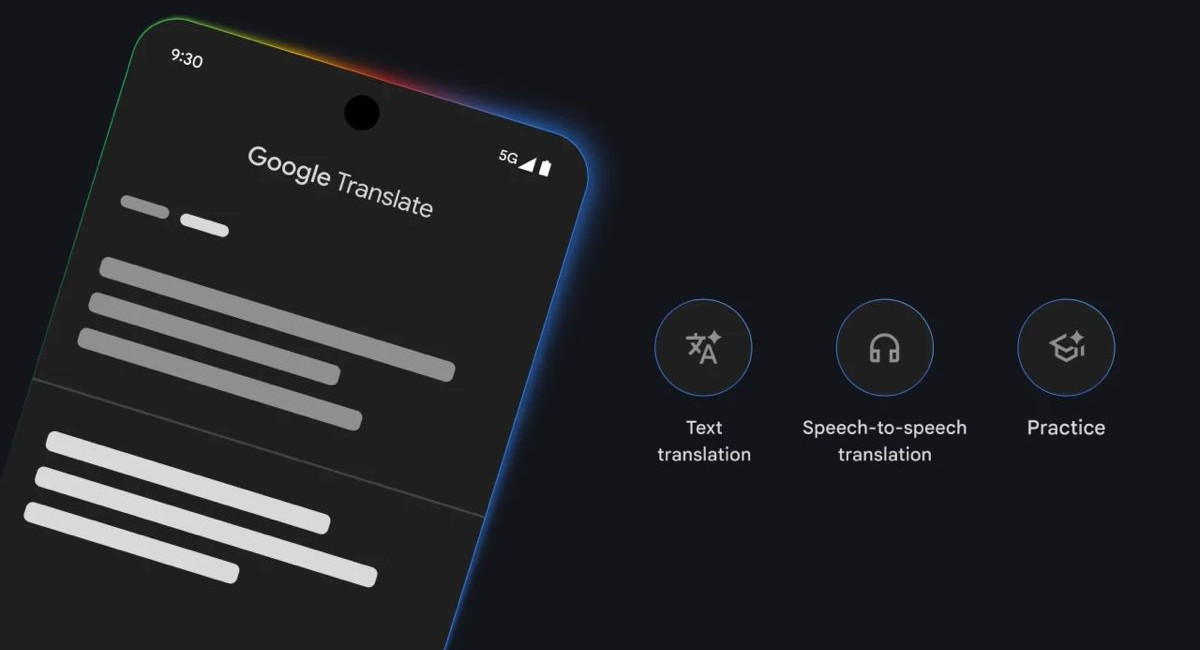
The process is designed to be immediate and streamlined, removing complexity for the end user. Within the Google Translate app, the user simply selects the "Live Translate" icon located in the bottom left corner of the screen. From that moment, the software takes over, delivering translated speech directly to the headphones in real-time.
This move by Google answers a long-standing community demand for greater flexibility, as the restriction to specific hardware had been a major hurdle for the widespread adoption of the service in everyday scenarios, such as travel or business meetings.
Beyond Words: Understanding Slang
Alongside the hardware expansion, Google is attempting to solve one of machine translation's most persistent challenges: idiomatic expressions and slang. Thanks to Gemini's advanced comprehension, the app will no longer translate phrases literally when they make no sense in another language, but will instead render their actual meaning naturally.
For instance, a local expression or proverb will be conveyed with its semantic equivalent in the target language, rather than a rigid literal translation that often causes confusion. This improvement is already available for translations between English and 20 other languages.
Learning Tools and Availability
The upgrade extends beyond translation. The app is being enriched with new language learning tools, which are expanding to 20 new countries. Users will be able to practice through customized scenarios that simulate real-life situations, while receiving improved feedback on pronunciation and usage, aided by streak systems to encourage consistency.
Regarding the availability of live translation on headphones, Google is following a phased approach. Currently, the feature is rolling out in beta for Android users in the US, Mexico, and India, covering 70 languages and 2,000 language pairs. According to the company's roadmap, expansion to more countries, as well as support for iOS devices, is scheduled for next year.
This move signals a pivot by Google toward more open solutions, where software and AI take the lead, leaving the user free to choose their preferred equipment.
MORE NEWS FOR YOU