 Help & Support
 SEARCH
Google unveils new Personal Intelligence feature that connects your digital life
SHARE IT
In the rapidly evolving landscape of artificial intelligence, the holy grail has always been context. Chatbots can recite encyclopedias and write poetry, but they often fail to answer simple questions about the user’s actual life because they lack access to personal data. Google is attempting to bridge this gap with a significant update to its AI ecosystem. The company has introduced a new feature set dubbed Personal Intelligence, a beta expansion for the Gemini app that promises to transform the chatbot from a generic knowledge engine into a deeply personalized digital assistant.
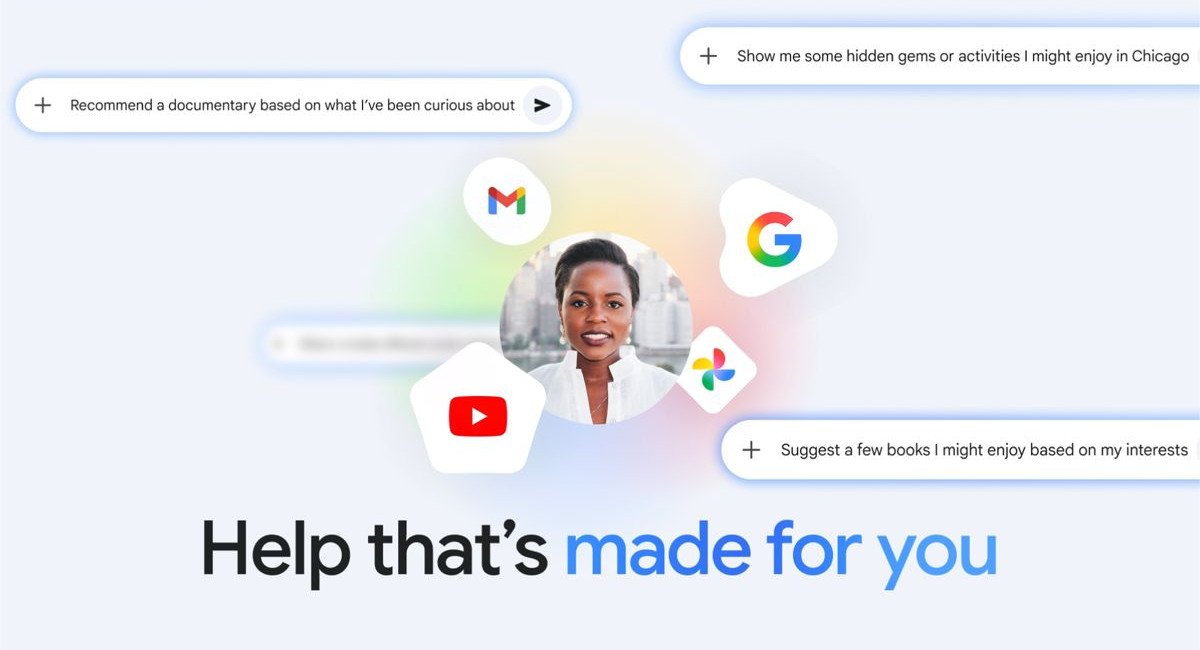
The core premise of Personal Intelligence is connectivity. For the first time, users can link the Gemini app directly to their suite of Google services, including Gmail, Google Photos, YouTube, and standard Google Search, with a single tap. This integration allows the AI to reason across different information silos. Instead of simply searching the web, Gemini can now retrieve specific details buried in an email thread, identify objects in a photo library, or synthesize information from a video history to provide a tailored answer.
Josh Woodward, the VP of Google Labs, Gemini & AI Studio, illustrated the utility of this feature with a relatable anecdote involving a trip to a tire shop. Standing in line and needing to purchase new tires for his family minivan, Woodward realized he did not know the tire size. In the past, this would have required a physical check of the vehicle or a frantic search through the owner’s manual. With Personal Intelligence enabled, he simply asked Gemini. The AI was able to analyze his data to not only find the tire specifications but also suggest options based on his driving habits, referencing family road trips found in his Google Photos to recommend all-weather tires suitable for diverse terrains.
The capabilities extended further when Woodward reached the counter and needed his license plate number. Rather than leaving the line to check the car, he queried the assistant again. Gemini successfully pulled the seven-digit alphanumeric code from an image in his Photos library and cross-referenced his emails to identify the specific trim of his vehicle. This multimodal ability—processing text and images simultaneously from personal archives—represents a significant leap in how users interact with AI assistants in real-time scenarios.
Beyond administrative tasks, the feature aims to assist with leisure and planning. The system can offer recommendations for books, television shows, clothing, and travel that are curated based on the user's actual history and interests. For example, when planning a spring break trip, the AI can analyze past vacations to avoid generic tourist traps, suggesting activities that align with the family’s specific preferences, such as an overnight train journey or specific board games, rather than a one-size-fits-all itinerary.
However, with great power comes the inevitable concern for privacy. Google has built Personal Intelligence as an opt-in experience, meaning it is off by default. Users must explicitly choose to enable it and can select which specific apps to connect. The company emphasizes that the data remains within Google’s secure environment and is not sent to third parties. Furthermore, Google states that it does not train its models directly on the raw content of a user’s Gmail inbox or Photos library. Instead, the training is conducted on the interactions—the specific prompts and responses—after sensitive personal data has been filtered or obfuscated. The goal is to teach the system how to retrieve a license plate number when asked, rather than teaching it the license plate number itself.
Despite the promise, the technology is still in its beta phase, and Google acknowledges that it is not flawless. There is a risk of what the company calls over-personalization, where the AI might draw incorrect connections between unrelated pieces of data. A poignant example provided involves the nuance of human relationships versus data points. If a user has hundreds of photos at a golf course, Gemini might assume they love golf. In reality, they might dislike the sport but frequently visit because they love their son, who plays there. The AI sees the frequency of the location but misses the emotional context. Users are encouraged to correct these misconceptions directly in the chat to refine the assistant's understanding.
Currently, access to Personal Intelligence is being rolled out to a limited group of Google AI Pro and AI Ultra subscribers in the United States. It functions across Web, Android, and iOS platforms. While it is currently restricted to personal accounts and unavailable for Workspace business or education users, Google plans to expand availability to more regions and the free tier over time. As this technology matures, it signals a shift away from static search and towards a future where our devices understand not just the world, but us.
MORE NEWS FOR YOU