 Help & Support
 SEARCH
Meta fortifies WhatsApp teen protections with new features
SHARE IT
In an ambitious move to strengthen digital safety for younger users, Meta has officially introduced an updated suite of parental controls for WhatsApp. The instant messaging platform is stepping up its efforts to protect teenagers online without compromising the core principles of privacy and end-to-end encryption. Rather than opting for direct content monitoring or total feature lockouts, this strategic release focuses on parental consent mechanisms, group activity oversight, and robust safeguards against generative artificial intelligence risks.
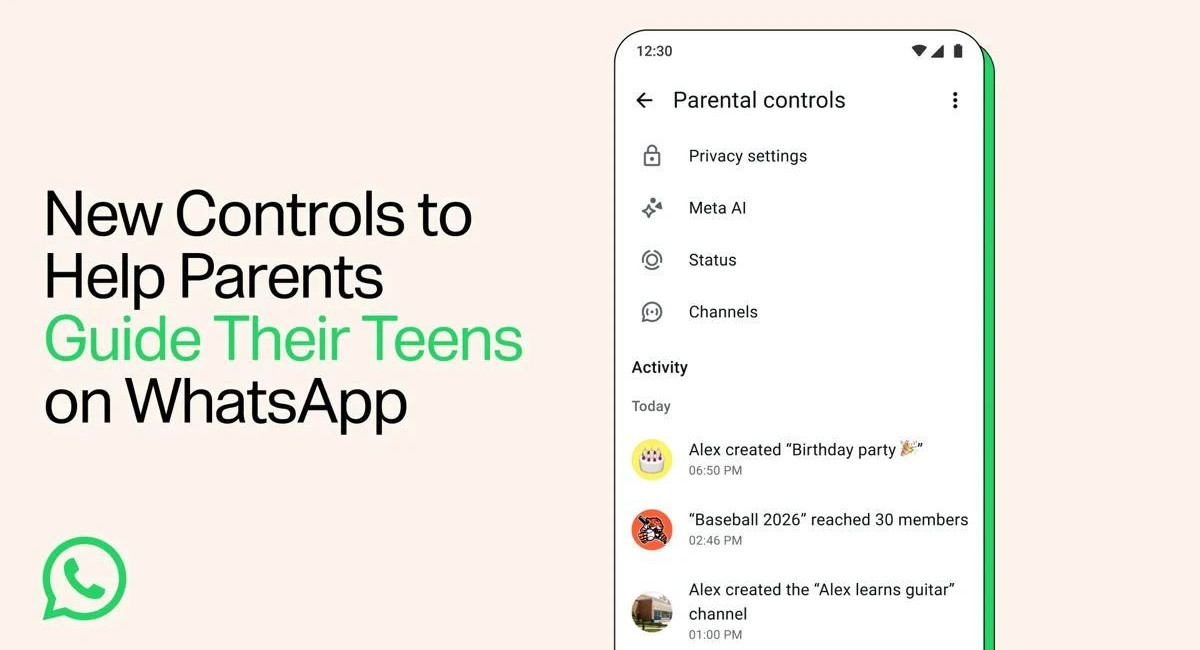
Central to this new security framework is a PIN-driven authorization system designed to prevent unauthorized modifications to privacy settings. Under this mechanism, guardians can establish tailored privacy parameters for a teenager's account directly through the application. Any subsequent attempt by the teen to relax these restrictions, such as allowing unknown contacts to view profile pictures or join unverified groups, triggers an immediate prompt requiring a unique PIN code known only to the parent. This interactive step ensures complete transparency between parents and teens while opening channels for constructive communication regarding safe browsing habits.
Beyond profile management, the update addresses the complex dynamics of group messaging, which often present safety challenges for younger demographics. To combat potential risks like online harassment, Meta has engineered a metadata-driven notification system. Parents now receive real-time alerts whenever their teenager joins or leaves a chat group. Crucially, algorithmic tracking detects sudden spikes in group membership. If a chat experiences a massive influx of new participants overnight, parents are instantly alerted, allowing them to spot potential instances of cyberbullying or coordinated group spam before they escalate.
Broadcasting features and public content consumption have also been brought under tighter supervision. Parents can now strictly regulate who gets to view a teen's temporary 24-hour Status updates, as well as control which contact updates appear on the teen's feed. Similar controls apply to Channels on WhatsApp, giving guardians the ability to filter public content streams and ensure that teenagers consume information exclusively from vetted, trustworthy sources.
Recognizing the rapid expansion of generative models across its ecosystem, Meta has paid special attention to AI interactions. The messaging service now allows parents to adjust their teen's access level to Meta AI. In addition to the default settings available for users aged 13 and above, parents can activate a specialized Limited Content mode. This restrictive filter dramatically reins in the potential generation or display of unsuitable automated responses, creating a secure boundary around AI-driven conversational tools.
Despite these extensive supervisory layers, Meta highlights that core user privacy remains untouched. The platform continues to rely on end-to-end encryption (E2EE) for all personal text messages, voice calls, and shared media files. Parents cannot read actual chat messages or listen to calls, ensuring that the fundamental confidentiality of user communications stays intact while delivering robust safety controls around social metadata and content exposure.
MORE NEWS FOR YOU