
 Help & Support
 SEARCH
Meta rewrites the search playbook with Facebook AI Mode
SHARE IT
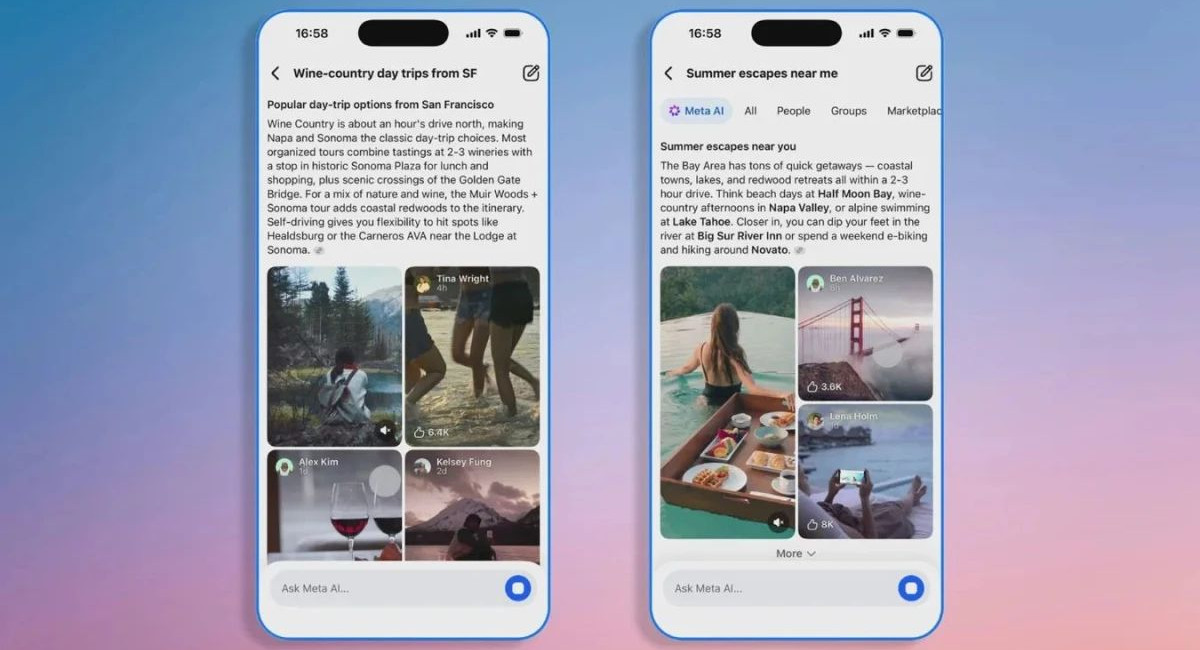
The way people navigate the digital landscape is undergoing a profound transformation. Traditional search engines, which have dominated the internet for decades, are increasingly losing ground to generative artificial intelligence platforms. Recognizing this seismic shift in user behavior, Meta is aiming to position Facebook not just as a social hub, but as a primary information destination. With the introduction of its heavily upgraded search interface, known as AI Mode, the tech giant is making a calculated move to keep users firmly embedded within its digital ecosystem, eliminating their need to venture elsewhere for practical answers and real-world recommendations.
At its core, AI Mode completely changes how users discover information inside the app. Instead of returning a standard list of blue hyperlinks or scattered individual posts, the new framework provides synthesized, direct responses to user inquiries. The underlying system accomplishes this by actively scanning, reading, and summarizing public discussions, comments, and shared experiences from the platform vast reserves of open data. By utilizing information that real people have contributed, the system generates answers that carry a distinctly human, colloquial tone, standing in sharp contrast to the sterile, algorithmic results found on the broader web.
This architectural shift alters the physics of online discovery. For instance, when a user queries the platform for recommendations regarding car rentals in Naxos, the system bypasses corporate landing pages and promotional marketing materials. Instead, the engine sweeps through recent conversations within local Greek holiday Groups, weighing the pros and cons shared by actual travelers to compile a structured, nuanced summary. This method taps into an authentic layer of crowd-sourced wisdom that is exceptionally difficult for traditional web search engines to replicate, as it draws directly from verified human interactions and ongoing communal discussions.
The technological engine driving this transformation is Muse Spark, a specialized large language model developed by Meta. Unlike the company broader Llama models, which are engineered for general-purpose tasks, Muse Spark was built with the singular mission of understanding the social web. Trained on billions of public posts and reactions, this specific model is uniquely adept at interpreting informal language, decoding local idioms, and gauging human emotion. It recognizes the subtext of emojis, identifies sarcasm in comment sections, and extracts the core sentiment from informal reviews, allowing it to deliver responses that feel like advice from a well-informed friend rather than a text encyclopaedia.
Alongside this search evolution, Meta is rolling out an array of generative media tools designed to lower the friction of content creation and sharing. A key highlight is the Wear It feature, a creative tool that allows users to instantly swap out clothing or accessories in their profile pictures and stories using generative fill technology, bypassing the need for complex editing software. Additionally, features like Smart Cutouts and AI Video Montages allow users to seamlessly remove backgrounds or compile static camera roll imagery into dynamic, professional-grade Reels with just a single tap, effectively turning the platform into an automated digital director.
Naturally, deploying artificial intelligence to analyze personal media libraries and public data assets revives long-standing concerns regarding user privacy. Meta has addressed these concerns by making camera roll integration strictly opt-in, meaning the system will not look through a device media storage unless a user explicitly grants permission, and the feature can be fully deactivated at any moment. However, the data reality remains clear for the search engine itself: anything published under a public setting serves as foundational training material for Muse Spark, emphasizing the growing importance of user awareness regarding personal privacy settings.
Ultimately, Meta latest strategy represents a bold attempt to redefine the utility of social networking. By converting casual, public community discussions into an organized, instant knowledge base, Facebook is evolving into an autonomous informational engine. Whether this approach will successfully challenge the dominance of established tech giants remains to be seen, but it fundamentally shifts the conversation around how social data can be repurposed to answer everyday questions.
MORE NEWS FOR YOU