 Help & Support
 SEARCH
Spotify brings the party to your DMs with Real-Time Listening and Jam Requests
SHARE IT
Spotify is taking a significant step to transform its platform from a solitary streaming service into a more interactive social network. In a major update rolling out this week, the company has introduced two new features embedded directly within its Messages interface: Listening Activity and Request to Jam. These additions are designed to bridge the gap between passive music consumption and active social connection, allowing users to see what their friends are playing in real-time and inviting them to join shared listening sessions with a single tap. This move underscores Spotify’s broader strategy to keep users engaged within its own ecosystem rather than having them switch to third-party messaging apps to share music links.
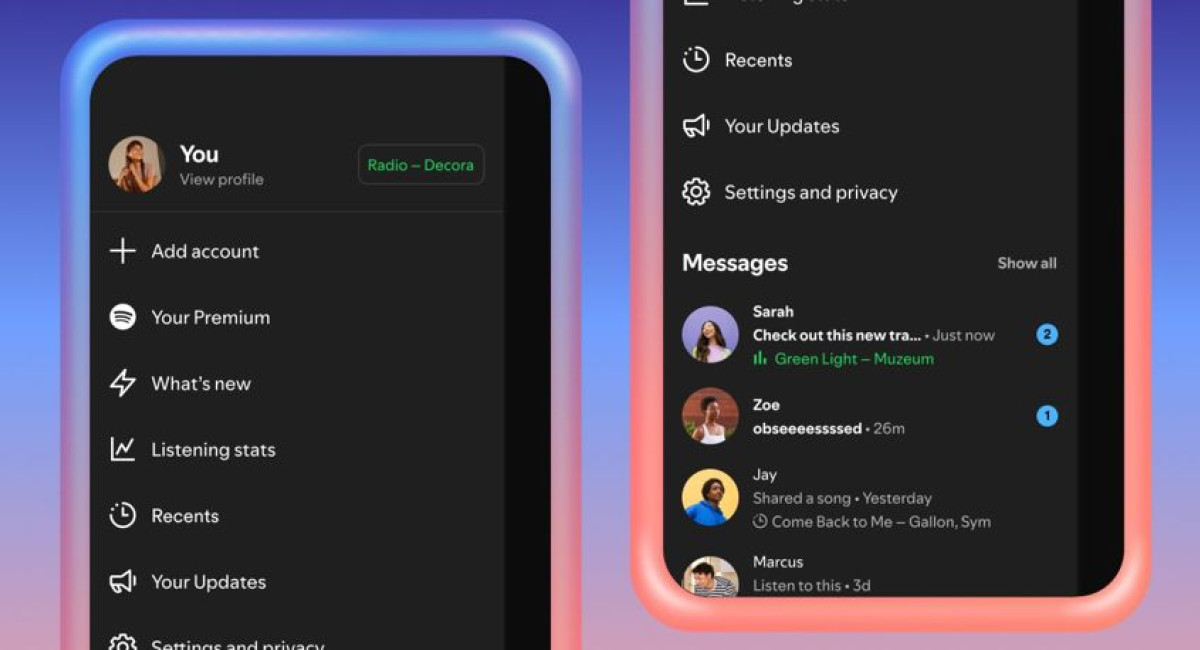
The first of these new features, Listening Activity, effectively brings the beloved desktop friend feed to the mobile experience, but with a more direct and personal integration. Unlike the passive sidebar on computers, this function lives within the Messages section of the mobile app. When enabled, it displays a user’s current audio stream at the top of their chat threads. This means that before you even type a message to a friend, you can see exactly what they are listening to at that moment. The feature is entirely opt-in, addressing potential privacy concerns by ensuring that only users who manually activate the setting will share their data. Furthermore, this activity is only visible to friends with whom a user has already established a message history, preventing strangers or distant acquaintances from monitoring listening habits.
The utility of Listening Activity extends beyond simple observation. It is built to be interactive. When a user sees a friend listening to a track, they can tap on the activity bar to immediately listen to the song themselves, add it to their own library, or react with a set of standard emojis. If a user is not currently active, the display defaults to their most recently played track, ensuring the social space never looks entirely dormant. This constant stream of context creates a digital equivalent of walking into a friend’s room and hearing what record is spinning, fostering organic conversations started by music rather than forced text interactions.
Complementing this transparency is the new Request to Jam feature, which solves a logistical hurdle that has plagued the platform’s collaborative listening tools. Previously, starting a remote Jam session—where multiple users listen to the same queue simultaneously—required coordination outside the app to determine if a friend was free. Now, because users can see via Listening Activity that a friend is already active and listening, the friction is removed. A Premium user can simply tap the Jam button in the top right corner of a chat thread to send an instant invitation. If the recipient accepts, they become the host of the session, and both parties can immediately begin adding tracks to a shared queue, listening in perfect sync regardless of their physical location.
The integration of these features represents a maturing of Spotify’s social architecture. By anchoring these tools in the Messages interface, the company is betting that music is inherently a conversation starter. The data supports this pivot; since relaunching Messages last year, users have exchanged hundreds of millions of texts, proving a strong demand for in-app communication. Request to Jam, in particular, leverages this behavior by turning a text chat into a live event. It allows for a shared experience that feels spontaneous rather than scheduled, mimicking the casual nature of handing someone an aux cord in a car.
While Listening Activity is available to all users who have access to Messages, the Request to Jam function follows Spotify’s tiered monetization model. Only Premium subscribers can initiate a request, although Free users can still join a session if invited. This distinction highlights the value proposition Spotify continues to build around its paid tier, offering enhanced social capabilities as a perk of subscription. Both features are currently rolling out to iOS and Android devices in markets where Messages are supported, with a wider global release expected by early February.
Ultimately, these updates mark a shift in how we perceive digital audio platforms. No longer just a library of files, Spotify is positioning itself as a live, breathing community. By letting users peek into each other’s headphones and seamlessly join the session, the service is trying to replicate the communal joy of music in a digital space. It turns every chat thread into a potential listening party, ensuring that even when users are miles apart, they never have to listen alone.
MORE NEWS FOR YOU