
 Help & Support
 SEARCH
Spotify Talk redefines music streaming with conversational AI
SHARE IT
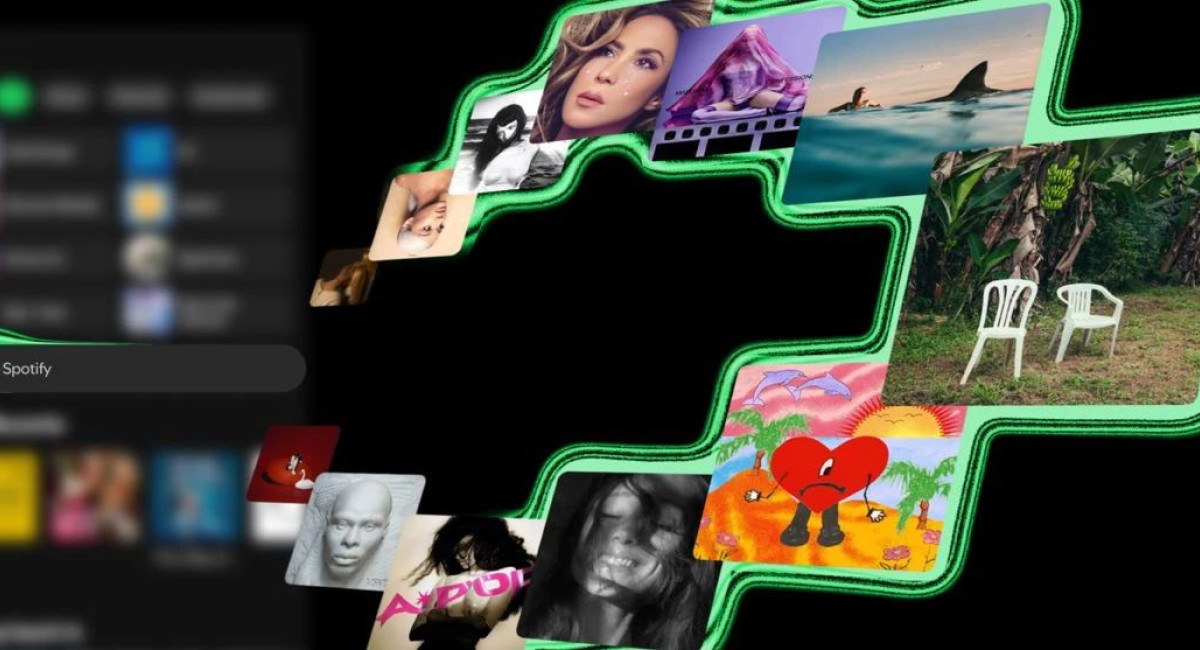
Spotify has officially stepped into the next generation of user experience with the announcement of Talk to Spotify, a highly sophisticated artificial intelligence assistant seamlessly integrated directly into the application. Operating on principles similar to ChatGPT, this new feature shifts the paradigm from passive scrolling to active, two way communication, allowing Premium subscribers to interact with their music library through natural language.
This is not merely a voice search upgrade or a simple tool for locating a specific track. The architecture behind Talk to Spotify is designed to comprehend complex, multi layered requests that incorporate variables such as mood, tempo, specific decades, and even distinct musical instruments. By leveraging advanced Large Language Models, the system operates as a responsive musical co pilot, generating tailored playlists and offering intelligent suggestions in real time. The traditional user interface is thus transformed into an interactive chat environment. For instance, a user can effortlessly request a forty minute playlist featuring alternative rock suitable for a late night drive, and the artificial intelligence will synthesize a complete, curated list in less than two seconds.
One of the most remarkable technological leaps introduced with this assistant is its contextual memory. Unlike older voice command systems that required users to start from scratch with every interaction, Talk to Spotify remembers the flow of the conversation. If the initial playlist generated by the AI does not perfectly align with the listener's preferences, they can easily issue a follow up command to refine it. A simple instruction to remove tracks featuring acoustic guitars or to increase the overall tempo is immediately understood and executed without the need to repeat the original prompt. Furthermore, the system acts as a comprehensive music encyclopedia. Drawing from extensive metadata and artist biographies, users can pose specific trivia questions, such as inquiring about the bass player on the debut album of the Arctic Monkeys, and receive instant, accurate answers.
To ensure maximum accessibility and convenience, the platform supports multimodal data entry. It processes both text inputs and voice commands with equal efficiency. By utilizing state of the art Speech to Text algorithms, the application minimizes recognition errors, even when the user is in a noisy environment like a busy street or a crowded subway. This seamless integration of generative AI is the culmination of a long term strategy for the company. The journey began a decade ago with the acquisition of Echo Nest, followed by the introduction of the AI DJ, which utilized Sonantic voice synthesis technology. Now, Talk to Spotify appears to be built upon a much deeper collaboration, likely employing variations of OpenAI models that have been specifically fine tuned on the platform's proprietary music catalog.
This rigorous fine tuning process is crucial, as it is designed to completely eliminate hallucinations. The assistant will not invent fictional collaborations between artists but will instead rely strictly on verified metadata and official song credits. To maintain optimal performance on mobile devices, including those running iOS 19 and the Android 16 beta, all the heavy computational processing is managed efficiently in the cloud. This launch is a direct response to a rapidly evolving competitive landscape, where rivals are integrating features like Apple Intelligence into Apple Music and Google Gemini into YouTube Music. However, Spotify distinguishes itself by maintaining a laser focus purely on the musical experience and pop culture, rather than attempting to serve as a generalized virtual assistant.
Addressing contemporary concerns surrounding data privacy, the company's terms of service explicitly state that conversations with the AI assistant are fully encrypted. While a subset of anonymized data may be used to further train and improve the algorithms, users are provided with a clear opt out mechanism within their privacy settings, ensuring full compliance with stringent European GDPR regulations. Talk to Spotify is currently rolling out as a public beta exclusively for Premium subscribers, with the initial launch targeting the United States, the United Kingdom, and Australia in English. For users in markets like Greece, the feature is accessible provided their application language is set to English. Full native support for Greek Natural Language Processing is actively under development and is slated for release in the fourth quarter of 2026, all without any additional cost to the existing Premium subscription tier.
MORE NEWS FOR YOU