 Help & Support
 SEARCH
Apple reinvents its voice assistant with Siri AI but Europe is left in the cold
SHARE IT
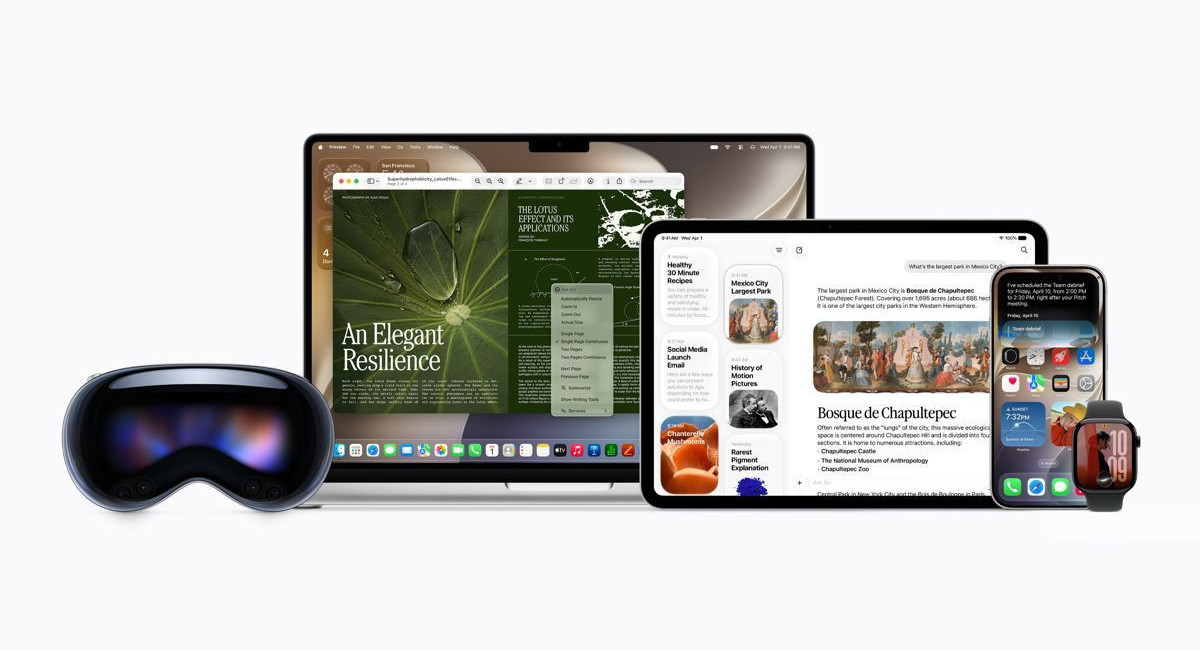
Apple has officially pulled back the curtain on its next-generation digital assistant, Siri AI, during its annual WWDC conference. This latest announcement marks a fundamental paradigm shift rather than a standard software update. Built upon the foundation of the newly introduced Apple Intelligence platform, the virtual assistant transitions from a simple, command-bound tool into a deeply integrated, context-aware AI partner. However, despite the groundbreaking capabilities showcased on stage, users across the European Union are facing a disappointing reality check regarding its initial availability.
Since its debut way back in 2011, Siri has largely operated by executing isolated, one-off commands. The newly unveiled architecture aims to completely eliminate this limitation. According to Craig Federighi, Apple’s Senior Vice President of Software Engineering, the reimagined Siri AI blends global knowledge with the local data stored on a user's device to solve multifaceted queries. The system can now maintain a continuous conversation, understanding context and nuances across prolonged interactions, a feat that sets a brand new standard for the brand’s ecosystem.
Among the standout features is the introduction of a dedicated Siri App. For the first time, users will be able to navigate through their complete prompt history, modify past inquiries, and resume prior discussions seamlessly across iPhone, iPad, and Mac. Furthermore, a new capability called Onscreen Awareness enables the virtual assistant to structurally analyze whatever is displayed on the screen. This allows the AI to pull context from active applications, meaning a user could look at a message and simply say, add this address to Maria's contact card, without having to copy or paste anything manually.
The assistant's contextual understanding goes even deeper by scanning emails, photos, calendars, and text messages to establish dynamic, real-time connections. During the presentation, Apple demonstrated a scenario where a user asks about a family member's flight arrival and the best route to the airport. In response, Siri AI cross-references incoming emails to locate the boarding pass, checks flight data online for real-time delays, and coordinates with Apple Maps to calculate travel time based on traffic. This complex process happens simultaneously, saving users from manually toggling between multiple applications. Additionally, an enhanced Visual Intelligence feature links the device's camera to the AI, allowing users to point their phones at real-world objects or landmarks like Bosque de Chapultepec to instantly retrieve historical facts or creative suggestions.
Integrating such deep personal data access naturally raises valid privacy concerns. Apple addresses this through a robust two-tiered security model. Most processing tasks and context analyses are handled locally on the device, capitalizing on the high-performance Neural Processing Units found in the A18 Pro processors of newer iPhones and M-series chips in Macs. For heavier computations that exceed local hardware limits, the system routes requests to Apple’s Private Cloud Compute. The company claims that this data is cryptographically verified to be deleted instantly after use, is never stored on servers, and is never utilized to train future AI models.
Despite the technical breakthroughs, the rollout comes with major regional constraints. The initial developer preview launches immediately, with a public beta arriving later in the year, but it will support only US English at the start. For consumers in Greece, utilizing these advanced capabilities like the Siri App, Writing Tools, or Onscreen Awareness requires switching their entire device operating system language to English.
The situation becomes even more complicated due to regulatory and corporate friction. Apple officially confirmed a major setback for the European market: Siri AI will not be arriving in Europe alongside the initial launch of iOS 27 and iPadOS 27. The delay is heavily tied to the European Union’s Digital Markets Act, which demands equal integration opportunities for third-party AI models. While EU regulators attribute the absence entirely to Apple's strategic choices, the restriction leaves European consumers waiting indefinitely. On a hardware level, when the feature does eventually roll out, it will demand substantial memory and processing power, restricting compatibility to the iPhone 17 series, iPhone 15 Pro, iPhone 16 Pro, and Apple Silicon-powered iPads and Macs.
MORE NEWS FOR YOU