 Help & Support
 SEARCH
ChatGPT launches group chats globally for everyone
SHARE IT
OpenAI is expanding ChatGPT beyond its traditional role as a one-on-one assistant by introducing group chats to users around the world. The feature, now available across the Free, Go, Plus, and Pro plans, marks a notable shift in how the chatbot can be used: not just as a personal tool, but as a shared space where groups can think, plan, and create together.
This global rollout follows a brief pilot phase in regions such as Japan and New Zealand. The company’s goal is clear: transform ChatGPT from a solitary conversational partner into a collaborative hub where friends, families, students, or teams can collectively work through ideas and tasks.
OpenAI says the new feature allows up to 20 participants in a single group conversation, with ChatGPT joining in as needed. Users in the same chat can brainstorm travel plans, co-write documents, compare options for big decisions, resolve arguments, or tackle research projects as a team. In these scenarios, ChatGPT functions almost like a helpful group facilitator—ready to search for information, summarize lengthy content, or weigh pros and cons when prompted.
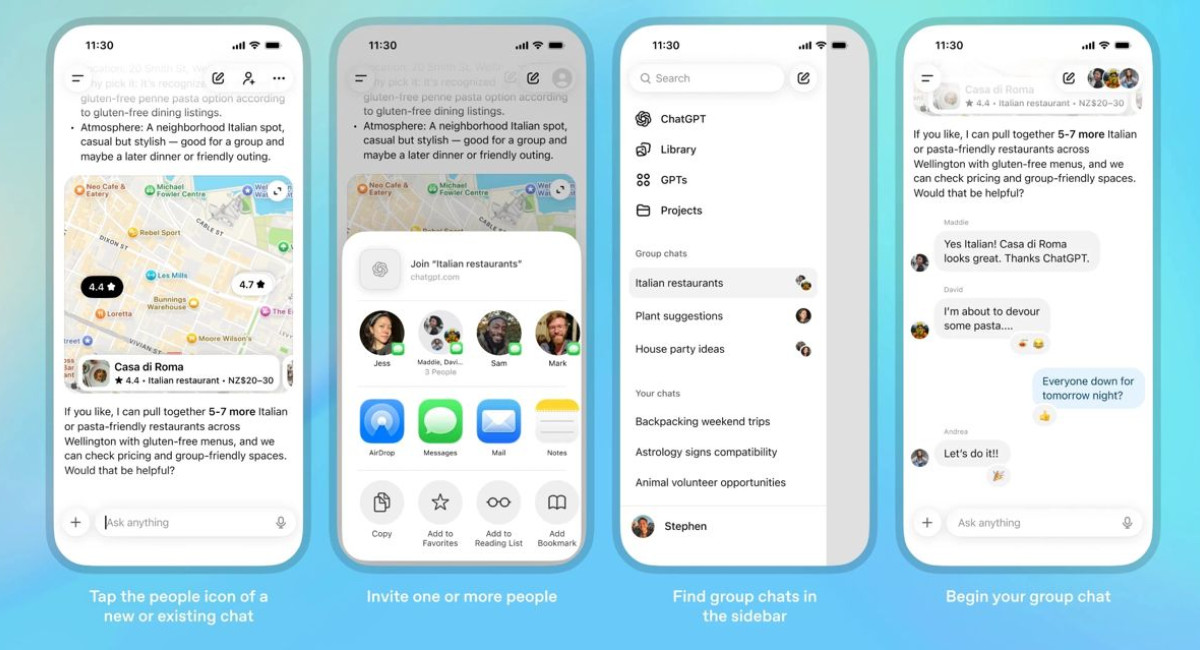
Starting a group chat is simple. Users can tap the people icon and add participants directly or share a link for others to join. Each participant is asked to create a brief profile that includes their name, username, and a photo. Importantly, OpenAI emphasizes that personal preferences and memory settings remain private to each individual. Even though everyone is participating in the same conversation, personal configuration data stays isolated.
There’s also a thoughtful detail in how the system handles group dynamics: if someone is added to a chat, the platform automatically creates a new conversation that includes them, leaving the original thread unaltered. This prevents sudden privacy issues or accidental exposure of past messages to new members.
During a group exchange, ChatGPT is designed to know when to speak up—and when to stay out of the way. It won’t interrupt unless tagged by name, letting users control the rhythm of the conversation. It can also react with emoji or reference users’ profile photos to make interactions feel more natural and lively.
With this update, OpenAI is signaling a broader ambition. The company sees these group chats as the beginning of a transition toward ChatGPT becoming a richer, more social environment. Collaboration, not just individual problem-solving, appears to be the next frontier for the platform.
MORE NEWS FOR YOU