 Help & Support
 SEARCH
Google Maps enters a new era of smart navigation
SHARE IT
For the better part of the last twenty years, navigating our world has been largely defined by the familiar blue dot on a digital screen. However, Google is now fundamentally shifting the paradigm of digital wayfinding by introducing what is undoubtedly the most significant upgrade to Google Maps in a decade. By deeply integrating its advanced Gemini artificial intelligence models into the core of the application, the tech giant is transforming its ubiquitous mapping service from a simple directional tool into a highly conversational, context-aware digital companion. This sweeping update promises to eliminate common travel frustrations and redefine how we explore, commute, and interact with our surroundings on a daily basis.
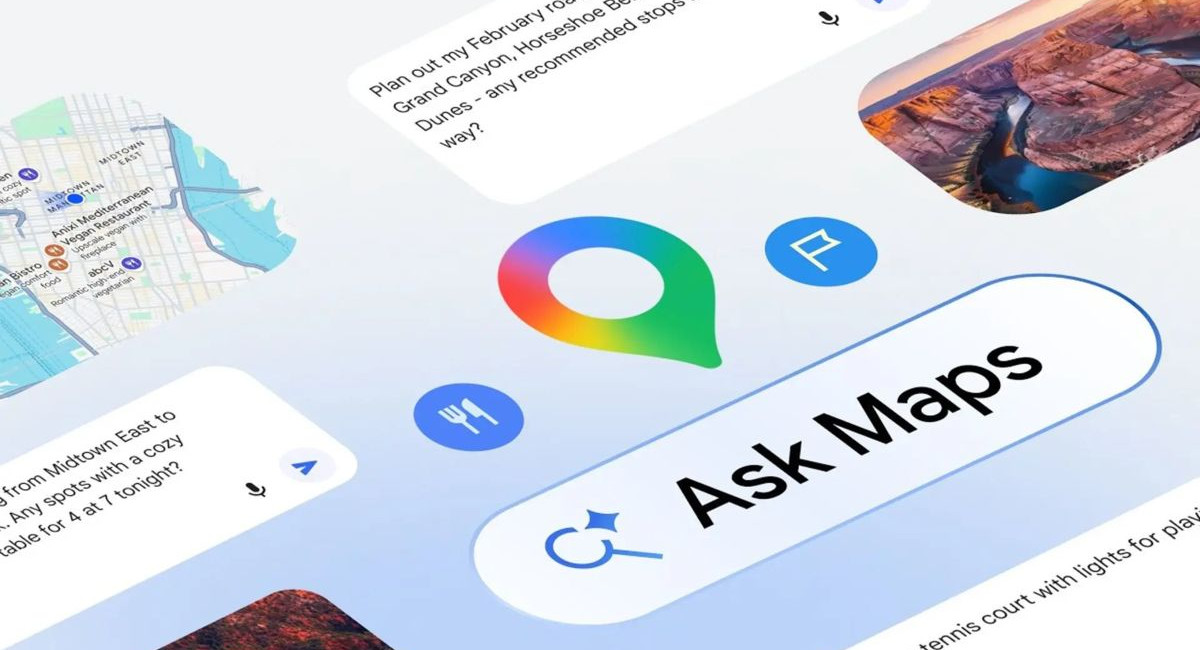
At the heart of this massive overhaul is a groundbreaking feature dubbed Ask Maps. This function essentially operates as a highly specialized chatbot embedded directly within the mapping interface, allowing users to converse with the application just as they would with a knowledgeable local guide. Instead of typing fragmented keywords, users can now pose complex, multi-layered questions in natural language. The system leverages real-time data, drawing upon an unimaginably vast repository of over three hundred million locations and community-driven reviews from more than five hundred million global contributors. If your phone battery is critically low and you need a charging spot but want to avoid long lines at a popular cafe, Ask Maps can instantly process these specific constraints and generate a tailored recommendation, complete with route visualizations and relevant imagery.
The intelligence of Ask Maps extends far beyond simply answering queries; it functions as a highly personalized concierge that understands your unique lifestyle. Google has engineered the chatbot to analyze your saved locations,previous search history, and even your specific dietary preferences when suggesting nearby dining options. This level of customization means that the application can seamlessly transition from providing directions to facilitating real-world actions. Users can effortlessly book restaurant reservations, curate lists of suggested venues for an upcoming trip, and share these customized itineraries with friends and family. Currently making its debut for Android and iOS users across the United States and India, with a web version slated for the near future, this feature builds upon the foundational technology seen in the Ask Photos assistant, marking a significant step forward in Google's artificial intelligence integration strategy.
Beyond conversational intelligence, Google Maps is finally addressing one of the most persistent and universally despised pain points in digital navigation: the inability to clearly distinguish between elevated highways and the complex web of ground-level roads beneath them. To solve this, the company is rolling out Immersive Navigation, a dramatic visual overhaul that significantly expands upon the Immersive View technology introduced a few years ago.This update brings a stunningly detailed three-dimensional perspective to the driving experience, meticulously highlighting critical infrastructural elements such as specific traffic lanes, pedestrian crosswalks, and geographical terrain. By doing so, it provides drivers with a much clearer understanding of their immediate environment, reducing the cognitive load required to decipher a flat, two-dimensional map while driving at high speeds.
The practical applications of Immersive Navigation are designed to enhance both safety and convenience on the road.As drivers approach notoriously complicated intersections or prepare for difficult lane changes, the application dynamically renders surrounding buildings as transparent, ensuring that structural obstacles never obscure the necessary route information. Furthermore, the voice guidance system has been thoroughly refined to sound significantly more natural and intuitive. When unexpected traffic forces a detour, the application no longer just blindly suggests a new path; it actively communicates the specific trade-offs involved. Drivers will be clearly informed whether an alternative route saves time but requires a toll, or if a longer path offers a more relaxing drive with less congestion. This is further bolstered by real-time, community-sourced alerts regarding sudden disruptions along the way.
The final major component of this comprehensive upgrade focuses on the often-stressful experience of arriving at an unfamiliar destination. The anxiety of the so-called last mile is mitigated through proactive environmental previews utilizing Street View imagery. Before you even arrive, Immersive Navigation provides parking recommendations and visually highlights the exact main entrance of the target building. It even explicitly indicates which side of the street you need to be on, ensuring a smooth and hassle-free conclusion to the journey. Currently rolling out to users in the United States, Google plans to steadily expand this deeply integrated visual experience to eligible mobile devices,CarPlay, Android Auto, and vehicles equipped with native Google software in the coming months.
Ultimately, this monumental update signifies a crucial turning point for Google Maps. By weaving sophisticated artificial intelligence and hyper-realistic three-dimensional rendering into the fabric of daily navigation, the company is not merely adding modern features; it is solving tangible, real-world problems that drivers and pedestrians face every day. As these capabilities become widely available, the way we perceive and move through our physical environment will undoubtedly become safer, more intuitive, and infinitely more connected.
MORE NEWS FOR YOU