
 Help & Support
 SEARCH
ChatGPT ushers a new era of AI-powered product research
SHARE IT
ChatGPT has long been a tool people turn to when they need help choosing what to buy—from comparing headphones to narrowing down laptops or searching for the right kitchen appliance. Now, OpenAI is taking that experience several steps further. With a new shopping-focused research system built directly into ChatGPT, the company aims to offer users far deeper, more structured guidance whenever they’re faced with complex purchasing decisions.
According to OpenAI, this enhanced shopping experience is powered by a specialized version of GPT-5 mini, trained through reinforcement learning to excel at analyzing products, interpreting trusted sources, and synthesizing information into clear, actionable insights. While the standard ChatGPT remains effective for quick yes-or-no questions—such as checking whether a product supports a certain feature—the new system is intended for situations where users need detailed comparisons, explanations of tradeoffs, and help identifying which products truly fit their needs.
One of the biggest changes isn’t just the AI’s ability to gather information; it’s the way it interacts with users during the process. Instead of delivering a simple list of recommendations, ChatGPT now approaches product discovery dynamically. When a user starts a complex shopping query, the system begins posing clarifying questions about budget ranges, preferred specifications, aesthetic tastes, or lifestyle details. The goal is to refine the search in real time, ensuring that the final results match the user’s priorities as closely as possible.
This tailored approach, OpenAI says, is particularly effective in product categories where decision-making is notoriously overwhelming. Electronics, beauty items, home and garden equipment, kitchen appliances, and sporting goods often come with dozens of models, endless technicalities, and confusing reviews. The new feature is designed to cut through that noise, condensing vast amounts of data from reliable sources into clean, digestible research summaries.
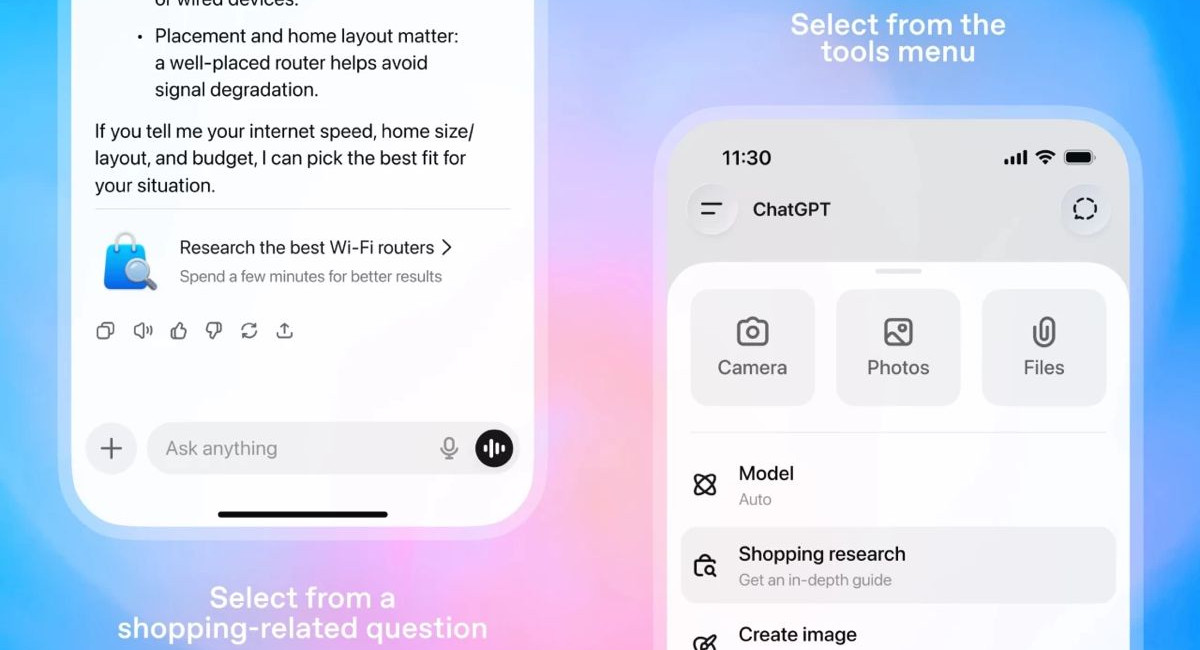
Using the tool is straightforward. When someone types a question that clearly requires in-depth consideration—like choosing a camera for wildlife photography or comparing robot vacuum models—ChatGPT automatically suggests switching to shopping research mode. Users can accept the prompt or manually activate the feature from the menu. Once activated, a visual interface appears, allowing users to explore suggestions, ask follow-up questions, and provide feedback that further tunes the recommendations.
A notable enhancement is the integration with ChatGPT’s memory feature. When memory is turned on, the shopping system can build on previous conversations. That means if a user is known to be an avid gamer and later asks about laptops, ChatGPT will immediately focus on gaming-oriented models without needing to be instructed. This personalization develops over time, making the guidance increasingly aligned with individual habits and preferences.
The rollout is beginning for all logged-in users across ChatGPT’s mobile apps and the web platform. In a rare move, OpenAI is making the tool available to everyone—Free, Go, Plus, and Pro subscribers alike. The company is also offering nearly unlimited usage throughout the holiday season, a period when many people struggle with gift buying and product comparisons. For ChatGPT Pro users, the shopping research feature also appears in ChatGPT Pulse, where it can proactively create tailored buying guides based on earlier interactions.
MORE NEWS FOR YOU