 Help & Support
 SEARCH
Claude Sonnet 5.5 is redefining enterprise efficiency
SHARE IT
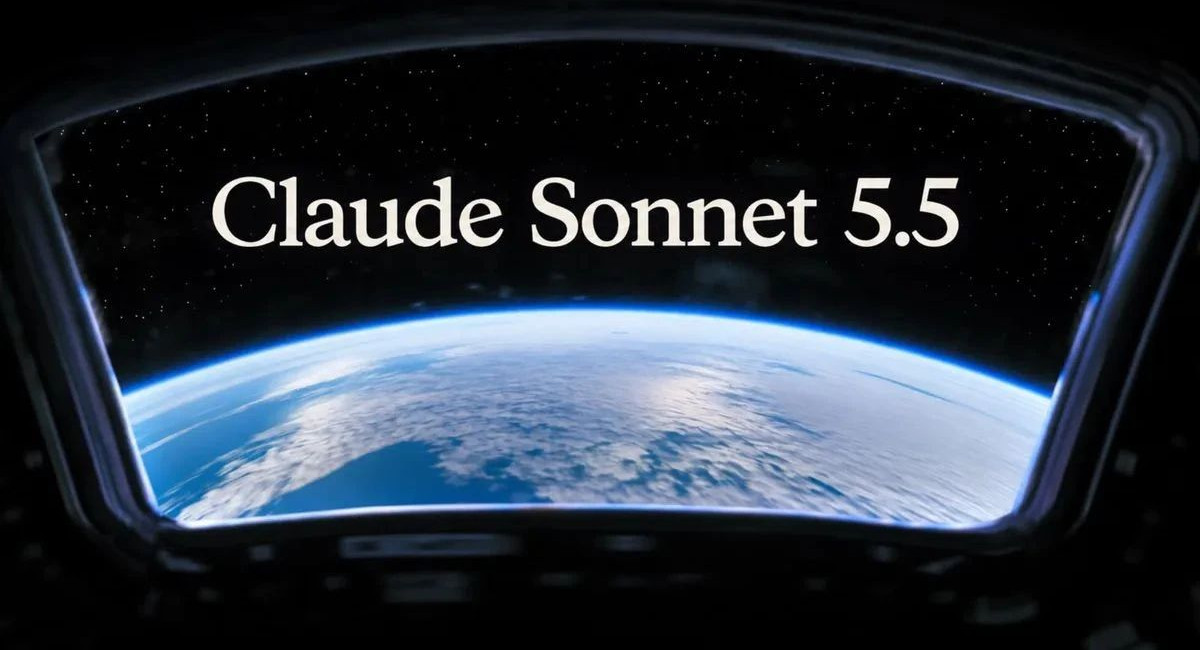
Anthropic has officially lifted the curtain on Claude Sonnet 5.5, positioning the latest iteration of its mid-tier language model not just as a technological upgrade, but as a highly capable digital partner engineered specifically for the demands of the modern professional environment. Moving away from the industry obsession with theoretical benchmarks and sheer network size, the company has pivoted toward a more pragmatic approach. The primary focus of this release rests on two critical pillars: drastically accelerating processing speeds and significantly slashing operational costs. This strategic shift signals a new era in the artificial intelligence landscape, prioritizing practical utility and sustainability over academic showmanship.
The most prominent feature of this new release is the substantial reduction in the financial burden associated with generative AI. For a long time, the prohibitive costs per million tokens have acted as a barrier, preventing small to medium enterprises and independent developers from fully embracing top-tier models. By heavily cutting these API access costs, Anthropic is effectively democratizing high-level artificial intelligence. Development teams that previously had to settle for smaller, less capable alternatives due to budget constraints can now leverage advanced natural language understanding to build sophisticated applications. This makes the generation of massive volumes of text financially viable for businesses of all sizes, bridging the gap between elite cognitive performance and accessible pricing.
Beyond the economic advantages, the architectural enhancements of Claude Sonnet 5.5 deliver an unprecedented leap in generation speed. The model has been optimized for algorithmic efficiency, allowing it to function seamlessly as an autonomous assistant capable of automating complex professional procedures. A key metric that has seen remarkable improvement is the Time-to-First-Token delay. By minimizing the lag between a user submitting a prompt and the system generating its initial response, the model creates the seamless illusion of an immediate, fluid human conversation. This upgrade is particularly transformative for applications that rely heavily on real-time interaction, such as dynamic translation tools, intelligent customer service agents, and automated code completion systems integrated within modern IDEs.
The capabilities of the system extend far beyond simple text generation. It has been meticulously fine-tuned to excel in multi-step reasoning, making it an ideal candidate for taking on the role of a dedicated digital programming assistant. It can analyze extensive databases, write complex code, and execute a series of interconnected tasks with remarkable precision. Unlike older generations of language models that often suffered from hallucinations when subjected to information overload, Claude Sonnet 5.5 maintains strict logical coherence. Users can confidently feed the system massive amounts of data, whether that involves entire corporate policy manuals, comprehensive financial reports spanning hundreds of pages, or repositories containing thousands of lines of code. The architecture is built to digest and utilize this deep context without losing the thread of the conversation or compromising accuracy.
Underpinning these performance enhancements is a steadfast commitment to security and reliability. The model is fortified with reinforced safety protocols guided by the proprietary Constitutional AI framework. This ensures that the system consistently avoids the generation of harmful, biased, or misleading content, which is a paramount concern for corporate environments deploying automated solutions at scale. The emphasis is entirely on providing a secure, dependable tool that can shoulder the weight of daily corporate needs without requiring the astronomical computational resources usually associated with massive models.
Ultimately, the transition to Claude Sonnet 5.5 represents a broader shift in the artificial intelligence industry. The relentless pursuit of ever-expanding parameters had created a fundamentally unsustainable model, saddling providers with massive operational expenses that were invariably passed down to the end users. With this release, Anthropic demonstrates that the future of generative AI lies in algorithmic elegance rather than brute computational force. By offering a solution that perfectly balances high intelligence, rapid execution, and economic accessibility, they have established a new standard for what businesses should expect from their digital tools.
The broader implications of this release touch upon how companies structure their internal workflows. Instead of viewing AI simply as a search engine or a basic drafting tool, organizations are now empowered to treat it as a collaborative entity. The classification of Claude Sonnet 5.5 as a digital partner is not merely a marketing slogan; it accurately reflects the system's enhanced capacity to understand the nuanced context of prolonged interactions. When an artificial intelligence can reliably track the intricacies of a long-running project, remember specific directives across multiple conversational turns, and apply consistent logic to layered problem-solving, it fundamentally changes the nature of human-computer interaction in the workplace.
MORE NEWS FOR YOU