 Help & Support
 SEARCH
Firefox introduces the ultimate AI kill switch
SHARE IT
Mozilla has recently unveiled its new AI controls for Firefox, a move that signals a profound commitment to user agency. Unlike many of its competitors, who often force-feed AI features to their audience with little room for negotiation, Firefox is positioning itself as the browser that respects the "off" button. This development is not just a minor settings update; it is a philosophical statement on how the web should evolve without sacrificing individual choice.
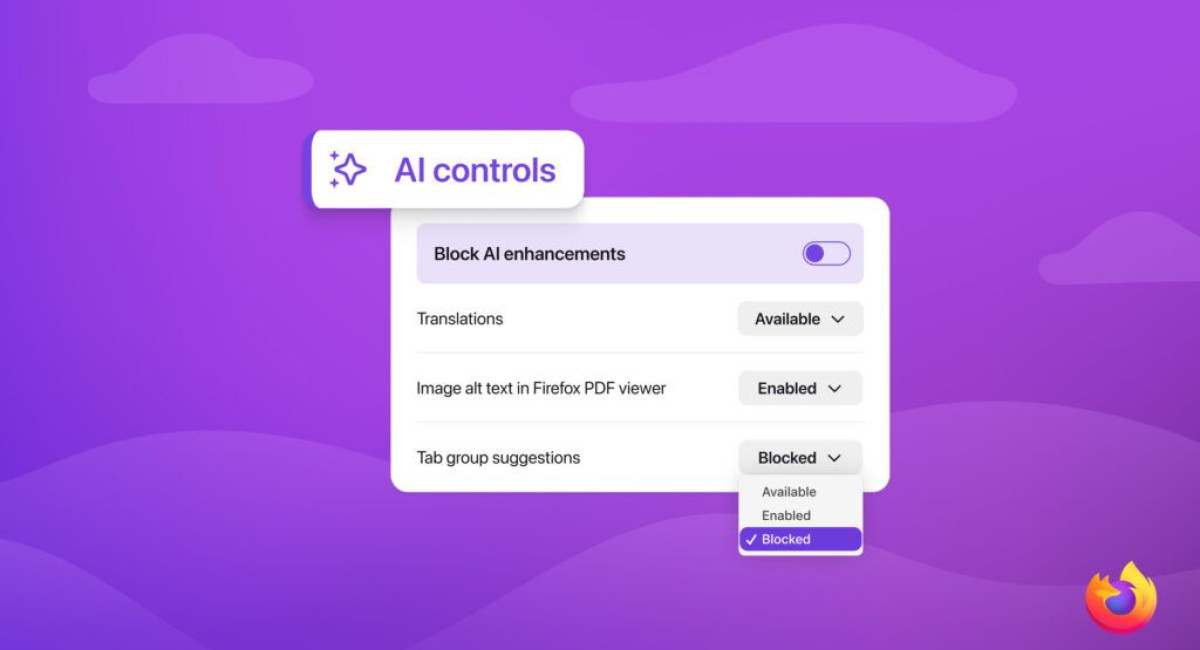
The heart of this update is a centralized management hub that allows users to dictate exactly how much machine learning they want in their daily browsing. For many, the constant influx of generative AI tools has felt more like an intrusion than an upgrade. Mozilla acknowledges this growing sentiment, noting that while some users are eager to embrace new efficiencies, a significant portion of the community wants nothing to do with the AI trend. By introducing these controls, Firefox offers a "clean" browsing experience that can be stripped of all AI enhancements with a single toggle, effectively silencing the noise for those who prefer the classic web.
However, the strategy is not purely about exclusion. For users who find value in modern tools, the new panel offers a modular approach. Instead of an all-or-nothing proposition, you can cherry-pick specific features. For instance, a user might find the AI-powered Translations essential for navigating foreign news sites but might have no interest in AI-enhanced tab grouping or the Link previews that summarize content before a click. This granular control ensures that the browser remains a tool shaped by the user’s needs rather than the developer’s agenda.
Among the specific features that fall under this new umbrella are several highly touted additions. The AI chatbot in the sidebar, which supports a variety of models including Anthropic Claude, ChatGPT, Microsoft Copilot, Google Gemini, and Le Chat Mistral, can now be easily toggled off. Similarly, the Alt text in PDFs feature, designed to improve accessibility by generating descriptions for images, remains optional. By placing these tools behind a clear interface of consent, Mozilla ensures that even the most helpful innovations do not become burdensome.
One of the most significant aspects of this rollout is its permanence. Mozilla has promised that once a user sets their preferences, those settings will persist through future updates. This addresses a common frustration among tech users: the "reset" that often occurs after a software patch, where disabled features mysteriously reappear. In Firefox, "off" means "off," and the browser will not bug users with pop-ups or reminders to re-enable AI functionalities they have already rejected. It is a level of transparency and respect for the user’s decision that is becoming increasingly rare in the software industry.
This initiative is also a reflection of Ajit Varma and the product team's vision for a "human-first" web. They argue that as technology moves forward, the power should remain in the hands of the people using it. By making AI features opt-in or easily dismissible, Firefox differentiates itself from browsers that are built by companies with a vested interest in promoting their own proprietary AI models. It reinforces the idea that a browser should be a neutral gateway to the internet, not a promotional platform for the latest trend in silicon valley.
Ultimately, these AI controls are currently making their debut in Firefox Nightly, the experimental version of the browser, allowing the community to provide feedback before a wider release. This collaborative approach is a hallmark of Mozilla’s development cycle. By inviting the skeptics and the enthusiasts alike to test these switches, the organization hopes to refine a system that balances cutting-edge innovation with traditional privacy and control. It is a bold experiment in digital democracy, proving that in the age of automation, the most important feature might just be the one that lets you turn it all off.
MORE NEWS FOR YOU