 Help & Support
 SEARCH
Gemini Intelligence: Android is no longer just an operating system
SHARE IT
At The Android Show: I/O Edition, Google fundamentally shifted the paradigm of mobile computing by introducing Gemini Intelligence. This is not merely another incremental software update or a fancy chatbot overlay. Instead, Google is embedding a sophisticated artificial intelligence infrastructure directly into the core architecture of Android. The strategic objective is clear: turning smartphones from reactive screens into proactive digital agents capable of executing complex workflows on behalf of the user.
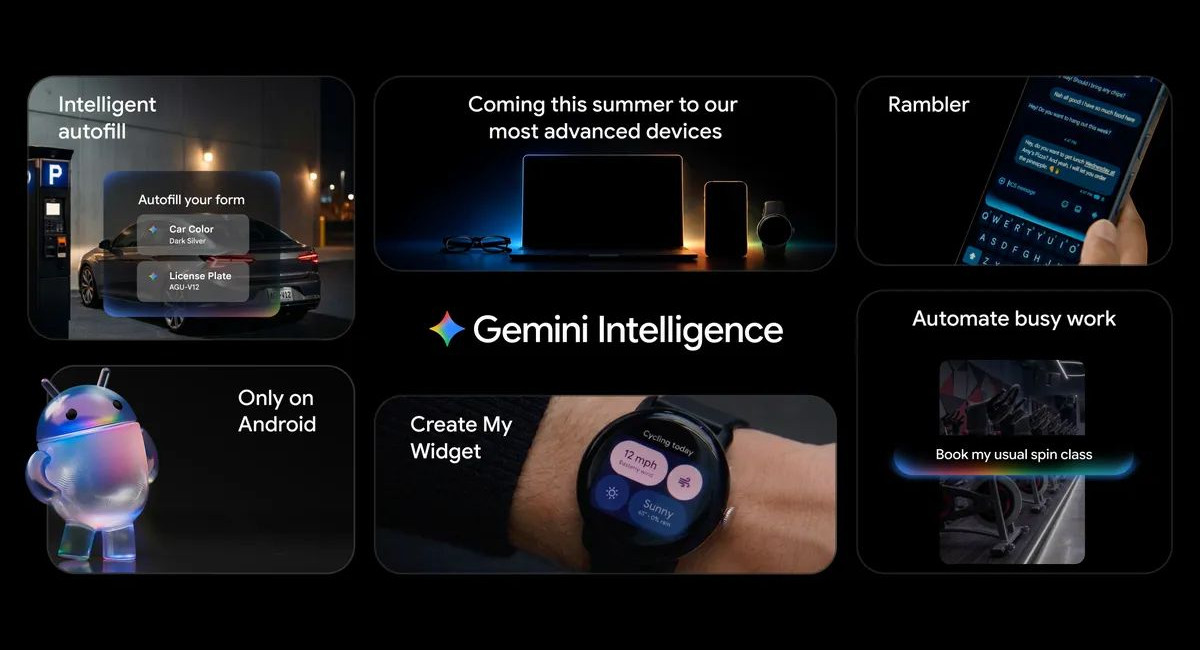
The headliner of this technological leap is multi-step app automation. Moving far beyond basic voice commands, Gemini Intelligence can now orchestrate operations across multiple third-party applications without requiring the user to tap through menus. If a user holds their device over a printed grocery list, the system can parse the visual text and automatically build a digital delivery cart within food delivery or rideshare platforms. For travelers, photographing a holiday brochure is enough for the AI to cross-reference data and find a matching itinerary for a group on Expedia. Operating smoothly in the background, the system provides live progress notifications and requires only a final user confirmation before executing any financial transaction.
Furthermore, Google is redefining web browsing and digital paperwork through deeper integration with Google Chrome and Android Autofill. Arriving later this summer, the AI-driven system can automatically summarize extensive web articles, compare online products side-by-side, and autonomously manage routine digital logistics like scheduling appointments or securing parking reservations. This ecosystem is reinforced by Personal Intelligence, a secure opt-in feature allowing the device to intelligently pull sensitive data, such as passport details stored in secure apps, to effortlessly populate intricate forms during checkout or registration processes.
Text and voice interactions are receiving an equally significant overhaul. Google introduced Rambler, a highly sophisticated speech-to-text functionality built into Gboard. Traditional dictation systems often transcribe every hesitation, verbal stumble, or filler word, but Rambler acts as an real-time editor. It instantly filters out conversational clutter, removes redundant sentence fragments, and rewrites dictated passages into polished, coherent text. Crucially, Google emphasized that this audio processing happens entirely live for transcription purposes, ensuring that voice data is not permanently stored.
Personalization on smartphones is also entering a generative era with the debut of Create My Widget. Instead of relying on rigid, pre-designed templates from developers, users can now instruct Gemini to construct entirely customized interactive elements using plain language prompts. Whether someone demands a hyper-specific weather dashboard tracking precise wind metrics or a dynamically updating weekly meal planner, the AI generates the user interface from scratch.
To visually unify these powerful capabilities, Google is rolling out an updated design framework called Material 3 Expressive. The revamped interface is deliberately engineered to minimize digital clutter and optimize user focus, ensuring that interactions with these deep AI tools feel organic rather than intrusive. Moreover, this cognitive layer is expanding well beyond the phone. Gemini Intelligence is slated to run across the entire Android landscape, bringing contextual assistance to smartwatches running Wear OS, connected vehicles via Android Auto, Android XR glasses, and an entirely new category of laptops dubbed Googlebook.
The immediate rollout focuses heavily on premium hardware, specifically targetting the latest Samsung Galaxy S26 and Google Pixel 10 devices. While the immense productivity gains of an omnipresent AI layer are undeniable, the tech industry is already watching closely to see how effectively Google balances system accuracy, user security, and defenses against emerging threats like prompt injection hacks. Nonetheless, the message from Google is unmistakable: the era of the passive smartphone is coming to an end.
MORE NEWS FOR YOU