
 Help & Support
 SEARCH
Apple redefines App Store subscriptions with new long term commitment model
SHARE IT
In a strategic move designed to balance affordability for consumers and steady revenue for creators, Apple has introduced a new subscription tier on the App Store. This latest update allows developers to offer monthly billing cycles tied to a mandatory twelve month commitment, effectively bridging the gap between expensive monthly plans and heavy one time annual payments.
For years, the App Store ecosystem has operated on a relatively binary system: users could either opt for a flexible but higher priced monthly subscription or commit to a full year upfront to secure a discount. While the annual option is mathematically superior for long term users, the initial financial burden often deterred potential subscribers. Apple’s new initiative addresses this friction point directly. By permitting developers to spread the cost of an annual plan over twelve smaller monthly installments, the company is making premium software more accessible to a broader demographic without sacrificing the total value of the contract.
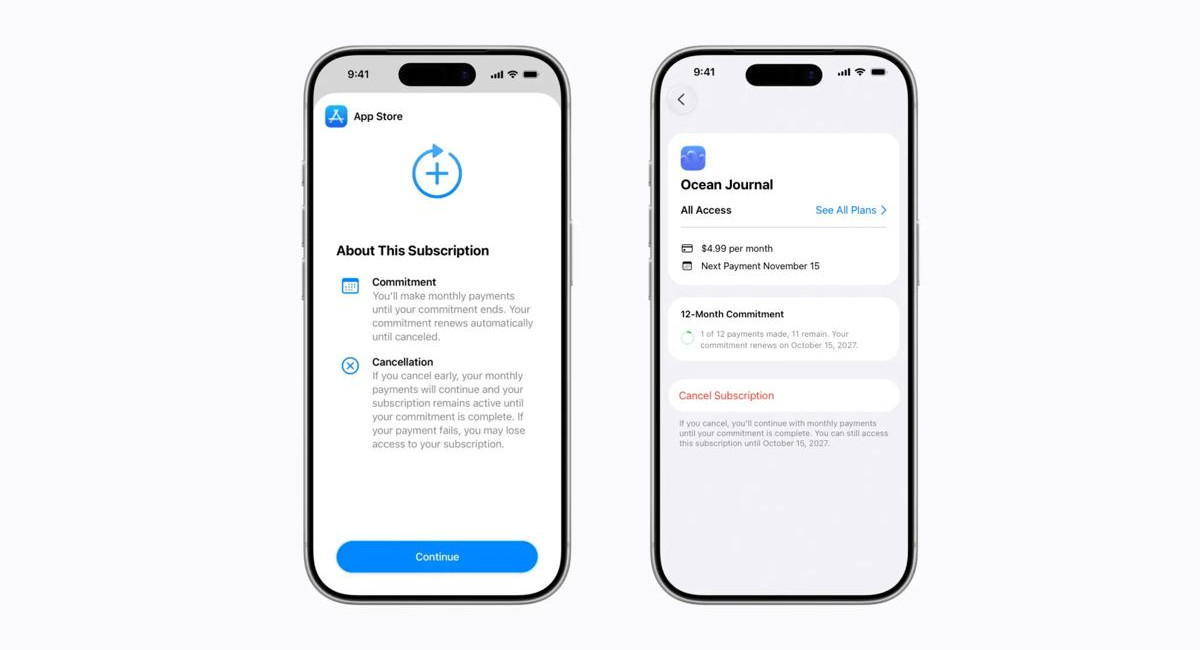
The mechanics of this new system are straightforward yet strictly governed. Once a user opts into a twelve month commitment plan, they are locked into that payment schedule for the duration of the year. Apple has clarified that while individuals retain the right to cancel their subscription at any time to prevent it from renewing for a subsequent year, they remain financially responsible for all twelve payments of the current term. If a payment fails during this period, access to the service is typically suspended, ensuring that the commitment remains a binding agreement between the consumer and the developer.
From a technical perspective, Apple is making it easy for the developer community to integrate this feature. The tools for configuration are already being rolled out via App Store Connect, and testing environments are available within XCode. This ensures that when the feature goes live, the transition will be seamless for both the backend management and the frontend user experience. To maintain transparency, Apple has also integrated tracking features within user accounts, allowing people to monitor exactly how many payments have been completed and how many remain in their current commitment cycle. Proactive reminders via email and push notifications will also be standard practice to keep users informed about upcoming renewals.
This update is slated for a global rollout alongside the release of the next major software iterations, including iOS 26.5, iPadOS 26.5, and macOS Tahoe 26.5. Even users on slightly older versions, such as iOS 26.4, will eventually see compatibility as the feature stabilizes. Interestingly, however, the United States and Singapore have been excluded from the initial launch phase. While Apple hasn't provided a specific reason for this geographic restriction or a definitive timeline for when these markets might be included, the move suggests a calculated phased approach to testing the economic impact of the new model in diverse international markets.
Beyond the technicalities of payment processing, this announcement arrives during a period of monumental transformation for the company. The leadership landscape at Apple Park is shifting, with Tim Cook preparing to conclude his storied fifteen year tenure as CEO. His successor, John Ternus, who has long led Hardware Engineering as SVP, is stepping into the spotlight. As the company prepares to launch groundbreaking hardware like the iPhone Fold, these subtle yet impactful changes to the App Store’s business model represent the evolving strategy of an organization in transition.
Ultimately, this new subscription model reflects a deeper understanding of modern consumer behavior. In an era where subscription fatigue is a real concern, providing a middle ground that offers the price benefits of a long term stay with the cash flow management of a monthly bill is a savvy move. It strengthens the App Store’s position as a dominant marketplace while providing developers with more predictable financial forecasting. As the software world moves toward this commitment based structure, it remains to be seen how it will influence user retention and overall spending habits across the global Apple ecosystem.
MORE NEWS FOR YOU