
 Help & Support
 SEARCH
Google Chrome shields Android users from seven billion malicious notifications every single day
SHARE IT
The digital open web was built on the ideal of seamless interaction between developers and users, a dynamic supercharged by the advent of mobile push notifications. Over time, however, these very notifications evolved into a primary conduit for malware distribution, aggressive phishing schemes, and invasive advertising. Mobile web browsing was rapidly devolving into an annoying minefield of deceptive pop-ups and endless prompts.
To turn the tide against bad actors, the Google Chrome security team engineered a multi-layered defense architecture designed to intercept unsolicited communications before they ever land on a mobile device screen. This sophisticated framework neutralized more than seven billion malicious push notifications every single day on Android devices during the first quarter of 2026 alone.
Rather than relying on a single silver bullet, Google deployed a defense-in-depth model frequently described as the Swiss Cheese strategy. This approach intertwines the real-time threat intelligence of Safe Browsing with the delivery infrastructure of Firebase Cloud Messaging. If an aggressive or malicious site bypasses the initial line of defense, subsequent analytical checkpoints are calibrated to identify and sever the transmission stream, neutralizing scams mid-flight.
A central element of this upgraded architecture is automated permission revocation based on silent user behavior analysis. Rather than expecting individuals to manually navigate complex settings menus to silence nuisance websites, Chrome now measures actual engagement. If algorithms detect that a domain is spamming alerts without meaningful user interaction, the browser automatically revokes notification permissions. Managed through the Safety Hub interface, this system prevents the quiet accumulation of elevated privileges that threat actors rely on for future phishing campaigns.
Beyond isolated malicious websites, the defense mechanism focuses heavily on mapping broader infrastructure networks. Cybercriminals often attempt to evade blocklists by spinning up new domain names at scale. To counter this, advanced behavioral tracking analyzes background technical indicators, such as coordinated service worker API requests across seemingly unrelated sites. By recognizing these operational patterns, Google can identify entire distribution networks and shut down their access to the Push API in one unified action.
At the server level, aggressive throttling provides a critical financial and operational deterrent against high-volume campaigns. Firebase Cloud Messaging now enforces strict algorithmic speed limits, tying allowed notification volumes directly to genuine user time spent on a site. For flagged or suspicious domains, sending rates are capped at 1,000 messages per minute. Any attempts to exceed this ceiling trigger HTTP 429 Too Many Requests errors, driving up the infrastructure cost for spammers and rendering large-scale automated campaigns economically unviable.
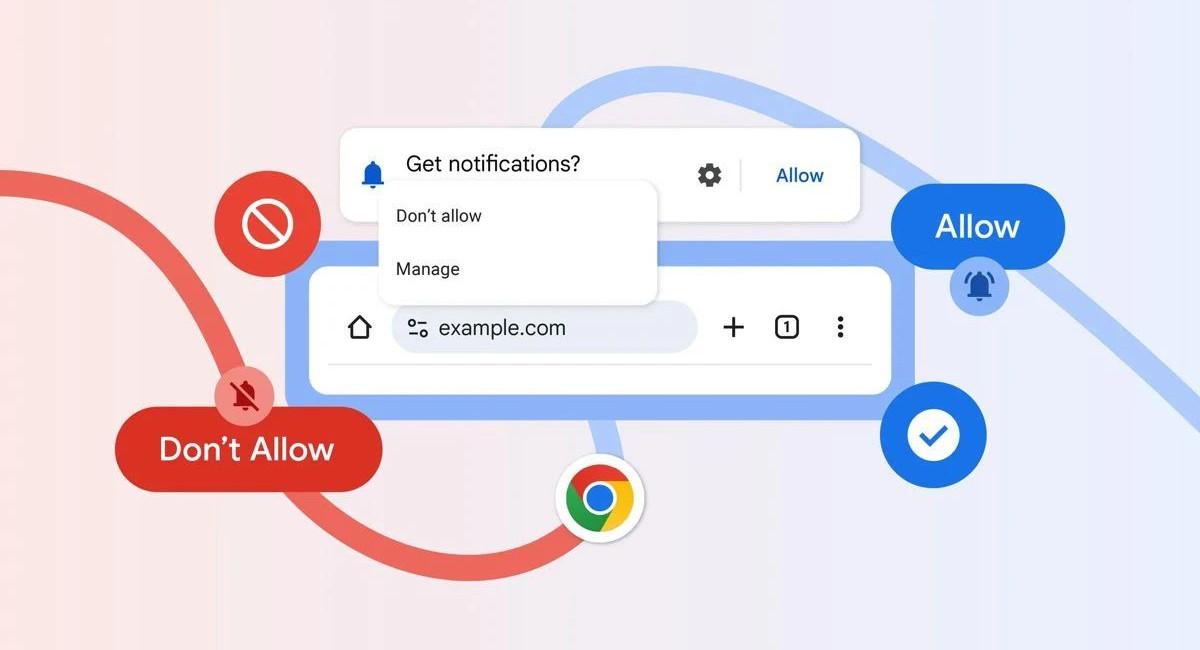
The final layer of protection addresses the human element by combating prompt fatigue. Android users often tap allow on pop-ups simply to clear them from their screens, accidentally opting into toxic subscription loops. A streamlined permission request interface and a new one-tap unsubscribe button directly within individual notifications make it effortless for users to reclaim control over their devices. Through this combination of client-side usability, server-side rate limits, and network-level telemetry, Google is successfully reclaiming the Android ecosystem from push-notification scams.
MORE NEWS FOR YOU