 Help & Support
 SEARCH
Google hangs up on fraudsters with advanced Android protection
SHARE IT
Artificial intelligence has transformed the landscape of communication, but it has also handed a powerful new toolkit to digital criminals. Among the most troubling emerging threats are highly sophisticated phone scams that leverage advanced voice cloning techniques. By capturing just a few seconds of audio from a public social media video, malicious actors can easily replicate the distinct vocal signature of a family member, business partner, or close friend. When combined with traditional caller ID spoofing techniques, these schemes create a terrifying illusion, making it nearly impossible for an unsuspecting victim to tell a legitimate call apart from a targeted cyber attack.
Historically, defending against these elaborate voice cloning and spoofing schemes depended entirely on the critical thinking and quick reflexes of the person answering the phone. Users had to spot inconsistencies in conversation, notice strange delays, or double-check information manually to realize they were being targeted. Recognizing that human intuition is no longer a sufficient defense against real-time artificial intelligence, Google is moving the burden of security away from the user and directly onto the operating system. The tech giant is introducing a powerful, system-level shield called Fake Call Detection to fundamentally change how mobile devices handle incoming communication.
Unlike standard spam-blocking applications that cross-reference incoming phone numbers with static blacklists or crowdsourced user reports, Fake Call Detection introduces a dynamic, real-time authentication method. The feature works completely in the background to verify the true identity of the caller before the user even has a chance to engage. This represents a significant paradigm shift in mobile security, transforming the native dialer from a passive receiver into an active gatekeeper. By focusing on immediate structural verification rather than historical caller reputation, Android can block modern impersonation attempts instantly.
The underlying magic of Fake Call Detection relies on a unique cryptographic digital handshake executed via Rich Communication Services, commonly known as RCS. Traditional telecommunications networks, such as the Public Switched Telephone Network and SS7 routing, were originally built decades ago on an inherent trust model. They accept the caller metadata passed through the routing chain without questioning its origin, which explains why internet-based Voice over IP services can manipulate caller ID information with minimal effort. To bypass these deep-rooted infrastructure vulnerabilities without requiring a global overhaul of cell towers and carrier systems, Google redirects the verification process away from old-school phone lines and onto modern data channels.
The entire background verification process unfolds seamlessly in mere milliseconds through a series of automated checks. When a legitimate caller initiates a telephone conversation, their smartphone simultaneously sends a silent, end-to-end encrypted confirmation token through the RCS data network. The receiving device automatically scans for this specific validation packet the moment the phone starts ringing. If the token is present and verified, the incoming call proceeds normally, allowing the user to answer without any visible interruption or delay.
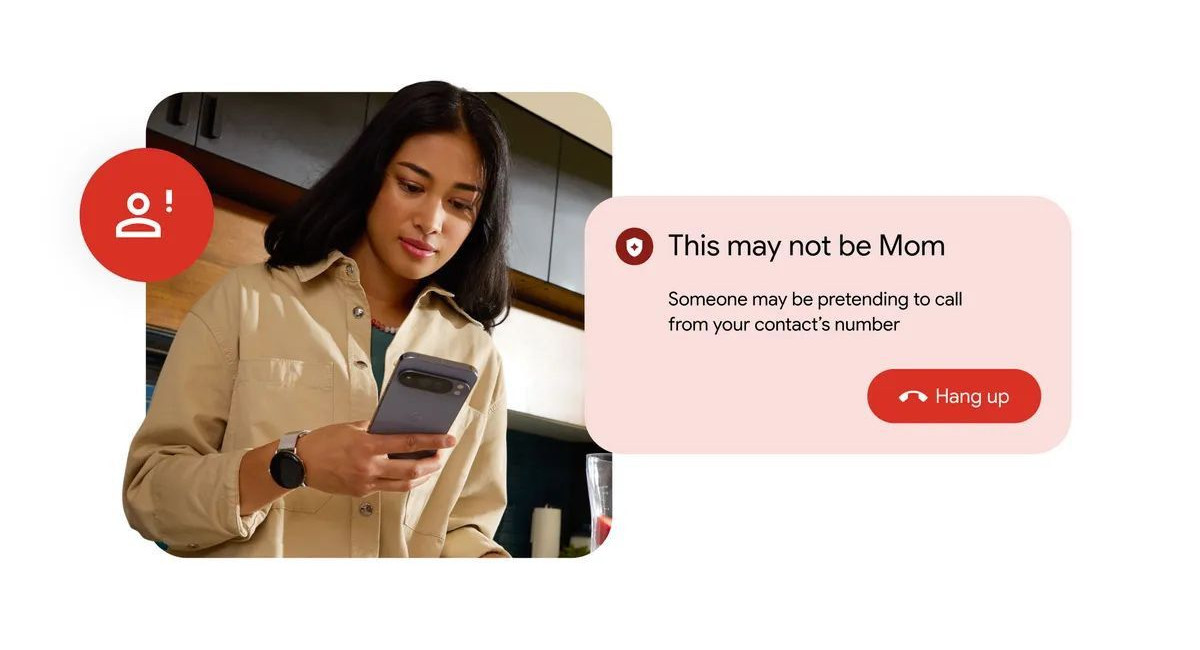
If a fraudster spoofs a familiar number using a computer program or an unrelated physical device, the essential RCS validation token will naturally be missing from the transmission. Upon noticing this absence, the recipient smartphone immediately pings the authentic device associated with that phone number via the RCS network to check its current status. If the genuine device responds that it is currently idle and not initiating any outbound traffic, the system instantly flags the incoming call as an active fraud attempt. The Phone by Google application then splashes a bright, unmistakable red alert across the screen, advising the user to terminate the connection immediately.
Because this verification process relies strictly on end-to-end encryption, all validation data remains entirely private and never leaves the local devices, ensuring that Google servers do not log or track call contents. This sophisticated protection mechanism requires no complex configuration or security expertise from the average consumer. The feature is rolling out to mobile devices running Android 12 or newer, beginning with the Pixel lineup, and requires the Phone by Google application to be set as the default dialer. By embedding this automated security layer directly into the everyday calling experience, Google is effectively cutting off AI scammers before they can speak a single word.
MORE NEWS FOR YOU