 Help & Support
 SEARCH
Google introduces a new layer of help on Android
SHARE IT
Google is expanding the capabilities of Android’s emergency features with a tool that could prove critical when every second matters. Beginning today, users in the United States, as well as select areas in Germany and Mexico, can share live video with emergency dispatchers directly from their phones. The update, called Android Emergency Live Video, aims to give responders a clearer understanding of unfolding situations when callers may be overwhelmed, unable to explain what’s happening, or physically endangered.
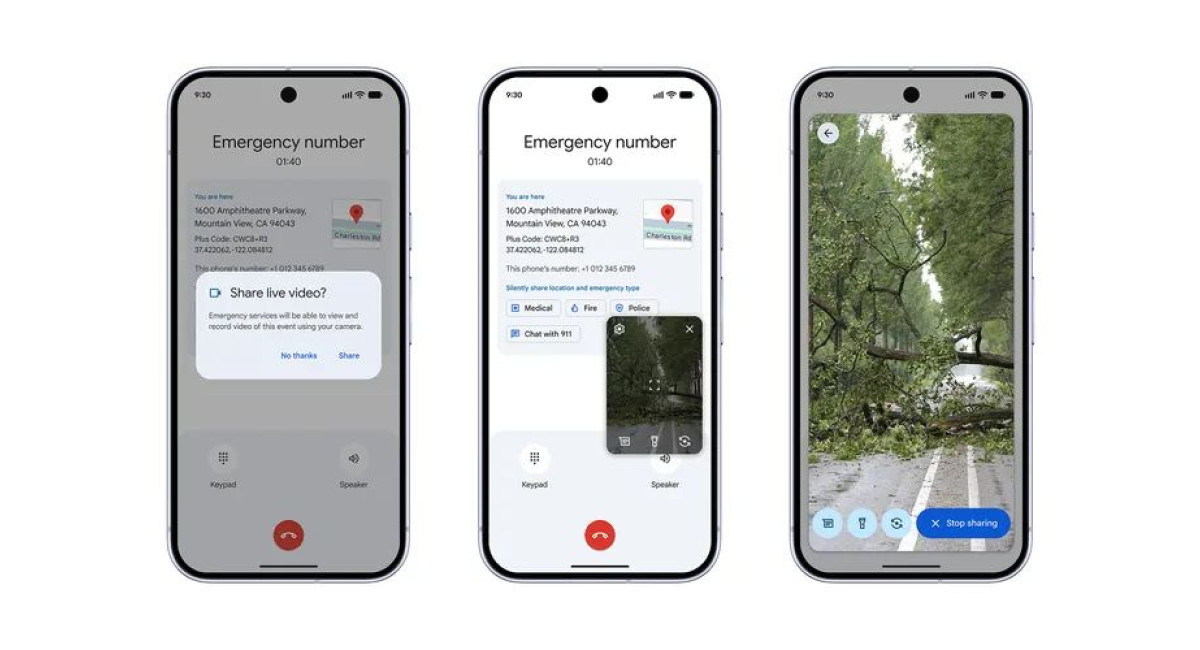
The premise is simple: during an emergency call or text to your country’s designated number, dispatchers gain the option to request access to your camera feed. If they believe video could clarify the scene or improve the response, they send a prompt to your device. From there, the decision is entirely yours. A pop-up window appears on the screen, offering a choice between sharing your video or declining the request. Google emphasizes that the feature is encrypted by default and designed with user consent at its core.
Once approved, a small picture-in-picture window opens, allowing you to monitor what your camera is broadcasting. The controls are straightforward and familiar. You can enlarge the video view, stop the stream at any time, activate your flashlight for visibility, or flip to the front-facing camera if doing so provides more relevant context. Meanwhile, emergency personnel gain real-time access to the feed and may record it as part of their response process.
Google explains that the purpose of the tool is to shorten the time between the initial call and the dispatch of appropriate assistance. Situations involving medical crises, vehicle collisions, or rapidly escalating disasters like wildfires often create high stress and confusion. Describing injuries, hazards, or fast-moving dangers can be difficult or impossible. In these moments, first responders rely on accurate information, and a live visual can provide clarity that audio alone cannot.
Having eyes on the scene may enable dispatchers to walk callers through crucial steps such as performing CPR, identifying safe exits, or assessing whether immediate evacuation is needed. The company notes that this added visibility may help responders make faster and more informed decisions, potentially altering the outcome of a life-or-death situation.
The rollout supports Android devices running version 8 or higher with Google Play services installed. It builds on Google’s long-term efforts to modernize emergency communications, including features like Location Sharing for emergency calls and automated crash detection on Pixel phones. With the introduction of live video, the company is signaling a broader vision in which smartphones become fully integrated tools for public safety operators.
Google also stresses that participation happens strictly at the user’s discretion. While dispatchers can request video access, they cannot activate the camera without approval. The system is meant to function as a collaborative exchange between users and emergency teams, not a mechanism for surveillance. Encryption and transparent controls aim to ensure that people remain in charge of what they share.
For now, availability remains limited to the United States and certain regions of Germany and Mexico, but Google says it is actively working with international public safety organizations to expand coverage. The company has also published documentation for emergency providers interested in adopting the technology, suggesting that global growth is a priority.
Android Emergency Live Video represents a significant step toward rethinking how smartphones can assist in moments of crisis. In environments where misinformation, panic, or environmental danger can cloud communication, direct visual contact can bridge gaps and expedite help. As Google continues to build out this capability, millions of users may soon find themselves with an emergency tool that transforms the way responders assess and act in critical moments
MORE NEWS FOR YOU