 Help & Support
 SEARCH
Google reinforces Android against the rise of mobile theft
SHARE IT
The days when a stolen smartphone was merely a lost piece of hardware are long gone. Today, these devices are the keys to our financial identities, housing everything from bank accounts to personal memories. Recognizing this shift, Google is rolling out a comprehensive security overhaul designed to transform Android devices from vulnerable targets into impenetrable digital vaults. This latest update introduces a multi-layered defense strategy that aims to neutralize the threat of theft at every stage—before, during, and after a criminal strikes.
At the heart of this initiative is the Expanded Identity Check, a feature that addresses the growing trend of shoulder surfing, where thieves observe a victim’s PIN before snatching the device. Under the new protocol, Android will demand biometric verification, such as a fingerprint or facial scan, for high-stakes actions whenever the phone is outside of a designated trusted location. By requiring biological proof of ownership for sensitive apps like password managers and banking platforms, Google is effectively ensuring that a stolen PIN is no longer a golden ticket for fraudsters.
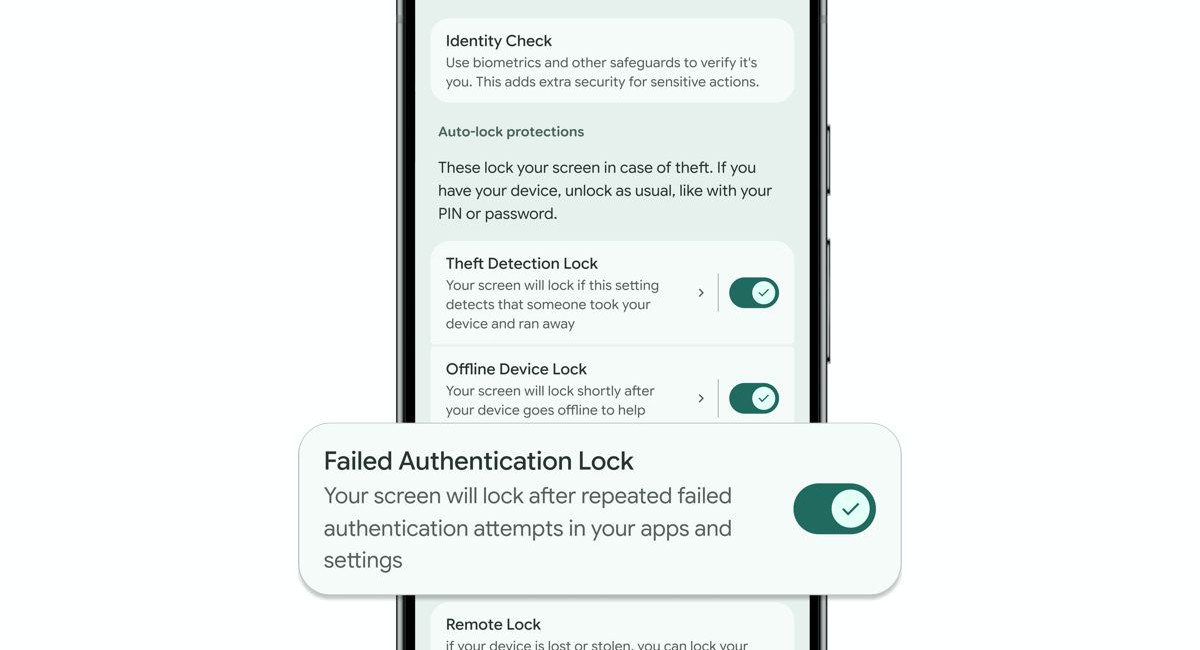
The update also tackles the physical act of theft with more intelligence. The new Failed Authentication Lock gives users a customizable safety net, allowing them to dictate exactly how many incorrect login attempts are permitted before the device automatically enters a locked state. Furthermore, a Smarter Lockout mechanism has been implemented to thwart brute-force attacks. As a thief repeatedly tries to guess a passcode, the lockout duration increases exponentially. To prevent domestic mishaps, Google has integrated logic that ensures accidental attempts by children or family members do not trigger these extreme measures.
Beyond local device security, the Remote Lock feature has received a significant upgrade. While users have long been able to wipe or lock their devices via a web browser, Google is introducing an additional security challenge to this process. This ensures that even the recovery tools themselves cannot be subverted by a malicious actor. By adding this extra layer of verification, the company is closing the window of opportunity that thieves often exploit in the frantic minutes following a snatch-and-run incident.
Interestingly, Google is adopting a proactive global stance, with these features being enabled by default in markets like Brazil, where mobile theft is particularly prevalent. This shift signals a broader industry trend where security is no longer an optional setting but a fundamental, out-of-the-box requirement. By integrating AI-driven theft detection that can recognize the physical motion of a phone being grabbed and making biometric checks the standard, Google is sending a clear message: a stolen Android phone is destined to become an expensive, unusable brick in the hands of a criminal.
MORE NEWS FOR YOU