 Help & Support
 SEARCH
Google revolutionizes switching from iPhone to Android
SHARE IT
For more than a decade, one of the most effective strategies employed by tech giants to retain customers has been ecosystem lock-in. Moving from an Apple device to an Android handset historically meant surrendering convenience. While transferring basic multimedia content like photos, videos, contacts, and calendar schedules eventually became manageable through wireless utility applications, deeper operating system data remained trapped inside the iOS wall. Switching phones often meant manually typing dozens of Wi-Fi passwords, re-entering account credentials, re-configuring individual passkeys, and visiting a mobile carrier storefront to provision a new cellular profile.
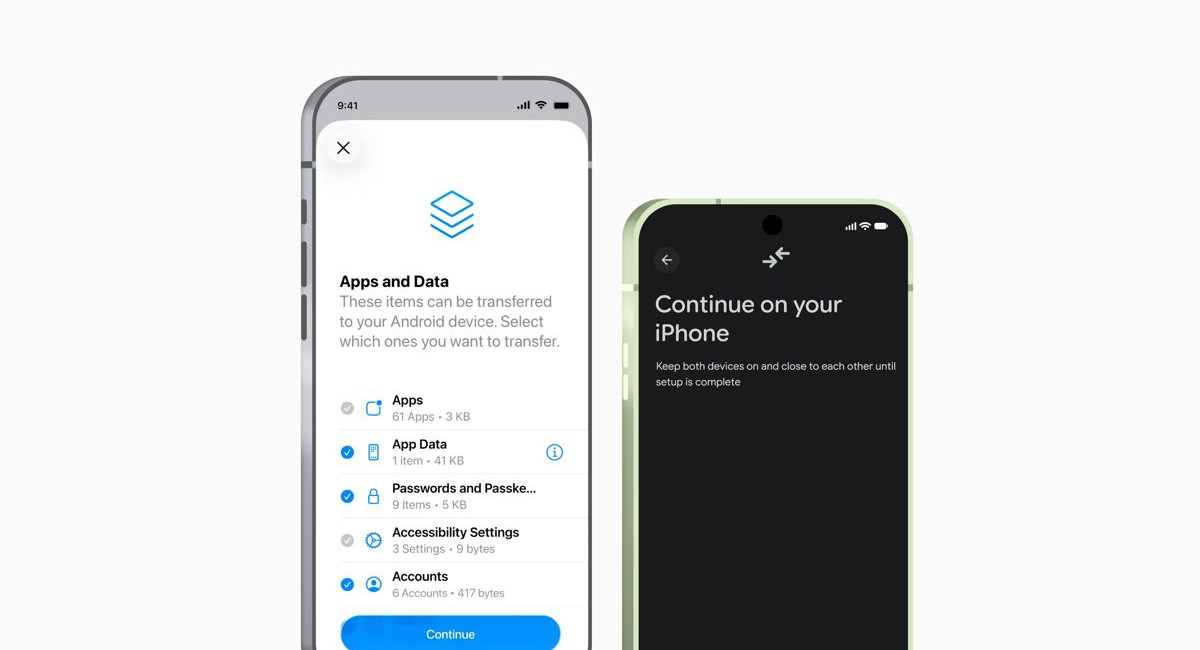
Google has officially tackled this pain point by introducing an extensive upgrade to the native Android data migration framework. Built directly into the Android setup experience, the overhauled migration system removes major technical hurdles that previously made transitioning from an iPhone feel like a tedious administrative chore. The most notable enhancement is the native ability to securely transfer saved passwords, passkeys, Wi-Fi network credentials, and active eSIM profiles directly to a new Android device during initial setup.
This revamped migration architecture drastically changes how two competing mobile ecosystems communicate during setup. Rather than relying solely on third-party application installations or restricted local backups, the new mechanism utilizes a direct device-to-device connection. Users initiating setup on an Android smartphone are presented with a unified pairing prompt. Scanning a generated QR code using an iPhone camera establishes a secure, encrypted channel between the handsets. Behind the scenes, the protocol orchestrates the migration of sensitive identity tokens, saved credentials, and network configurations in a single continuous workflow.
The inclusion of native eSIM migration represents a major operational leap forward. In previous generations, moving an active cellular subscription from an iPhone to an Android device required direct interaction with cellular carrier portals, physical SIM swaps, or manual activation codes. With the updated implementation, supported carriers enable digital SIM transfers directly within the setup flow. Users simply authorize the transfer on their source iOS device, allowing the cellular profile to shift seamlessly to the destination hardware without requiring carrier intervention or store visits.
Equally significant is the handling of authentication credentials. Passwords and passkeys have long served as sticky retention mechanisms because users dread the prospect of resetting or re-entering login details across dozens of mobile applications. By establishing a secure bridge to migrate stored credentials and Wi-Fi access details, Google ensures that users land on their new home screen with their essential digital life already configured. Furthermore, for users who prefer not to migrate everything immediately during initial device setup, the upgraded system allows data transfers to be triggered later directly through the Android settings menu.
This strategic move comes at a pivotal moment in the smartphone landscape. Hardware differentiation among flagship devices has increasingly centered on specialized form factors, display technology, and on-device artificial intelligence capabilities. However, consumer willingness to experiment with new hardware design, such as foldable devices or camera-focused flagships, is frequently constrained by the perceived difficulty of transferring personal data. By streamlining the onboarding process, Google effectively lowers the wall around Apple ecosystem, allowing hardware innovations on Android devices to compete more directly on their own merits.
The rollout of this enhanced migration capability spans key flagship hardware across the Android ecosystem, including Google Pixel devices and latest generation foldables like the Samsung Galaxy Z Fold8 and Galaxy Z Flip8. Requiring compatible system software on both sides, the seamless transfer workflow bridges iOS and Android in ways that were previously considered impractical. Ultimately, this friction-free transition process empowers consumers with greater freedom of choice, proving that switching operating systems no longer requires starting over from scratch
MORE NEWS FOR YOU