 Help & Support
 SEARCH
Google smartly bridges the gap between Android and iPhone users
SHARE IT
In the fast-moving world of consumer electronics, one of the most frustrating pain points for everyday consumers has been the invisible wall separating major mobile operating systems. For years, transferring files, documents, and high-resolution photos between ecosystems felt like navigating a technological labyrinth. While Apple users enjoyed the seamless convenience of local file sharing, those attempting to bridge the gap with alternative devices were often forced to rely on email attachments, cloud links, or messaging platforms that heavily compress and degrade image quality. Now, a massive expansion to a key software feature is poised to change that dynamic for millions of smartphone owners worldwide.
The shift stems from a major upgrade to Quick Share, the native sharing platform developed by Google. In a bold move that redefines cross-platform interoperability, the software giant has successfully expanded native compatibility with Apple's proprietary communication protocols. Rather than relying on official cooperation or awaiting permission from competitors, engineers reverse-engineered the necessary framework to allow direct, local communication between operating systems. This expansion effectively means that a vast array of popular mobile devices can now communicate directly with iOS without requiring any middle-man applications or complex workarounds.
The brilliance of this technical achievement lies in how it translates connection requests on the fly. Google developed the communication framework to translate standard sharing signals directly into Apple Wireless Direct Link (AWDL), the exact system that power local sharing on Apple hardware. When initiating a transfer, the device utilizes Bluetooth Low Energy (BLE) to detect nearby hardware, establishing a secure, high-speed connection over Wi-Fi Direct. For the recipient on the other side of the digital fence, the incoming transfer request appears natively within the standard system menu, operating exactly as if the file were sent from another device within the same ecosystem.
While the feature originally debuted on an exclusive selection of flagship devices, including the Pixel 10 and the Galaxy S26 series, a fresh rollout has dramatically democratized access to the tool. A wide variety of highly popular smartphones have officially joined the support roster. This includes massive consumer hits like the Samsung Galaxy S25 and Galaxy S24 lineups, alongside innovative foldable designs like the Galaxy Z Fold6 and Galaxy Z Flip6. Prominent flagship models from other major manufacturers, such as the OnePlus 15, the OPPO Find X8, and devices from HONOR, are also gaining native capability. The inclusion of previously released, highly successful device generations ensures that millions of consumers gain instant access to the upgrade without needing to purchase new hardware.
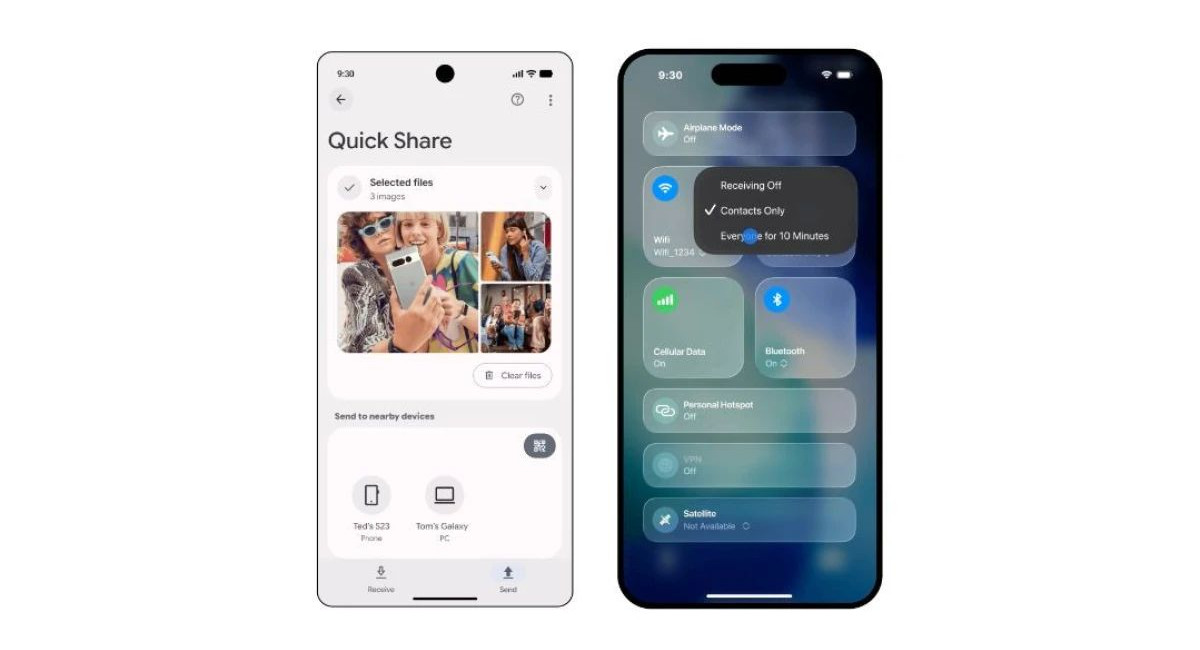
Recognizing that many consumers still carry older or more budget-conscious devices, the updated framework introduces a clever secondary method to ensure no one is left stranded. Devices that lack the specific wireless components or processing hardware required for direct peer-to-peer translation can still utilize an automated routing system. When a user selects a file on an older device, the software automatically packages the items and generates a unique QR code on the screen. The recipient simply scans this code using a standard camera application, prompting a secure, uncompressed download through a private cloud server. While this method requires an active internet connection, it circumvents the aggressive file compression seen on popular chat platforms, preserving full resolution, video quality, and original metadata.
Executing these transfers requires minimal preparation from the user, ensuring the feature remains approachable for non-technical individuals. On the originating device, users simply navigate to the connected devices menu within their settings to ensure the cross-platform sharing toggle is enabled. On the receiving end, ensuring the visibility settings are briefly adjusted to accept transfers from everyone allows the devices to recognize each other within seconds. Once configured, selecting a media file and tapping the share icon populates the nearby recipient in the menu, triggering a standard, secure confirmation prompt on the receiving screen.
This update represents a significant psychological shift in the ongoing platform rivalry. By voluntarily dismantling one of the most stubborn friction points in mobile tech, the update diminishes the ecosystem lock-in that has long forced families and social circles to purchase hardware from a single brand just to share memories easily. As boundaries between competing devices continue to blur, the ultimate winner is the consumer, who can now choose a smartphone based on hardware preferences or budget, rather than social convenience
MORE NEWS FOR YOU