 Help & Support
 SEARCH
Google to universalize AirDrop compatibility across the Android ecosystem
SHARE IT
For over a decade, the smartphone market has been defined by a rigid dichotomy: the walled garden of Apple and the fragmented but open world of Android. Few features have exemplified this separation more starkly than AirDrop. The ability to seamlessly zap photos, videos, and documents between Apple devices has been a defining convenience for iPhone users and a source of envy—or at least frustration—for those on the outside. While Google has offered its own competitors, such as Android Beam and later Nearby Share (now Quick Share), the lack of cross-platform interoperability meant that sharing a file between an Android phone and an iPhone often required clumsy workarounds like email, messaging apps, or cloud links.
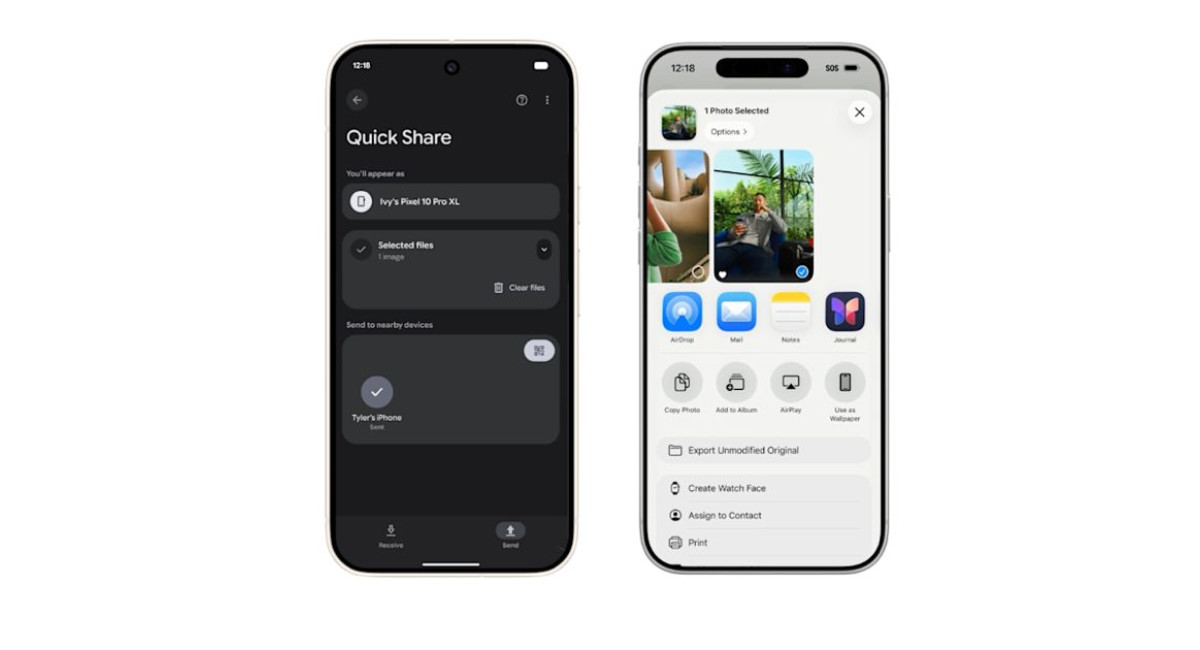
That era of digital segregation appears to be drawing to a close. Following a limited but successful pilot program, Google has confirmed plans to significantly expand AirDrop-style compatibility to a much wider range of Android devices. This development, initially introduced as an exclusive feature for the Pixel 10 series in late 2025, marks a pivotal shift in how the two dominant mobile operating systems interact.
The confirmation came from Eric Kay, the Vice President of Engineering for Android, during a recent press briefing at Google’s offices in Taipei. Kay acknowledged the success of the initial rollout on Google’s flagship hardware and outlined a roadmap for 2026 that involves bringing this interoperability to the broader Android ecosystem. The strategy is clear: having proven the technology works reliably and securely on the Pixel 10, Google is now coordinating with its extensive network of hardware partners to implement the standard across other brands. This means users of Samsung, OnePlus, and other Android devices could soon enjoy the same friction-less sharing capabilities with iPhone users that Pixel owners have recently gained.
Functionally, the system is designed to mimic the ease of use that Apple users are accustomed to, though it operates within the framework of Google’s Quick Share. For the transfer to work, the receiving Apple device—whether it is an iPhone, iPad, or Mac—must have its AirDrop visibility set to "Everyone for 10 Minutes." On the Android side, the user must be in the "receive" mode within the Quick Share interface. Once these conditions are met, the Android device can detect the Apple device and initiate a transfer, and vice versa. It is a bridge built on existing protocols, effectively allowing Android phones to speak the language of AirDrop without requiring official support from Apple.
The technical underpinnings of this feature are particularly interesting given Apple’s historically guarded stance on its ecosystem. Google claims to have achieved this interoperability through its own independent implementation, rather than a partnership with Cupertino. To address potential concerns regarding security and privacy—paramount issues for both companies—Google has emphasized that its solution has undergone rigorous vetting. This includes scrutiny by Google’s own internal security teams as well as penetration testing by third-party security firms to ensure that the mechanism cannot be exploited.
This move is widely interpreted by industry analysts as a strategic play to lower the barrier to entry for iPhone users considering a switch to Android. The "lock-in" effect of Apple’s ecosystem is powerful, and the fear of losing convenient features like AirDrop often keeps users tethered to iOS. By neutralizing this advantage and ensuring that an Android phone can play nicely with the iPads and Macs a user might already own, Google is removing a significant friction point.
Furthermore, the expansion is not just limited to software updates from Google. Hardware partners like Qualcomm are also signaling support, with recent indications that Snapdragon-powered devices will natively support this cross-platform sharing. This suggests a deep, hardware-level integration that could make the experience even smoother and more battery-efficient than a purely software-based solution.
As 2026 progresses, the artificial walls that have prevented simple file sharing between the world’s two most popular mobile platforms are finally crumbling. While the rivalry between Android and iOS will undoubtedly continue, this specific update represents a rare win for consumer convenience over ecosystem exclusivity. For the first time, the "green bubble" versus "blue bubble" war might not apply to the simple act of sending a photo to a friend standing right next to you
MORE NEWS FOR YOU