 Help & Support
 SEARCH
Google unleashes creative power with major updates to Veo 3.1 AI video model
SHARE IT
The landscape of digital content creation continues to evolve at a breakneck pace, and Google is once again at the forefront of this transformation. Building on the momentum established last year, the tech giant has announced a significant suite of upgrades to Veo, its flagship artificial intelligence video generation tool. These enhancements, specifically designed for the Veo 3.1 model, aim to provide creators with unprecedented control over their visual storytelling while catering to the growing demand for mobile-first content. The updates signal a maturing of AI video technology, moving beyond mere novelty to become a robust utility for professional and amateur filmmakers alike.
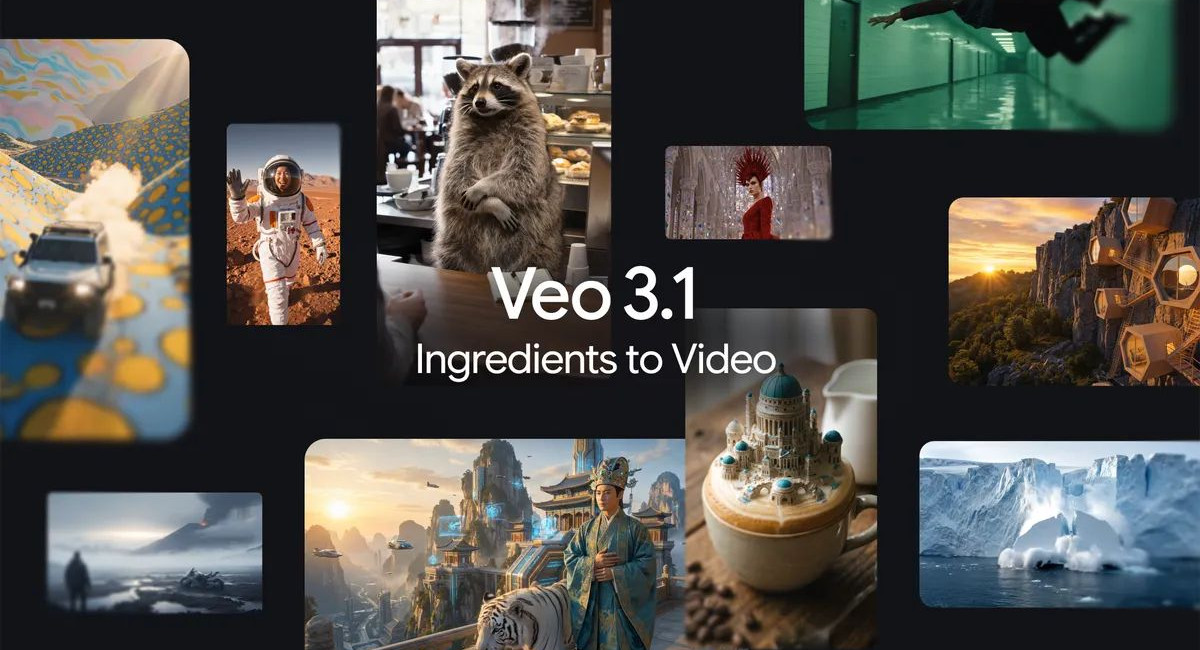
Google has been refining its approach to generative video for several years, but the launch of Veo 3 in May 2025 marked a turning point. That release introduced a model capable of producing surprisingly realistic video clips with minimal user input. However, the latest iteration, Veo 3.1, takes this a step further by addressing some of the most persistent challenges in AI video generation, namely consistency and narrative coherence. The centerpiece of this update is a feature dubbed Ingredients to Video. This innovative tool allows users to input specific visual elements, such as characters, background images, textures, and objects, which the AI then weaves into the generated video. This capability is a game-changer for creators who need to maintain character consistency across different scenes or ensure that specific branding elements remain uniform throughout a video.
By enabling the reuse of these visual ingredients, Google is effectively handing directors a digital continuity supervisor. The advancements in visual synthesis techniques mean that even seemingly disparate elements can be merged into a high-impact, cohesive clip. This solves a common frustration where AI models would hallucinate different versions of a character or object from one shot to the next, breaking the viewer's immersion. Now, a creator can define the look of a protagonist or a setting once and trust Veo 3.1 to retain those characteristics as the narrative unfolds.
Recognizing the dominance of smartphone consumption in the modern media diet, Google has also prioritized mobile-friendly outputs in this latest rollout. Veo 3.1 now supports the generation of content in a 9:16 aspect ratio. This vertical format is the standard for popular short-form video platforms, specifically YouTube Shorts. By integrating this native aspect ratio directly into the generation process via Ingredients to Video, Google removes the need for awkward cropping or post-production formatting, streamlining the workflow for influencers and social media managers who target mobile audiences exclusively.
Quality assurance has also received a significant boost. Users of Google Veo can now leverage advanced upscaling capabilities, allowing for video output in crisp 1080p and even 4K resolution. This addresses one of the early criticisms of AI-generated video, which was often plagued by low resolution and visual artifacts. The ability to produce high-definition content makes Veo a viable option not just for social media quick bites, but potentially for higher-production-value projects where visual fidelity is paramount.
In terms of accessibility, these powerful new features are being integrated across Google's ecosystem. The Ingredients to Video functionality is landing directly on YouTube Shorts and YouTube Create, putting these sophisticated tools in the hands of millions of users. Furthermore, the portrait output option and the other enhancements are becoming available within the Gemini app. For developers and enterprise users, these upgrades are also rolling out to Flow, the Gemini API, and the Vertex API, allowing for the construction of custom applications powered by Veo's engine.
However, amidst this rapid expansion of creative capabilities, Google remains cognizant of the ethical implications of synthetic media. The company is continuing its commitment to transparency and safety by embedding SynthID digital watermarks into all content generated by its tools. This technology allows for the identification of AI-generated material, helping to combat misinformation. Users can even upload media to the Gemini app to verify its provenance, ensuring that as the line between captured reality and artificial generation blurs, there remains a mechanism for truth and verification. As Veo 3.1 rolls out, it stands as a testament to how quickly AI is moving from an experimental curiosity to an essential instrument in the creator's toolkit.
MORE NEWS FOR YOU