
 Help & Support
 SEARCH
Meta deploys advanced AI to transform User Support and Platform Safety
SHARE IT
Meta is ushering in a new era of digital interaction by integrating highly advanced artificial intelligence systems across its flagship applications, Facebook and Instagram. This strategic overhaul aims to provide users with immediate, actionable assistance for routine account issues while simultaneously deploying sophisticated algorithms to detect and neutralize severe content violations before they can impact the broader community.
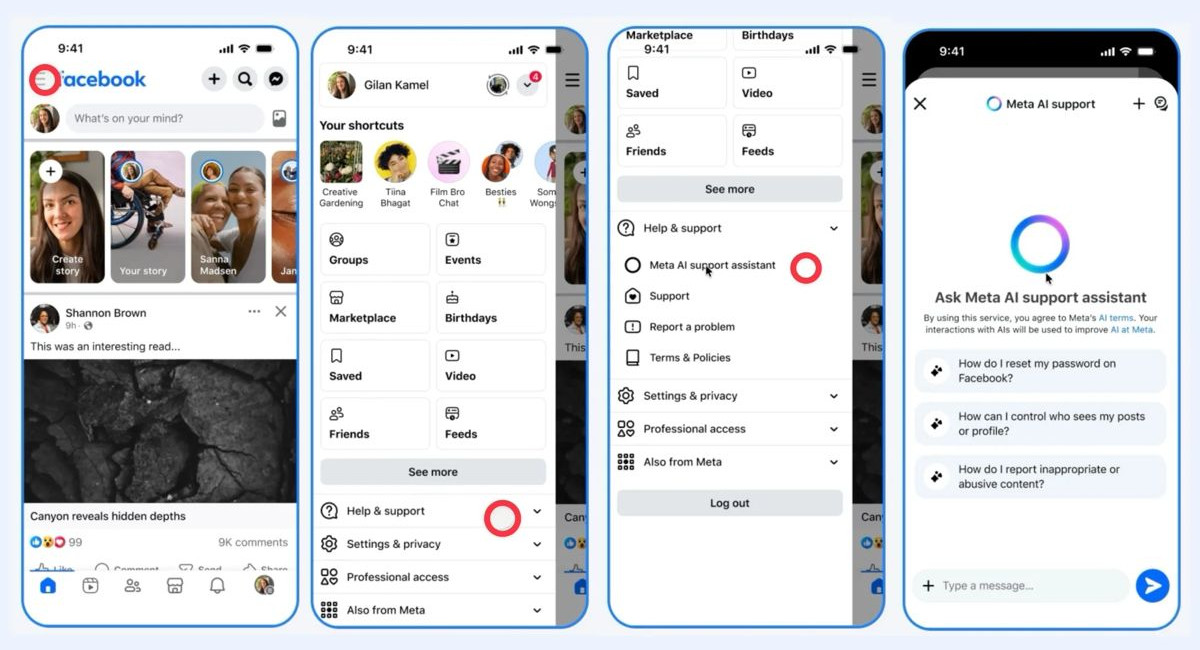
At the forefront of this initiative is the global rollout of the Meta AI support assistant. This tool was initially previewed late last year and is now being made available to users in regions where Meta AI is currently supported. Accessible via the Facebook and Instagram mobile applications for both iOS and Android, as well as through the desktop Help Centers, the assistant is designed to fundamentally change how users experience customer service. Gone are the days of endlessly searching through static help pages or waiting hours for a response to a simple query. The Meta AI support assistant is engineered to provide reliable, round the clock support, effectively resolving issues from the initial report to the final outcome.
The capabilities of this new assistant are extensive and directly address the most common friction points users encounter. Whether a user needs to report a sophisticated scam, flag an impersonation account, or simply understand why a specific piece of content was removed from their feed, the AI assistant is equipped to guide them through the process. It also streamlines routine tasks such as managing complex privacy settings, resetting forgotten passwords, and updating profile information. Meta reports that the assistant can typically formulate a helpful response in under five seconds, a metric that dramatically undercuts traditional support wait times. Furthermore, the company is already testing features to assist users who are entirely locked out of their accounts, beginning with select cases in the US and Canada, signaling a commitment to resolving even the most critical access issues quickly.
Parallel to enhancing user support, Meta is heavily investing in upgrading its content enforcement mechanisms. The company is actively transitioning towards more sophisticated AI models capable of identifying severe policy violations with unprecedented accuracy. These systems are specifically trained to target high risk areas, including illicit drug sales, child exploitation, and complex financial fraud. The early data from these deployments reveals a significant leap in efficiency. In one instance, the new AI systems successfully identified and mitigated five thousand daily scam attempts that had previously slipped past human review teams.
The precision of these advanced models is equally noteworthy. By analyzing nuanced behavioral patterns, the AI can detect coordinated account takeovers that might appear completely benign to a human moderator. For example, a sudden login from a new geographical location combined with a swift password change and profile edit is instantly flagged as a security threat. This level of contextual understanding has led to an eighty percent reduction in user reports regarding celebrity impersonation and a twofold increase in the detection of violating adult content, all while decreasing false positive errors by over sixty percent. Moreover, these systems operate across languages representing ninety eight percent of the global online population, adeptly navigating cultural nuances, regional slang, and the ever changing meanings of emojis.
Looking ahead, Meta plans to deeply integrate these AI systems into its core operations over the next few years. This shift will allow the company to reduce its reliance on external third party vendors for content moderation, focusing instead on a robust internal infrastructure. However, Meta maintains that human expertise remains irreplaceable. While AI will handle the massive scale of repetitive reviews and track adversarial tactics, human specialists will continue to design, oversee, and evaluate the algorithms. Most importantly, critical decisions regarding permanent account disablement and law enforcement escalations will remain strictly under human jurisdiction. By marrying the unparalleled scale of artificial intelligence with nuanced human judgment, Meta aims to create a more responsive, secure, and user centric digital environment for billions of people worldwide.
MORE NEWS FOR YOU