 Help & Support
 SEARCH
OpenAI strikes back with ChatGPT Images 2.0 to challenge Google
SHARE IT
In a significant move that underscores the fierce rivalry in the generative artificial intelligence sector, OpenAI has officially unveiled its latest breakthrough.The highly anticipated ChatGPT Images 2.0 has been launched to the public, directly targeting the advancements recently made by Google with its formidable Gemini Nano Banana 2 model. This new release represents a monumental leap forward in synthetic media generation, promising to reshape how users and developers interact with visual artificial intelligence tools.
To truly understand the magnitude of this release, one must look back at the trajectory of OpenAI over the past year. In early 2025, the organization introduced a massive overhaul to the image generation capabilities embedded within ChatGPT. That particular model captured the imagination of the internet, rapidly achieving viral status and reportedly driving millions of new users to adopt the platform. Recognizing the massive demand for programmatic access,OpenAI subsequently rolled out the underlying technology to developers via the gpt-image-1 application programming interface in April 2025. By December of the same year, they refined the system further with the gpt-image-1.5 update,delivering crucial enhancements and solidifying their position in the highly competitive market.
However, the competition never sleeps. Google has been aggressively expanding its own synthetic media footprint through the Gemini Nano Banana series, a rollout that began generating significant momentum last September. The stakes were raised exponentially earlier this year when Google took the wraps off Nano Banana 2, internally known as Gemini 3.1 Flash Image. This state of the art model was praised for delivering professional grade image quality, setting a formidable new standard in the industry. The pressure was mounting on OpenAI to respond, and the answer has arrived in the form of ChatGPT Images 2.0.
During a highly publicized livestream event, OpenAI Chief Executive Officer Sam Altman, alongside key members of his team, demonstrated the remarkable capabilities of their new model. One of the most historically challenging tasks for visual artificial intelligence has been the accurate generation of legible text within images. ChatGPT Images 2.0 addresses this limitation head on, showcasing a profound ability to render typography flawlessly. Presenters illustrated this by generating intricate mockups of macOS desktop environments and complex chat interfaces, with every line of text appearing sharp, accurate, and perfectly integrated into the visual context.
Beyond just handling text, the system boasts an unprecedented level of precision when it comes to following complex user prompts. OpenAI emphasized that the model preserves intricate details and faithfully renders fine grained elements that previous iterations would have struggled with. Whether it is delicate iconography, detailed user interface components, dense visual compositions, or subtle stylistic guidelines, the model follows instructions with remarkable accuracy. Furthermore, creators now have the flexibility to generate high definition visuals at up to 2K resolution, with support for an expansive range of aspect ratios spanning from a wide panorama to a tall vertical format.
Catering to different user needs, OpenAI has split the offering into two distinct versions. The first, labeled ChatGPT Images 2.0 instant, is designed for rapid generation and is available to all standard ChatGPT and Codex users. The second, more advanced tier is dubbed ChatGPT Images 2.0 thinking. Reserved exclusively for premium subscribers across the Plus, Pro, and Business tiers, this version introduces a revolutionary workflow. When activated, it can independently scour the web for real time information related to a user prompt before generating the final image. It can also produce multiple distinct variations from a single query and rigorously verify its own visual outputs for accuracy and context.
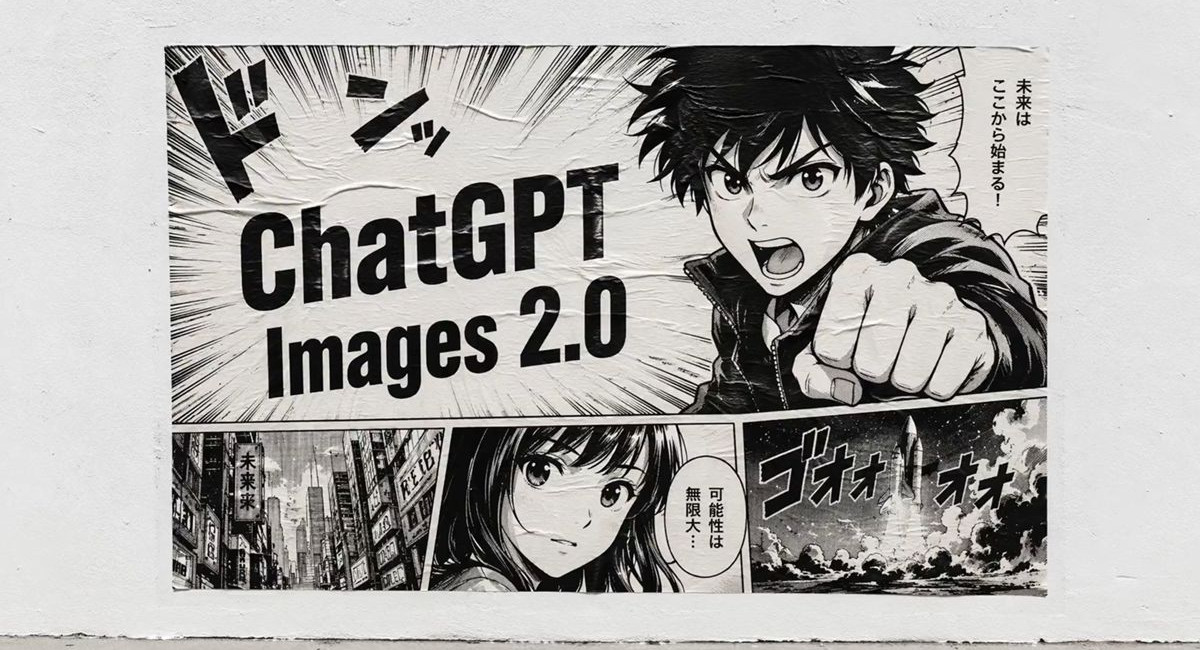
In an increasingly interconnected world, language support is paramount. The latest update introduces robust multilingual understanding, making it vastly superior at handling and rendering non Latin typography. Users can now confidently generate visuals containing Japanese, Korean, Chinese, Hindi, and Bengali text without fearing the garbled artifacts of the past.
For the developer community, the underlying gpt-image-2 model is now accessible through the standard interface.Pricing is structured to reflect the heavy computational load, costing eight dollars for standard input, two dollars for cached input, and thirty dollars for output. As this visual arms race continues, it is clear that the ultimate winners are the users and developers who now have access to unprecedented creative power.
MORE NEWS FOR YOU