
 Help & Support
 SEARCH
Meta’s digital bouncer: Artificial Intelligence to patrol age limits on social media
SHARE IT
The persistent challenge of keeping children off adult-oriented social media platforms has entered a new technological era. Meta, the parent company of Facebook and Instagram, is deploying advanced artificial intelligence to identify and remove users who are under the legal age of 13. By moving beyond traditional self-reporting methods, the tech giant aims to close a long-standing loophole that has allowed millions of minors to navigate the digital world unsupervised.
Historically, age verification on the internet has been remarkably easy to circumvent. Most platforms rely on a simple birthdate entry field, a barrier that even a primary school student can bypass with a few clicks. While various groups have called for stricter verification, such as government-issued IDs, these proposals often face intense backlash due to privacy concerns and the risk of creating a more closed web environment. Meta’s new approach seeks a middle ground by using automated analysis to estimate age without requiring formal documentation.
The new system functions by scanning a user’s digital footprint for specific physical and behavioral indicators. According to Meta, the AI will examine uploaded photos and videos for subtle biological cues, including bone structure and height, to determine if a person fits the profile of a pre-teen. This visual data is then cross-referenced with text-based signals, such as mentions of school grades or celebratory posts about specific birthdays. By combining these different data points, the algorithm can flag accounts that appear to belong to children, even if the user claimed to be older during the registration process.
One of the more complex aspects of this rollout is the distinction between identification and estimation. Meta has been careful to clarify that this system does not utilize facial recognition technology. Instead of identifying who a specific individual is, the AI focuses on "abstract" age estimation. It looks at the context of the imagery to place the user within a general age bracket. This distinction is crucial for navigating global privacy regulations, though it remains to be seen how the public will react to the idea of an algorithm "studying" their physical features for age-related markers.
The technology must also account for the creative ways children attempt to fool existing safeguards. From using filters to mimic older features to the classic trope of wearing a fake moustache, young users are often one step ahead of static filters. Meta’s AI is reportedly being trained to recognize these "props" and avoid being misled by superficial changes that don’t align with broader physical metrics. The goal is to create a dynamic bouncer that can see through the digital disguises used by tech-savvy minors.
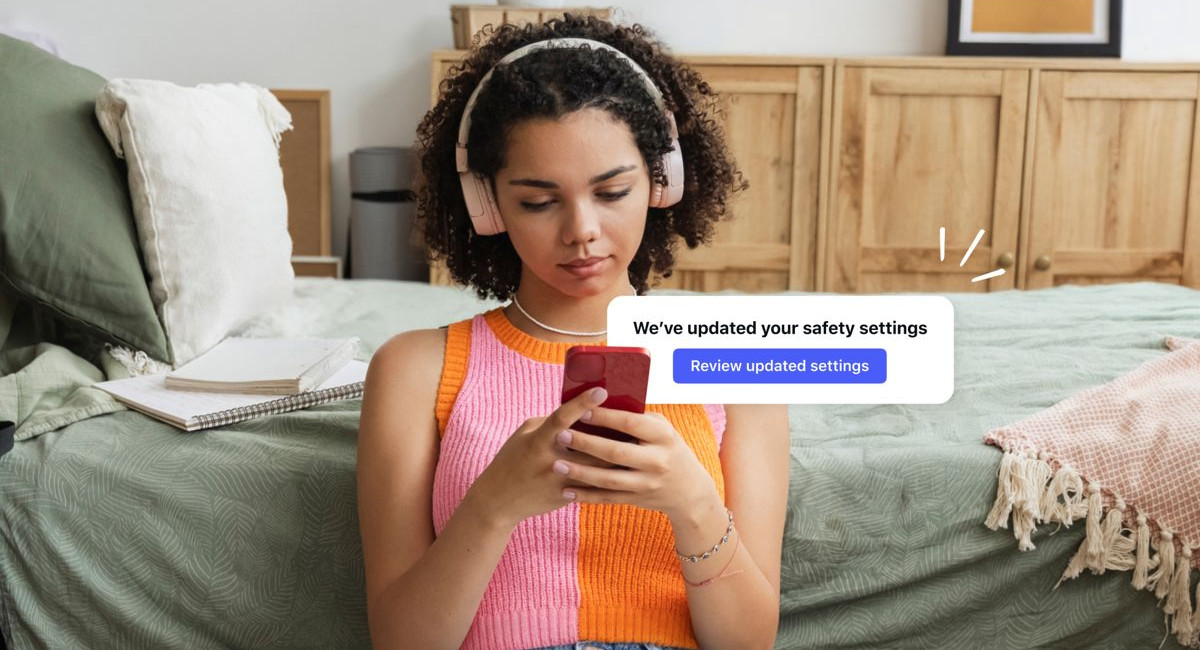
Beyond the automated scanning, Meta is also increasing the involvement of parents. Starting this month in the US, the company will send notifications to parents on Facebook and Instagram, urging them to verify the listed ages of their teenagers. This initiative reflects a broader trend of "digital co-parenting," where the platform provides tools for guardians to monitor their children's activities more closely. Parents are already being given insights into what their children discuss with AI and what they search for, and this new age-check serves as another layer of oversight.
Critics and advocates alike are watching this development with a mixture of hope and skepticism. While the removal of underage accounts is a clear goal for child safety, the technical execution of scanning billions of images for bone structure remains a significant undertaking. The balance between protecting minors and maintaining user privacy is delicate, and Meta's reliance on AI marks a definitive shift in how social media companies manage their youngest and most vulnerable demographic.
MORE NEWS FOR YOU