 Help & Support
 SEARCH
OpenAI overhauls ChatGPT for Teenagers worldwide
SHARE IT
Nearly a year after facing intense scrutiny and regulatory backlash following the tragic loss of sixteen-year-old Adam Raine, OpenAI is executing its most comprehensive safety overhaul to date. The artificial intelligence pioneer has officially initiated the global rollout of ChatGPT for Teens, a specialized iteration of its flagship conversational platform designed specifically for users under eighteen years of age. Transitioning automatically across accounts over the coming fortnight, the system requires no manual opt-in from teenagers; anyone detected or registered as a minor will be seamlessly transferred into this dedicated environment. The initiative represents a fundamental shift in how tech developers manage adolescent interaction with generative intelligence.
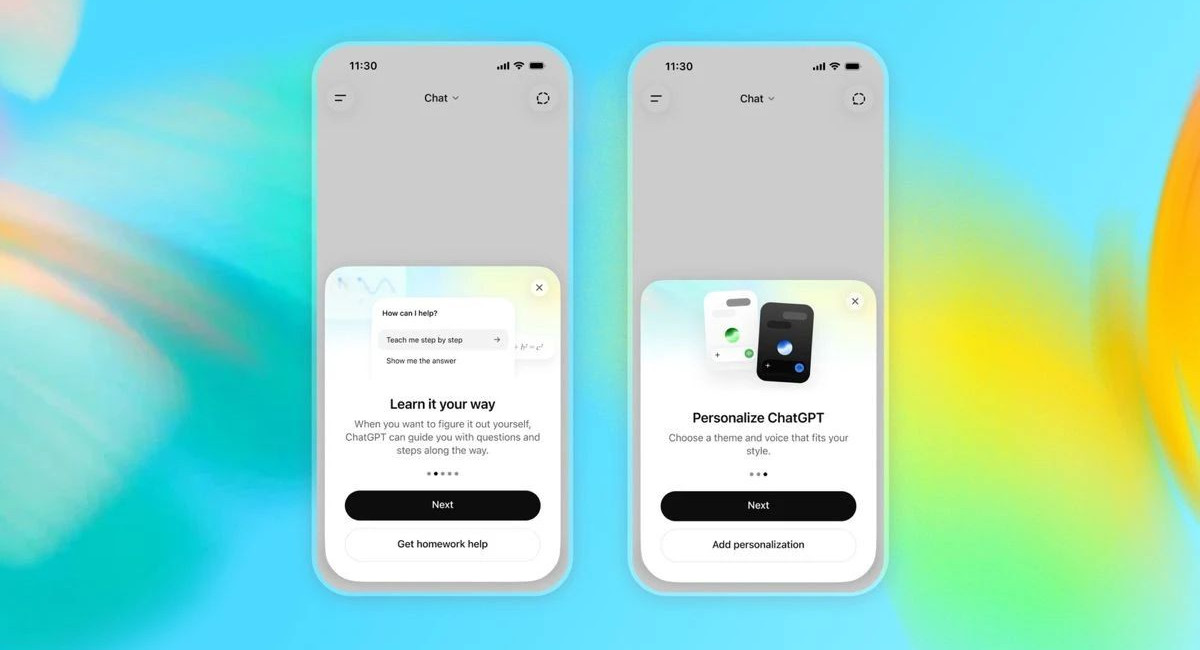
At the core of this global deployment is Study Mode, a new default feature intended to fundamentally alter how students use artificial intelligence for academic work. Rather than functioning as a shortcut generator that hands out ready-made homework answers, Study Mode adopts the classical Socratic method. When presented with a question, the system responds with guided queries and step-by-step prompts that encourage the student to analyze the material and arrive at the solution independently. According to Lauren Jonas, Head of Youth and Families at OpenAI, the goal is to transform the platform from an automated task-completion tool into an interactive learning partner. Extensive pilot testing has demonstrated notable improvements in student performance, encouraging the integration of customizable Study Hours that allow parents and students to lock the system into educational mode during designated study times.
To prevent students from circumventing these learning boundaries, the algorithm has been equipped with sophisticated language recognition tools that spot shortcut requests. If a student explicitly asks the chatbot to write a full essay or calculate an equation without explanation, the model detects the evasion technique and politely redirects the conversation back to analytical reasoning. Furthermore, the learning environment is enriched by dynamic visual generation capable of illustrating more than three hundred academic topics. From complex mathematical integrals and planetary orbits to biological processes like cellular mitosis, the chatbot can generate custom visual aids instantly to help students visualize abstract scientific principles. Suggested prompts on the main screen are continually refreshed based on the user's progress, reinforcing an active learning environment.
Alongside academic tools, the updated framework enforces strict boundaries against artificial intelligence anthropomorphism. Following widespread concern regarding the psychological risks of emotional attachment to software, OpenAI has implemented hardcoded algorithmic restrictions that prevent the model from simulating human connection. The system is strictly forbidden from referring to itself as a friend, expressing emotional attachment, or projecting human empathy. Periodic notifications remind teenagers of the system's synthetic nature and urge them to take regular breaks from the screen. Although cosmetic customization options like personal wallpapers are still available, they are carefully curated to ensure that the user experience remains strictly utility-focused, preventing the formation of parasocial bonds with the software.
Parental oversight has also received a major upgrade through linked guardian accounts. Parents now have the ability to enforce Quiet Hours, restricting access during late-night hours to promote healthy sleep habits and minimize digital distractions. However, the most critical element of this security update is the real-time escalation system for mental health emergencies. Expanding beyond traditional rules against violent threats, the platform now monitors conversations for indicators of severe self-harm or eating disorders.
Crucially, when safety algorithms flag potential crisis situations, the process relies on human-in-the-loop oversight rather than purely automated actions. Flagged transcripts are immediately routed to a specialized team of human safety experts located at OpenAI headquarters. If these human reviewers confirm that a user is in distress, emergency alerts are dispatched directly to the parents via text message, email, and push notification within a target timeframe of less than one hour. By combining Socratic learning methods, strict emotional boundaries, and swift human intervention, OpenAI aims to set a new standard for how technology companies protect and educate young users in the artificial intelligence era.
MORE NEWS FOR YOU