 Help & Support
 SEARCH
Predicting the unpredictable: When AI meets flood prevention
SHARE IT
When disaster strikes, the difference between tragedy and survival often comes down to a single factor: timely information. For years, the global community has relied on early warning systems to mitigate the devastating impacts of natural hazards. However, a glaring blind spot has persisted in these life-saving efforts, particularly concerning urban flash floods. Unlike other weather events that build gradually, flash floods materialize with terrifying suddenness, leaving populations with mere minutes to react. The primary hurdle in forecasting these sudden deluges has not been a lack of computing power, but a fundamental absence of high-fidelity historical data. Without a comprehensive record of past events, training artificial intelligence systems to predict future occurrences remained an insurmountable challenge.
That narrative is now changing completely. In a major leap forward for crisis prediction, Google has unveiled Groundsource, a pioneering methodology driven by artificial intelligence. This new approach seeks to fundamentally resolve the historical data gap that has long plagued meteorologists and disaster response teams. By leveraging the advanced capabilities of Gemini, Groundsource achieves something previously thought impossible: it transforms massive volumes of unstructured public information into a rigorous, high-quality archive of historical disaster data. Instead of relying solely on traditional meteorological sensors, which are often sparse in urban environments, this system looks to the wealth of information already documented in public reports over the decades.
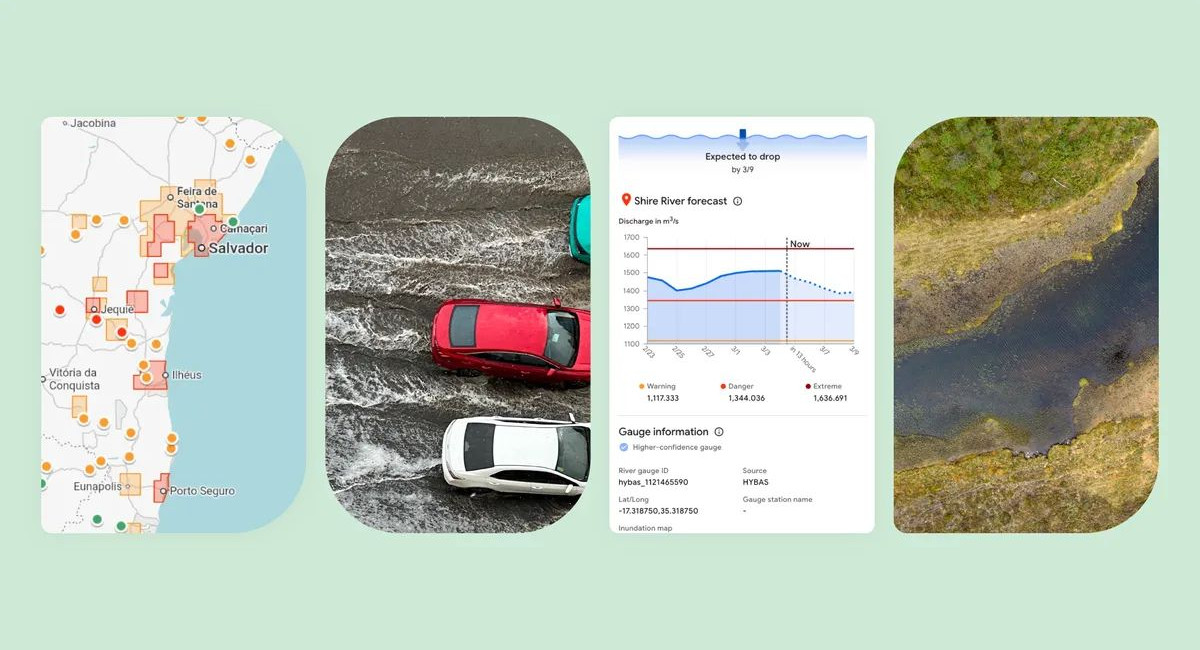
The sheer scale of the data processing involved is staggering. The Gemini system sifted through countless public records spanning many years, successfully identifying and cataloging more than 2.6 million distinct historical flood events. This massive data collection effort covers more than 150 countries, providing a truly global perspective on the phenomenon of urban flooding. But identifying that a flood occurred is only half the battle; knowing exactly where it happened is crucial for predictive modeling. To solve this, the methodology incorporates Google Maps technology to delineate the precise geographic boundaries of every single recorded event. This meticulous mapping creates a highly focused and accurate dataset specifically tailored to the unique dynamics of flash floods in densely populated city landscapes.
Armed with this unprecedented dataset, researchers have trained a sophisticated new forecasting model that delivers tangible, life-saving progress. The system can now predict urban flash floods up to a full 24 hours before the waters begin to rise. These crucial forecasts are being made easily accessible to the public through the existing Flood Hub platform. This new capability does not replace but rather deeply enhances the company's current riverine flood forecasting tools, which already provide critical early warnings to an estimated 2 billion people across the globe. Adding urban flash flood predictions to this arsenal represents a massive expansion of the platform's protective reach, offering vulnerable city dwellers a precious window of time to secure their property and seek higher ground.
The implications of this breakthrough extend far beyond immediate disaster response. For local communities worldwide, the availability of a 24-hour warning transforms a potential catastrophe into a manageable crisis, allowing for orderly evacuations and the prepositioning of emergency resources. Simultaneously, Groundsource serves as a monumental gift to the global scientific community. By providing an open-source benchmark of this magnitude, it empowers independent researchers, climate scientists, and partner organizations to scale their own impact. This is especially vital for urban regions in developing nations that have historically lacked the infrastructure to gather and maintain detailed flooding records.
Looking to the future, the integration of the urban flash floods model into the broader Google Earth AI family of geospatial tools marks just the beginning of a larger resilience strategy. The underlying artificial intelligence approach that powers Groundsource is highly adaptable. Scientists envision a near future where this exact same methodology is deployed to track and predict other devastating natural phenomena, such as sudden landslides or severe heat waves. By continuing to harvest and verify global public reports, researchers can build even more comprehensive datasets. The ultimate vision driving this innovation is clear and ambitious: to forge a world where no community is ever caught off guard by a natural disaster, turning the lessons of the past into the protective shield of the future.
MORE NEWS FOR YOU