 Help & Support
 SEARCH
Quick Share finally talks to AirDrop
SHARE IT
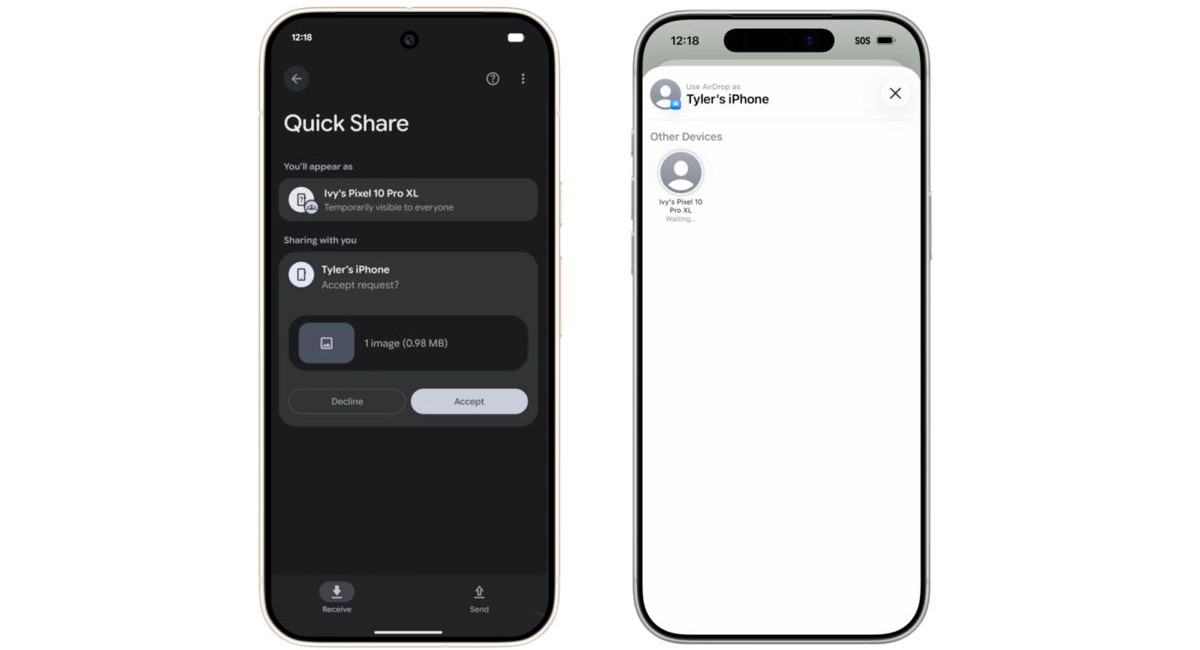
Google has taken a step few expected but many hoped for: Android’s Quick Share can now communicate directly with Apple’s AirDrop, enabling smooth file transfers between the two rival ecosystems. The upgrade debuts on the Pixel 10 family and works with iPhone, iPad, and macOS devices, setting the stage for a much more interoperable future.
For years, transferring files between Android and Apple hardware has required workarounds, third-party apps, or cumbersome cloud links. With this update, Google is breaking down one of the most persistent barriers separating the two platforms. Although the feature is rolling out gradually, starting with Google’s newest flagship phones, the company plans to expand the integration across additional Android devices.
At its core, the update allows users to send photos, documents, and videos without giving a second thought to whether the person standing next to them is holding a Pixel or an iPhone. The simplicity mirrors the seamless experience Apple users have enjoyed within their own ecosystem for more than a decade.
To make the new system work, the iPhone owner simply needs to set their AirDrop visibility to “Everyone for 10 minutes,” which temporarily makes the device discoverable beyond their contacts. Once enabled, a nearby Pixel 10 will automatically list the iPhone as an available Quick Share target, allowing instant peer-to-peer transfer. Google acknowledges that this is only an initial implementation and says it hopes to collaborate with Apple to expand compatibility to AirDrop’s more private “Contacts Only” mode in the future.
Google emphasized that accuracy matters, especially when sending sensitive files. Before a transfer begins, users can double-check the target device name displayed on their screen to ensure they’re sharing with the right person.
The integration works both ways. Owners of Apple devices aren’t limited to receiving content — they can also send files back to Pixel phones. As with the iPhone, the Pixel needs to be set as discoverable for the exchange to occur. Once both devices are visible to each other, the process is fully symmetric.
The connection, Google stresses, is direct. Content isn’t funneled through company servers, nor is metadata stored along the way. Everything moves from device to device using a secure peer-to-peer link. This distinction is important not only for privacy-conscious users but also for regulatory environments that increasingly scrutinize how tech companies handle personal data.
Security, according to Google, was central in designing this interoperability. The company says the new sharing pipeline was hardened with robust safeguards and verified through independent security testing. It positions this feature as part of a broader commitment to cross-platform harmony — the same philosophy that has guided its push for universal support of RCS messaging and alerts for unknown Bluetooth trackers.
One notable omission is any insight into Apple’s involvement. Google’s announcement stays silent on whether the Cupertino company actively collaborated or simply allowed the system to operate within AirDrop’s existing parameters. Apple has not commented on the rollout, but industry observers will be watching closely. If both companies continue to participate, the move could mark the beginning of a more interoperable era between iOS and Android — territories long defined by competition rather than cooperation.
For now, Quick Share’s new capability offers something many users have waited years to see: a simple, fast, secure way to exchange files across platforms without friction or extra apps. It’s a small shift with big practical consequences, especially for households, classrooms, creative teams, and workplaces where Apple and Android devices coexist every day.
MORE NEWS FOR YOU