 Help & Support
 SEARCH
The future of Search: Google unveils Personal Intelligence in AI Mode
SHARE IT
Google is fundamentally redefining the relationship between users and the web by introducing Personal Intelligence within its AI Mode for Search. This latest evolution marks a shift from providing generic answers to delivering a deeply customized experience that understands the unique context of an individual's life. By integrating a user's digital footprint directly into the search process, Google aims to move beyond a simple information retrieval tool into a proactive personal assistant.
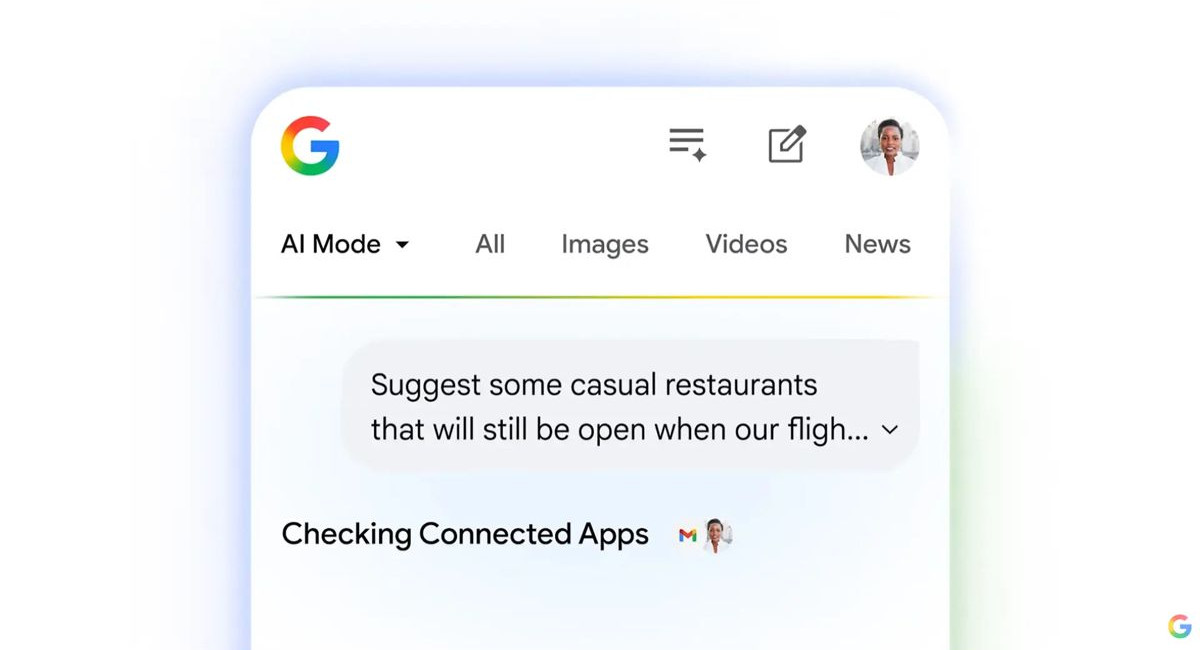
At the heart of this update is the ability for Google AI Pro and AI Ultra subscribers to securely link their Gmail and Google Photos accounts with Search. This opt-in feature allows the underlying Gemini 3 model to draw insights from personal data, such as flight confirmations, hotel bookings, and visual memories. The goal is to eliminate the need for users to manually input details they have already stored elsewhere. Instead of starting from scratch with every query, the AI already possesses the necessary background to provide relevant, high-context results.
The practical applications of this technology are diverse and intuitively designed. For instance, a user planning a family vacation no longer needs to cross-reference their itinerary. By accessing travel details from Gmail and identifying family preferences through Google Photos, AI Mode can suggest a custom schedule that includes kid-friendly museums or specific types of restaurants the family has enjoyed in the past. It transforms a broad search for activities into a curated plan that feels intimately familiar.
Shopping also receives a significant boost through Personal Intelligence. When searching for seasonal clothing, the system can analyze past brand preferences and combine them with upcoming travel plans found in the user's inbox. If a user is heading to a cold climate like Chicago in early spring, the AI might recommend specific windproof jackets from brands they already trust. This level of synchronization acts as a digital personal shopper that understands both the user’s style and their immediate needs.
Beyond functional utility, the feature invites users to explore more creative and abstract queries. Questions like describing one’s perfect day or imagining a movie title for their life become possible because the AI can synthesize themes from a user’s personal history. It represents a move toward a more conversational and reflective form of interaction, where the search engine acts as a mirror to the user's own experiences.
Privacy and user agency remain central to this rollout. Google has emphasized that Personal Intelligence is strictly an opt-in experience, giving users full control over which apps are connected and the ability to toggle these connections at any time. Furthermore, the company clarified that the Gemini 3 model does not train directly on a user's private Gmail inbox or Photos library. Instead, training is limited to specific interactions within AI Mode to improve overall functionality while maintaining a clear boundary around personal content.
Currently, this feature is being introduced as a Labs experiment for personal Google accounts in the United States, specifically for those using the English language. As it undergoes real-world testing, Google acknowledges that the system may occasionally misinterpret context or make incorrect connections. Users are encouraged to provide feedback through a simple rating system, allowing the AI to refine its accuracy over time. This experimental phase is a crucial step in Google’s broader vision to make Search not just a gateway to the world’s information, but a personalized tool that is uniquely yours.
MORE NEWS FOR YOU