 Help & Support
 SEARCH
The mind behind Wordle returns with a cryptic new obsession
SHARE IT
If you cast your mind back to the winter of late 2021 and early 2022, you will likely remember a time when green and yellow squares dominated every social media timeline. That was the era of Wordle, a wonderfully simple daily ritual that temporarily united the internet. Since handing over the reins of his viral sensation, the creator of that beloved game, Josh Wardle, has maintained a relatively low profile in the gaming sphere. Now, he has finally broken his silence to drop a brand new daily puzzle on the world. The game is called Parseword, and unlike its famously straightforward predecessor, this one is a genuine chin-scratcher that will demand significantly more from your cognitive reserves.
Parseword is a totally free-to-play, bite-sized digital adaptation of the cryptic crossword, a format that has long been a staple of British newspapers but has struggled to find a massive mainstream audience in the United States. In America, the concise crossword reigns supreme, offering straightforward, albeit sometimes vague, clues that often require you to solve intersecting words just to confirm your guess. Cryptic crosswords operate on an entirely different level. Every single clue in a cryptic crossword is a puzzle in its own right, cleverly constructed to validate itself. You are not just retrieving a synonym from your vocabulary; you are untangling anagrams, identifying hidden words, and deciphering multi-layered wordplay that can initially seem like an alien language to the uninitiated.
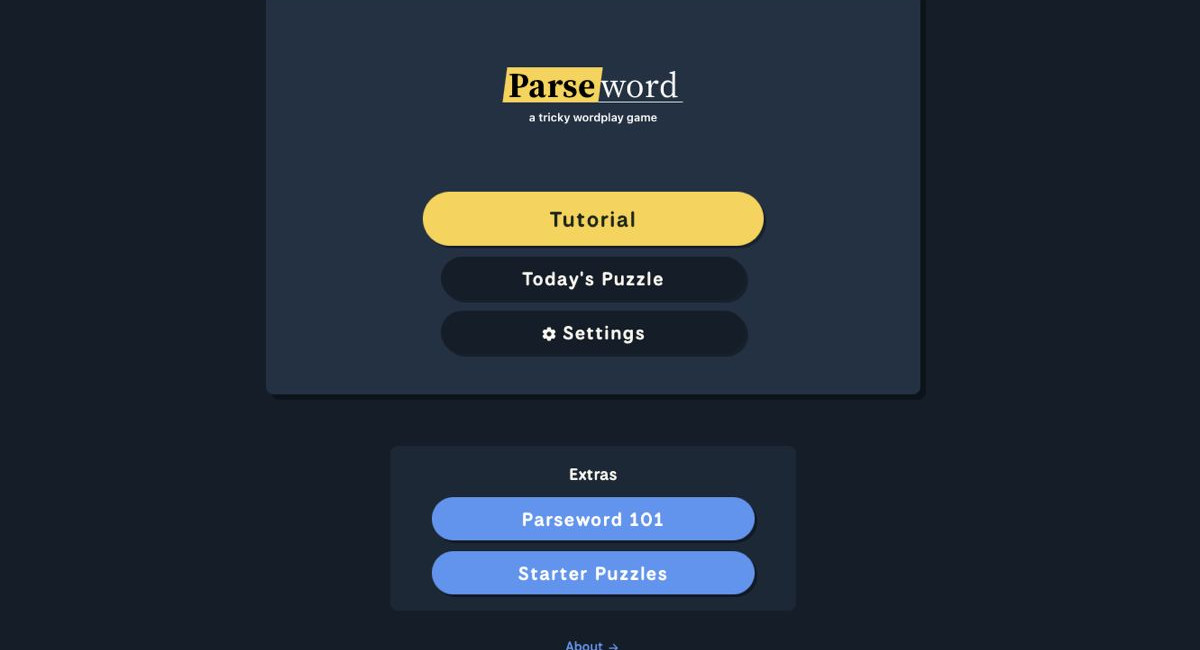
Recognizing that cryptic crosswords are notoriously intimidating, Josh Wardle and his team of collaborators have specifically designed Parseword to bridge the gap between seasoned cruciverbalists and casual puzzle fans. The creators have openly acknowledged that while cryptic puzzles are beautiful and rich, they have a brutally steep learning curve. To counter this, Parseword is built with accessibility at its core. It does not just throw you into the deep end. Instead, it gently guides new players through the mechanics of cryptic clues using comprehensive tutorials, approachable starter puzzles, and instructional videos. Furthermore, for those inevitable moments when you find yourself staring blankly at the screen, there is a dedicated hint button to nudge your thought process in the right direction without entirely giving away the answer.
To understand why this deliberate, educational approach makes sense, one only needs to look at the history of Wardle himself. Wordle was famously born not out of a desire for commercial success, but as a touching personal project. He originally coded the game simply as a fun activity for his partner, who loved word puzzles, to enjoy during the pandemic lockdowns. He never anticipated that his romantic gesture would morph into a cultural juggernaut, eventually leading to a lucrative acquisition by the New York Times for a sum in the low seven figures. The explosive, uncontrollable viral success of that period was clearly a whirlwind experience for the software engineer.
The landscape of daily digital puzzles has shifted dramatically since that massive acquisition. Today, the New York Times has successfully transformed the momentum of Wordle into a thriving ecosystem of daily habits, expanding its roster to include wildly popular hits like Connections and Strands. Players are now accustomed to logging on every morning to test their wits across multiple different formats. Parseword is launching into this highly competitive, puzzle-hungry environment, but it seems completely uninterested in competing for absolute dominance. Instead, it occupies its own distinct, quiet corner of the internet, free from the pressures of corporate engagement metrics and aggressive monetization.
This sense of creative freedom is clearly a driving force behind the new release. According to recent interviews, Josh Wardle has expressed a profound sense of relief regarding how this launch is being handled. He has stated that releasing Parseword feels like something happening on his own terms, as opposed to the overwhelming sensation of the Wordle phenomenon, which felt like something that simply happened to him. Currently, there are no grand commercial ambitions attached to the project. It stands purely as a passion project aimed at sharing the specific joy of cryptic crosswords with a broader audience. If you are ready to test your linguistic lateral thinking, the game is available right now for anyone brave enough to take the challenge.
MORE NEWS FOR YOU