
 Help & Support
 SEARCH
Tomb Raider: Legacy of Atlantis officially announced
SHARE IT
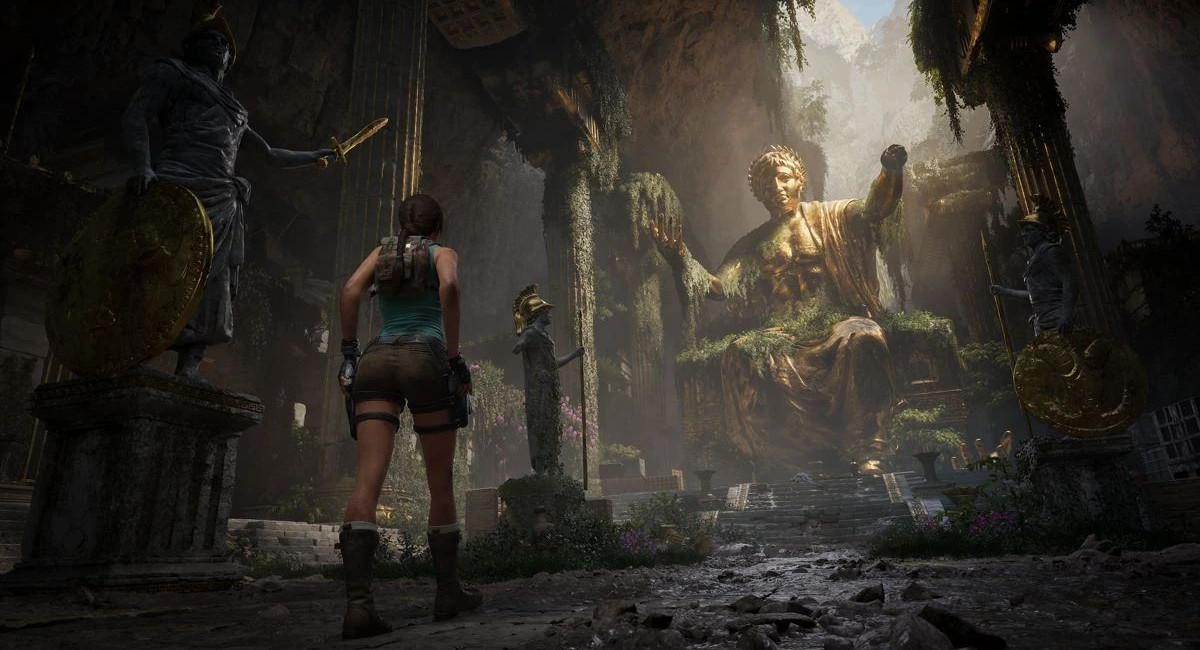
Gaming's most iconic archaeologist is trading the gritty, raw survivalism of her recent outings for a grand return to her classical, myth-soaked roots. Sony has officially pulled back the curtain on Tomb Raider: Legacy of Atlantis, mapping out an ambitious narrative and technical leap forward that takes direct aim at Mediterranean folklore. Leaving behind the grounded realism of the previous trilogy, this upcoming entry plunges players straight into the heart of ancient legends, drawing heavy inspiration from the philosophical dialogues of Plato.
According to the latest details from Sony, the game is being crafted to serve as a showcase for current-generation hardware, heavily leveraging the advanced architecture of the PlayStation 5. The development team is moving away from the bleak wilderness and focusing instead on the deep, submerged mysteries of the lost continent. By grounding the narrative in texts like Timaeus and Critias, the story promises a rich tapestry of sunken ruins, elaborate ancient mechanisms, and mythological creatures that will challenge players both physically and intellectually.
At the core of this new journey is a complete overhaul of environmental interaction. Players will find themselves navigating intricate puzzles deeply rooted in physics and fluid dynamics. Instead of merely pushing blocks, Lara will have to manipulate water currents and maintain the structural integrity of crumbling underwater temples to progress. The gameplay loop heavily emphasizes the fluid transition between tense deep-sea diving and perilous vertical climbing up unstable, sunken monuments.
To bring these watery depths to life, the developers are maximizing the technical capabilities of modern hardware ahead of the early 2027 release window. Gamers will have to choose between two distinct graphical setups. Performance Mode will target a dynamic 4K resolution running at a silky-smooth 60 frames per second. On the other hand, Quality Mode will scale things up to native 4K at 30 frames per second, fully unlocking advanced ray tracing features.
The inclusion of global illumination ray tracing is particularly vital for a title so focused on marine environments, as it allows for hyper-realistic light refraction through moving water. Furthermore, traditional loading screens are being completely eradicated. Thanks to customized NVMe SSD architecture, players will experience seamless transitions when moving from the sun-drenched surface world down into the claustrophobic, deep underwater caverns of Atlantis without a single interruption.
Immersion is further heightened by a sophisticated audio design powered by Tempest 3D AudioTech. The game utilizes spatial audio to position every sound cue accurately in a three-dimensional space. Players will be able to pinpoint the exact direction of rushing water currents or the ominous echo of ancient masonry collapsing nearby, providing a distinct tactical advantage during exploration and puzzle-solving sequences.
The DualSense controller also plays a pivotal role in dictating how the adventure actually feels in the player's hands. Specialized haptic feedback will simulate a wide array of tactile sensations, allowing users to feel the rough texture of ancient stone during vertical climbs or the heavy, dragging resistance of deep water while swimming. Meanwhile, adaptive triggers are set to dynamically alter pressure based on the equipment in use, providing realistic tension when pulling back the string of Lara's signature bow or firing a heavy harpoon gun underwater.
Fans will not have to wait too long to dive into this mythological sandbox. Tomb Raider: Legacy of Atlantis is officially scheduled to land on store shelves and digital platforms on February 12, 2027, marking a bold new chapter for the historic franchise.
MORE NEWS FOR YOU