 Help & Support
 SEARCH
Xiaomi next generation OS drops flat design and enhances performance efficiency
SHARE IT
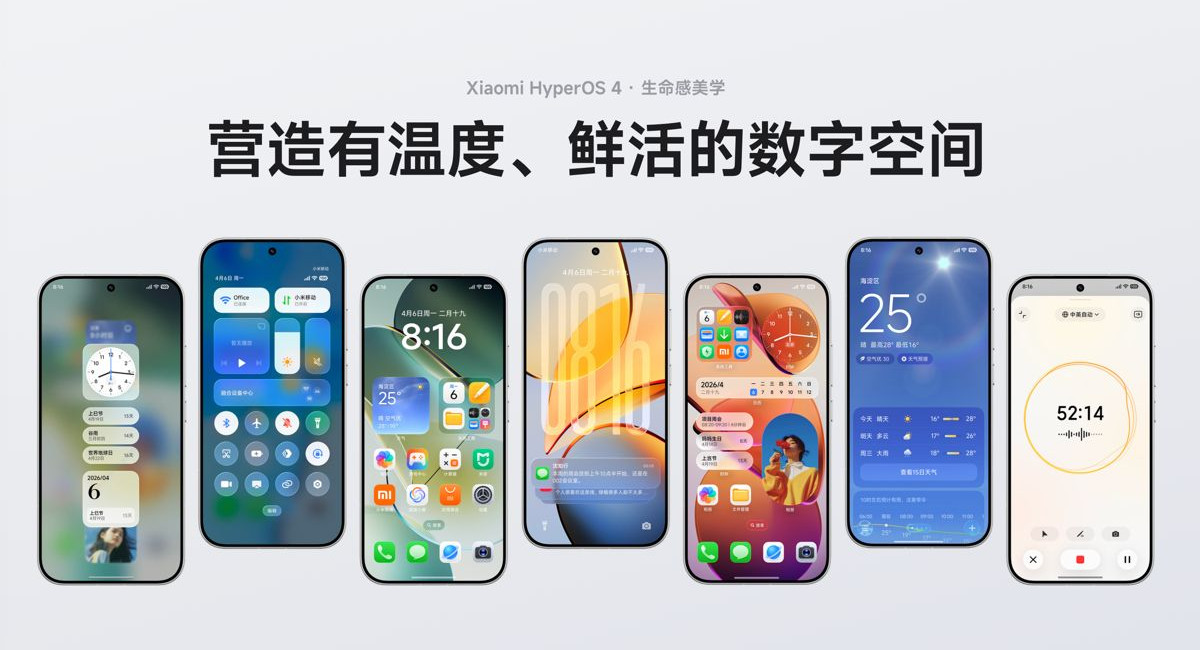
The tech giant has officially pulled back the curtain on Xiaomi HyperOS 4, bringing a sweeping set of changes to its software ecosystem. While the operating system remains anchored to the core architecture established in Xiaomi HyperOS 3 with Android 17, the company has completely re-engineered how the system looks, feels, and handles long-term workloads. This release clearly signals a shift toward a more polished interface combined with deeper machine learning integration across everyday smartphone tasks.
At the center of this update lies the new Glass UI visual paradigm. Moving away from the conventional flat aesthetic, the design team has implemented dynamic lighting, realistic light refraction, and dimensional layering across pop-up windows and menus. To maintain fluidity without dropping frames, dedicated hardware resources are now assigned to render realistic transparencies and shadows. Users also gain granular control over customization, featuring a fully editable lock screen with flexible placement for clocks, widgets, and notifications, alongside resizable home screen folders. Floating applications and UI elements now transition seamlessly during screen rotation, maintaining orientation without visual jarring.
Under the hood, performance management gets a critical upgrade aimed at preventing system slowdowns during prolonged use. Internal benchmarks reveal that even after nine hours of continuous operation, app launching remains 18 percent faster compared to the previous release. This improvement relies on predictive resource management algorithms that analyze user behavior to pre-load critical assets into system memory before an app is tapped. Image processing also sees substantial gains, with the HDR algorithm execution time cut down to 240ms, the camera app cold-start speed accelerated by 200ms, and high-resolution video playback optimized to eliminate frame dropping entirely.
Artificial intelligence forms another major pillar of the update through the introduction of Super AI Assistant 2.0, powered by the proprietary MiMo large language model. Designed to run complex tasks directly on the device, the assistant handles natural language image searches, automated speech transcription, note organization, smart home controls, route planning, and integration with Xiaomi electric vehicles. To keep interactions non-intrusive, requests are processed quietly via the Xiaomi Super Island interface surrounding the front camera cut-out, expanding into full-screen views only when results are prepared.
Adding a fresh layer of contextual interactivity is the Inspiration Ball feature. This floating interactive element acts as an intelligent portal capable of reading screen content dynamically. Users can drag the indicator over a written address and issue a voice command to immediately launch map navigation, or place it over a product photo to prompt the system to locate matching items across online retail platforms.
The public rollout for Xiaomi HyperOS 4 begins with a public beta phase launched initially in China. High-end flagship devices form the first wave, with models such as Xiaomi 17 Ultra, Xiaomi 17 Pro Max, Xiaomi 17 Pro, Xiaomi 17, Redmi K90 Pro Max, Redmi K90, Xiaomi Pad 8 Pro, and Xiaomi Pad 8 getting early access. Subsequent rollout phases starting later in the season will extend eligibility to mid-range and foldable lineups, including Xiaomi 17T Pro, Xiaomi 17T, Xiaomi 15 Ultra, Xiaomi 15 Pro, Xiaomi 15, Redmi K90 Ultra, Xiaomi Mix Flip 2, and several additional tablet variations.
MORE NEWS FOR YOU