 Help & Support
 SEARCH
YouTube’s AI evolution towards expressive global content
SHARE IT
In an era where digital borders are increasingly becoming a thing of the past, YouTube is taking a definitive step forward to ensure that language is no longer a hurdle for global storytelling. The platform has recently unveiled a series of significant updates to its auto-dubbing technology, a move that signals a shift from functional translation to a more nuanced, emotional, and realistic viewing experience. This evolution is led by Chandralekha Motati, Product Manager at YouTube, who emphasizes that the goal is to make global stories feel local, regardless of where the viewer is located.
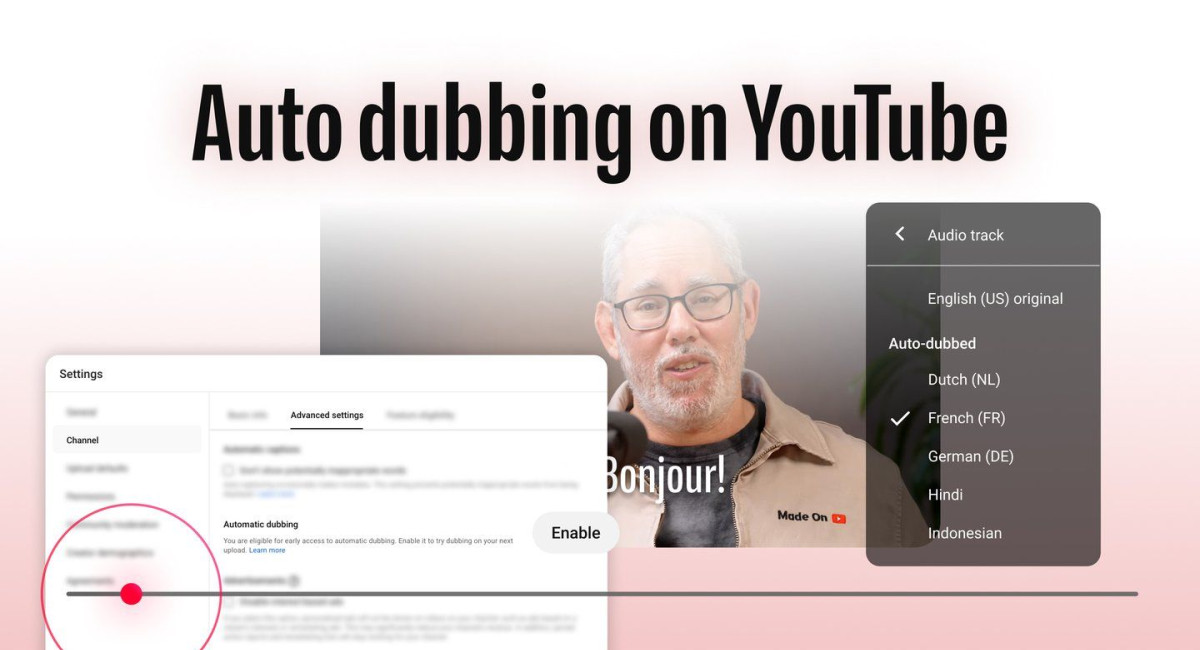
One of the most striking developments is the introduction of Expressive Speech. For years, AI-generated voices were often criticized for being flat or robotic, stripping away the personality that makes a creator's content unique. To address this, YouTube has launched this new feature across eight major languages, including English, French, German, Hindi, Indonesian, Italian, Portuguese, and Spanish. By utilizing advanced AI models, the system can now capture the original pitch, energy, and emotional delivery of a creator. This means that a joke told with a specific cadence or an educational point made with emphasis will retain its intended impact, even when heard in a different language.
The reach of this technology is also expanding rapidly. What began as a pilot for a select group of creators is now being made available to everyone on the platform. YouTube’s auto-dubbing library has grown to support 27 languages, a massive leap that aims to democratize access to global audiences. The data suggests that there is a significant appetite for this: in December alone, an average of six million people spent at least ten minutes a day watching content that had been automatically dubbed. This growing adoption highlights a fundamental change in how users consume media, moving toward a world where the creator’s native language is no longer a limiting factor for their success.
Beyond just the audio, YouTube is also looking at the visual aspect of dubbing. The platform is currently testing a Lip Sync pilot program. This cutting-edge feature uses AI to subtly adjust the lip movements of the speaker on screen to match the translated audio. This addresses the "uncanny valley" effect that often occurs when the sound doesn't align with the visuals, creating a seamless experience that feels as natural as watching the original video. Although still in the testing phase, this technology represents the next frontier in AI-driven localization.
Viewer autonomy remains a core part of this rollout. Recognizing that a "one size fits all" approach doesn't work for a diverse global community, YouTube has introduced a Preferred Language setting. While the platform typically uses watch history to suggest a language, users can now manually set their preferences. This is particularly useful for multilingual viewers who might want to switch back to the original audio or choose a specific language they are currently learning. It ensures that the AI serves the user’s needs without being intrusive.
For the creators themselves, the updates are designed to be an "effortless win." The introduction of Automatic Smart Filtering is a prime example of how YouTube is refining the process. This system can identify parts of a video that shouldn't be dubbed—such as musical performances or silent Vlogs—to preserve the authenticity of the original work. Furthermore, the platform assures creators that auto-dubbing has no negative impact on their discovery algorithm. Instead, it serves as a tool for growth, helping them tap into new markets without the high costs traditionally associated with professional dubbing.
Ultimately, these advancements reflect YouTube’s commitment to creator agency and viewer flexibility. By combining the scale of AI with the nuances of human emotion, the platform is not just translating words; it is translating the soul of the content. As these tools become more refined and widely available, the "next generation of global storytelling" is becoming a reality, allowing creators to connect with fans from every corner of the globe in a way that feels personal and authentic
MORE NEWS FOR YOU