
 Help & Support
 SEARCH
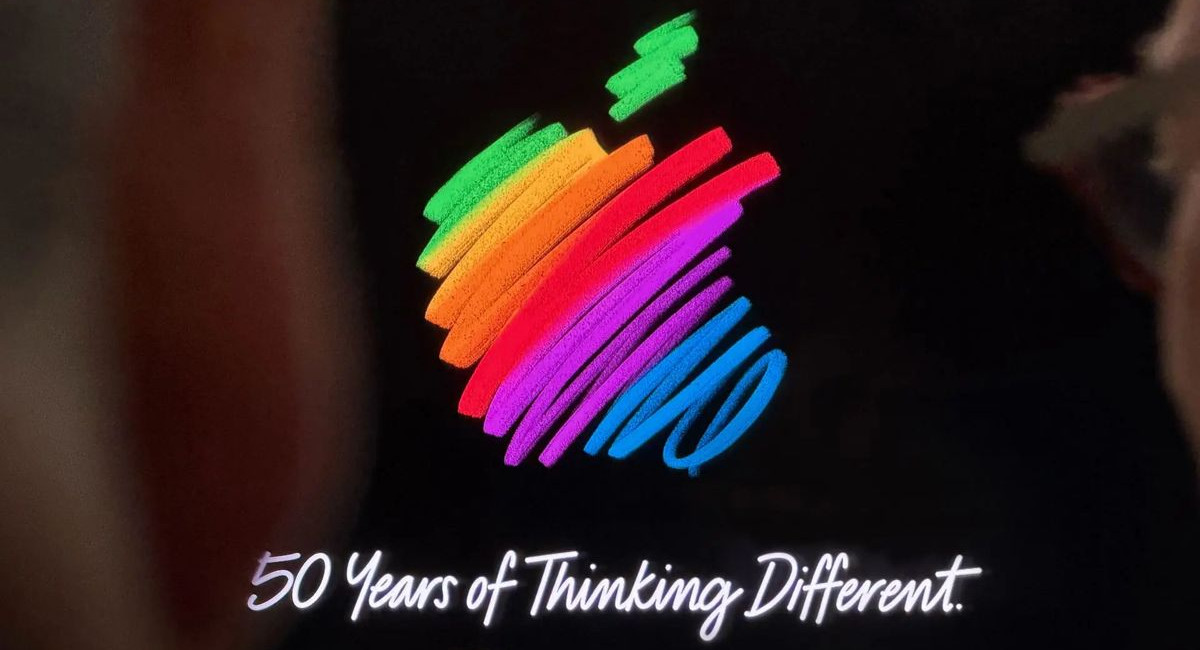
Apple celebrates 50 years of innovation!
SHARE IT
Apple has officially turned fifty years old, celebrating half a century of existence that has fundamentally reshaped human interaction, communication, and modern culture. What began in a humble home garage in Los Altos, California, under the visionary guidance of two young men named Steve Jobs and Steve Wozniak, has blossomed into an undeniable global titan. Today, commanding a staggering market capitalization of approximately three point seven trillion dollars, the Cupertino based enterprise stands as a testament to relentless innovation. Chief Executive Officer Tim Cook initiated the jubilee by sharing a heartfelt message on social media, expressing profound gratitude to the teams, the users, and everyone who has been a part of this extraordinary journey, while also publishing a commemorative letter appropriately titled 50 Years of Thinking Different.
The enduring allure of Apple is not merely a product of clever marketing, although the late Steve Jobs was arguably an unparalleled master of the craft. Instead, it is deeply rooted in an obsessive commitment to the seamless integration of hardware and software. The company has cultivated a user experience that borders on magic for its loyal consumer base. Industry observers often point out the meticulous design language that permeates the product lineup. If you were to stack your iPhone, your iPad, and your Mac on top of one another, you would notice that their rounded corners align with mathematical perfection. Furthermore, the ecosystem operates with a fluidity that competitors still struggle to replicate, perfectly exemplified by how AirPods instantly and intuitively switch their audio source the moment a user transitions from typing on a Mac to answering a call on an iPhone.
Reaching this zenith required immense sacrifice and raw engineering brilliance during the formative years. While Steve Jobs provided the visionary direction and marketing prowess, Steve Wozniak was the foundational technical genius who painstakingly designed the Apple I and Apple II computers. The legendary duo had to liquidate their most prized possessions to fund the earliest known green fiberglass prototype, the Celebration Board 0. Steve Jobs sold his Volkswagen microbus, and Steve Wozniak parted with his beloved HP-65 calculator. Those early financial struggles were eventually alleviated by Mike Markkula, the first angel investor who provided the critical funding necessary to manufacture the Apple II and eventually stepped in to serve as the second chief executive officer of the corporation.
As the decades progressed, the company attracted some of the brightest minds in the technology sector. The visual identity of the modern era was heavily shaped by former chief design officer Jony Ive. His portfolio includes the iconic, translucent, candy colored iMac G3, as well as the revolutionary designs of the iPad and the iPhone. He also played a pivotal role in the architectural conceptualization of the futuristic Apple Park campus. Parallel to the design revolution, the early two thousands witnessed the transformation of the music industry, spearheaded by Tony Fadell. Widely celebrated as the father of the iPod, Tony Fadell oversaw the development of the iconic music player through multiple generations before his departure in 2008, cementing the company as a dominant force in digital media.
The software that breathes life into these iconic devices has its own complex history. The foundational multi touch implementation that eventually evolved into the iOS operating system was championed by Scott Forstall. Despite his immense contributions, Scott Forstall exited the company following the highly publicized and turbulent launch of Apple Maps, a misstep that prompted a rare public apology from Tim Cook. However, the software division continued to thrive under the energetic leadership of Craig Federighi, the senior vice president of software engineering affectionately known to fans as Hair Force One, who oversees macOS, iPadOS, and iOS. Complementing the software experience, Eddy Cue successfully expanded the massive services sector, turning the iTunes Store, Apple Music, Apple Pay, and the App Store into highly lucrative pillars of the modern corporate strategy.
The phenomenal commercial success of these innovations was heavily driven by executives like Phil Schiller, the former vice president of worldwide marketing who helped launch the App Store and transitioned the WWDC events into a highly successful virtual format. On the logistical front, former chief operating officer Jeff Williams dedicated twenty seven years to building an impregnable global supply chain and pioneering the corporate health strategy before retiring in 2025 and passing the responsibilities to Sabih Khan. Today, looking toward the horizon, the hardware engineering is spearheaded by John Ternus. Having played an instrumental role in the critically acclaimed Apple Silicon transition, John Ternus is now widely speculated by industry insiders to be the natural successor to Tim Cook. As retail stores host live performances and vintage memorabilia fetches astronomical sums at auction, the fiftieth anniversary serves as a powerful reminder that the spirit of the Los Altos garage continues to drive the future of technology
MORE NEWS FOR YOU